
In the evening, most neighborhoods look the same. Families are home, but often in different rooms. Screens are on, routines are full, and backyards, full of space and possibility, often go unused.
This isn’t a personal failure or a lack of effort. It’s the result of a culture built around speed, efficiency, and convenience, not spending time growing or making things together.
But what’s easy to miss is that, even with all this, most food in the United States is still grown by families. According to the USDA Census of Agriculture, about 95 percent of farms in the United States are family-owned and operated. Family farms are not a relic of the past, they are still the dominant model of farming today.
And the best part is that starting a family farm doesn’t require a large piece of land, a lot of money, or prior experience, you just need the willingness to begin.

The Benefits of a Family Farm
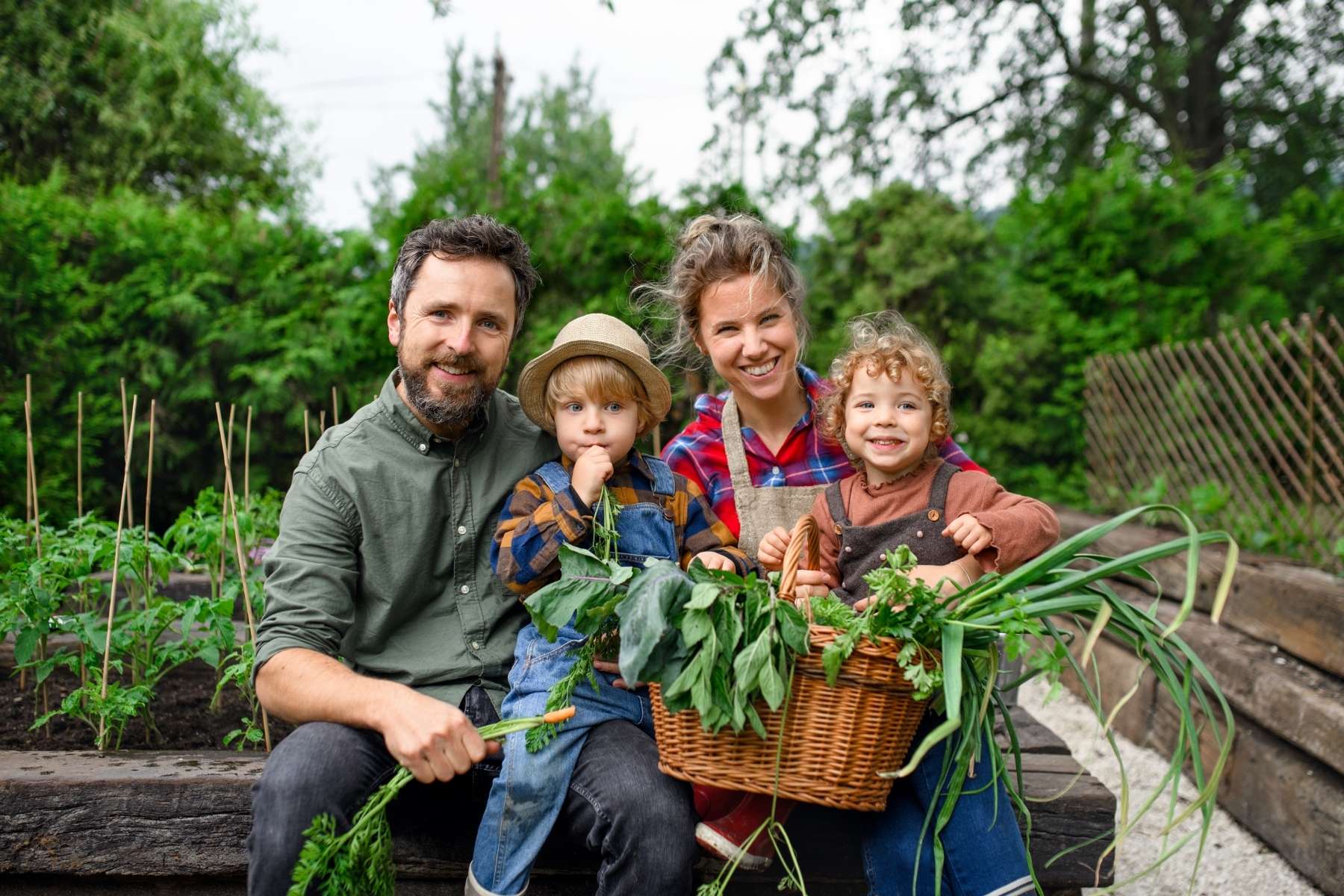
One of the most meaningful benefits of a family farm is how naturally it brings people together. Shared responsibility creates connection. Conversations happen naturally while watering. Lessons unfold while planting. When a crop depends on daily care, everyone has a role.

Toddlers can dig. Teens can build, plant, or harvest. Adults can plan and problem-solve. Older generations bring memory, patience, and perspective. Everyone belongs when hands are in the soil. No one needs to be an expert. No one is left out.

Working with soil has a grounding effect that’s difficult to replicate elsewhere. The physical act of planting, weeding, and tending slows breathing, reduces stress, and calms busy minds. Gardening side by side removes pressure. There’s no need for forced eye contact or structured conversations. Words come easily when hands are busy.
There’s also a deep sense of empowerment that comes from knowing how food is grown. This isn’t rooted in fear or scarcity. It’s rooted in capability. Understanding how to grow even a portion of what a family eats changes how the world is viewed. Food stops being something that simply appears through marketing, packaging, and supply chains. It becomes something tangible, seasonal, and connected to place.

Family farms also strengthen communities. Extra produce is shared with neighbors. Kids learn generosity without being told to practice it. Relationships form naturally over fences, garden beds, and shared harvests. Whether a family farm is a few beds in a backyard or a larger family-owned operation, the role it plays is the same. It reconnects people to food, to land, and to one another.

We Want to Start a Family Farm But…
Starting a family farm doesn’t arrive as a grand plan. It can begin with one afternoon and a trip to the garden store. Someone wanders past the seed racks. Someone else picks up a packet and says, “We could try this.” Before you know it, a few ideas are floating around, and that unused space at home starts to look a little different.
Then the questions come up.
Where do you even begin? What if it doesn’t work? What if you do it wrong?
Feeling overwhelmed is the most common pause point. Farming can look complicated from the outside, filled with unfamiliar terms, practices, and opinions. It’s easy to assume there’s a single right way to do things, and that mistakes mean failure. That assumption stops more family farms before they ever start than anything else.

There’s also a lingering belief that farming requires more than most families have. More land. More money. More time. Images of vast farmland, animals, and family corporations can make small family operations feel insignificant by comparison, making it easy to forget that family owned and operated farms come in many forms and many sizes.
Time raises another quiet question. Life already feels full. Adding something new can feel like adding pressure. There’s concern about keeping up, about consistency, about starting something that won’t be sustainable. Add in worries about soil, pests, crop failure, or even the idea of caring for an animal someday, and hesitation feels perfectly reasonable.

And then there’s the question many parents don’t always say out loud, will the kids even care? Screens are strong competitors. There’s fear that interest will fade, or that the work will fall on one person, leaving the rest watching from a distance.
All these thoughts are signs of care. Every farmer, every family farm, every successful homestead begins right here, with curiosity and questions, not certainty.
Family farms aren’t built by people who have everything figured out. They’re built by families willing to start small, learn as they go, and adjust along the way. One seed. One bed. One season at a time.
And most of the time, it really does begin with that first trip to the garden store, and a simple decision to try.

What Having a Family-Owned Farm Really Means
When many people hear the term family farm, they picture something vast, rows of crops stretching to the horizon, barns, tractors, animals, and generations of farmers working hundreds of acres of farmland. That image, while real for some, has also unintentionally made family farming feel out of reach for everyone else.
The truth is, a family farm has never had a single definition. At its core, it simply means food grown and cared for by a family, for a family, often shared with neighbors and community. Today, that can look like raised beds in a backyard, containers on a patio, herbs on a windowsill, or a shared plot in a community garden. It can exist in urban neighborhoods, suburban developments, rural homesteads, and everywhere in between.

Modern family farms are about participation, not scale. A handful of vegetables, a few berry bushes, or herbs by the door all count. Even planting flowers that support pollinators plays a role. What matters is learning when to harvest, how to care for soil, and how to work with nature. Small farms and family operations across the United States prove this every day, producing food on a modest scale while staying closely connected to their land and region.
Success doesn’t come from perfect rows, high yields, or polished aesthetics. It comes from consistency. From showing up. From learning together. A family farm succeeds when it becomes part of daily life.

Starting Where You Are
Every successful family farm begins with an honest look at the space that already exists. Not the space you wish you had, not the land you might someday own, but the space available right now.

Start by simply observing. A backyard may have sunny and shaded areas. A side yard might catch morning light. A balcony or patio can support containers. Even a windowsill can grow herbs. None of this requires technical evaluation or special tools. Notice where the sun falls, where water is easy to access, and where it feels pleasant to spend time.

The best way to begin is to start small. One or two beds. A few containers. A short list of crops. Something that fits naturally into busy weeks because when a farm feels manageable, it gets cared for. When it feels overwhelming, it gets postponed.

Choosing forgiving, rewarding plants makes an enormous difference early on. Crops that grow quickly, tolerate small mistakes, and offer visible progress help build confidence, especially for kids. Seeing something sprout, grow, and eventually reach harvest creates momentum. It turns curiosity into commitment. Early success fuels motivation to keep going.

Soil Is The Foundation Most Beginners Overlook
When soil is cared for, watering becomes easier, pest pressure decreases, and crops grow with less effort. When soil is ignored, even the best intentions struggle.
Thinking about soil begins with understanding that soil is alive. It’s home to countless organisms that work together to support plant health. Organic matter, things like compost, decomposed leaves, and natural residues, feeds that living system. When soil is fed, plants are fed. In a very real way, feeding the soil feeds the family.

Compost plays a central role in this relationship. It builds resilience over time, helping soil hold water during dry periods and drain properly during heavy rain. It supports diverse growing practices and adapts to different regions, climates, and crop choices. Healthy soil reduces the need for constant intervention and encourages balance rather than correction.

This is where organic growing begins. Regenerative practices may sound complex, but at heart they reflect a simple idea of taking care of what supports you, and it will take care of you in return.
A family farm built on this mindset becomes easier each year. The work shifts from reacting to problems toward observing and responding thoughtfully. That foundation, quiet, living, and dependable, is what allows everything else to grow

What Every Family Needs to Know About Growing Organically (From Seed to Harvest)
Organic growing doesn’t begin with perfection or expensive inputs, it begins with attention. The most important lessons are rarely found on seed packets or labels. They come from watching, adjusting, and learning season by season.

Pay attention to weather patterns, seasonal shifts, and how a space behaves throughout the day and start with seeds and plant starts that are worth your time. Quality matters more than quantity. Strong seeds and healthy starts are more resilient from the beginning, which means fewer struggles later.

Watering is where many beginners struggle because it’s misunderstood. Too much water can weaken roots just as quickly as too little. The goal is steady moisture, not constant saturation. Healthy soil holds water longer, which means plants learn to grow deeper, stronger roots. When watering feels confusing, slow down and observe. Plants communicate clearly through their leaves, color, and posture.
Healthy plants prevent most issues before they begin. Strong growth, supported by good soil and thoughtful care, naturally reduces pest pressure and disease. Problems don’t disappear entirely, but they become easier to manage and less frequent. This is where organic practice shines, working with natural systems instead of constantly fighting them.

Harvest timing is one of the most overlooked skills. Harvest too early and flavor hasn’t developed. Wait too long and texture, sweetness, or tenderness can decline. Learning when a crop is ready transforms food from simply edible to deeply satisfying.
When kids are involved, let them participate naturally. Show rather than tell. Invite them to taste, touch, and notice changes. Curiosity grows alongside the crop. Over time, these small experiences build intuition and respect for food without turning the process into a lesson.

Making It a Family Activity, Not a Chore
A family farm thrives when it feels shared, not assigned. The difference between connection and resentment often comes down to ownership. When everyone has a role that feels meaningful, participation happens naturally.
Simple routines like a weekend planting day or a quick check-in walk through the garden after dinner. A shared harvest before a meal. These moments don’t need structure, they grow organically when the farm becomes part of daily life.

Shared meals deepen the experience. Food grown together tastes different. Not because it’s objectively better, but because the connection is felt. Sitting down to eat something the family helped grow brings the process full circle, reinforcing why the effort matters.
A family farm doesn’t demand equal participation at all times. It invites contribution when possible. Over time, that invitation becomes a habit, and then a tradition.

Common Beginner Mistakes (They’re Part of the Process)
Every farm is built on learning. And every expert gardener knows that mistakes aren’t interruptions to progress, they are progress.
One of the most common early mistakes is trying to do too much, too fast. When everything looks exciting, it’s tempting to plant all the things. More crops feel like more success. What usually happens instead is divided attention. Plants that would have thrived with steady care struggle when time gets stretched thin.
Then there’s timing. Many problems don’t start big. A few leaves covered in powdery mildew. A plant that looks slightly off. It’s easy to wait, hoping things will resolve on their own. Sometimes they do. Most times they don’t. This is why prevention, application of our natural and organic pesticide solution, and using an integrated pest management approach makes a key difference in not having issues arise in the first place.

Crop failure is often the hardest lesson, especially the first time it happens. A plant that never takes off. A harvest that doesn’t come together. Weather that doesn’t cooperate. These moments feel personal at first, but they aren’t. They’re part of farming everywhere, at every scale. What they offer is context. Each failure leaves behind information, about soil, timing, placement, or conditions, that carries into the next season.
What separates experienced growers from beginners isn’t fewer mistakes. It’s how those mistakes are handled. Experience teaches when to adjust, when to wait, and when to try something different next time. Patterns start to emerge. Decisions feel less stressful. Confidence grows quietly, built on observation instead of guesswork.
Every farmer learns this way, whether tending a small family farm or working within larger family operations. No one skips this stage. The process itself is the teacher. And over time, those early mistakes turn into the very knowledge that makes farming feel natural.

Protecting What You Grow with Natural Pest Control
Caring for plants is less about control and more about protection. Healthy plants are naturally resilient, and most problems are easier to manage when they’re noticed early and addressed gently. This approach shifts plant care from reaction to awareness, and it changes everything about how a family farm feels.
Organic plant care works best when it’s preventative. Strong soil, consistent watering, and good airflow do most of the work long before pests or disease ever appear. When plants are supported from the beginning, they’re less stressed, and stressed plants are the ones that tend to attract problems. Protection starts with keeping plants healthy, not waiting for something to go wrong.
When issues do show up, natural approaches feel far less intimidating than many people expect. The goal isn’t to eliminate every insect or create a sterile environment. It’s to control pests in a way that protects the crop, the soil, and the people who live around it. Early intervention makes a big difference, catching a problem while it’s small prevents it from becoming overwhelming later.

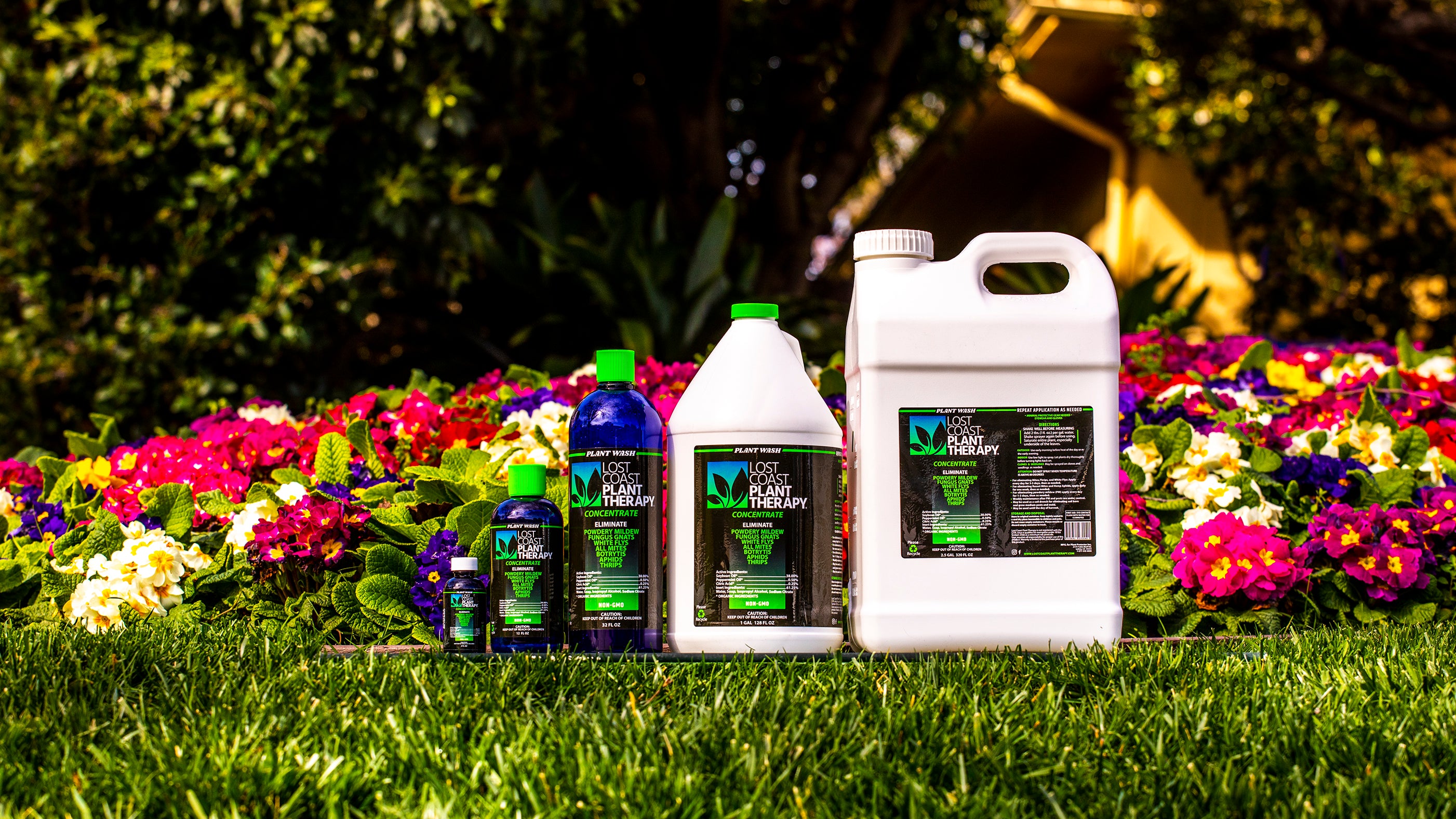
This is where our Natural Plant Protector can be especially helpful for family farms and home growers. Products like Lost Coast Plant Therapy function as a minimum risk pesticide, designed to help control soft bodied pests and plant diseases like fungus, mildew, rust or botrytis. while staying aligned with organic values. Used as a Natural Plant Wash, it supports plants without relying on harsh methods. Because it’s made with natural and organic ingredients, it’s safe to use in home gardens and around kids, pets, and everyday living spaces when used as directed.
Many families appreciate that it comes as a concentrate, making it cost-effective and easy to mix as needed throughout the growing season. It controls pests through physical action rather than toxicity, and it leaves no residue behind.

Plant care becomes an extension of stewardship, protecting food, soil, beneficial insects, and family health all at once. When protection feels gentle and intentional, it becomes part of the rhythm of the farm instead of something to fear or avoid.

Growing Skills That Last a Lifetime
One of the biggest surprises of starting a family farm is how much you learn without realizing it’s happening. Skills don’t arrive all at once, they build slowly, season by season. You start noticing how soil holds water differently after compost is added. You see how weather patterns affect a crop. You learn that timing matters more than rushing. Little by little, what once felt confusing starts to feel familiar.
These skills naturally involve everyone. Kids learn responsibility in a way that makes sense to them, plants need water, seeds need time, food doesn’t just appear. Adults gain confidence by solving small problems and seeing real results. Older family members often recognize patterns, share memories, and pass along knowledge that might otherwise be lost. Farming gives everyone a reason to talk, share, and learn from one another without it feeling forced.

Over time, families get better at adapting. A missed harvest teaches when to pick next time. A season that goes well builds excitement. A tough year shows what can be done differently. None of this requires perfection. What matters is showing up, paying attention, and adjusting as you go.
These are skills that stick. Even if someone moves away from gardening later on, the understanding stays. It changes how food is valued, how choices are made at the store, and how waste is viewed. Knowing how food is grown leaves a lasting impression, no matter where life leads.

Family Farms Are Leading the Way in Organic, Regenerative Growing
By the time a family starts growing food, even on a small scale, they’re already part of something much larger. That’s because family farms don’t just exist at the margins of agriculture, they shape it.
According to the USDA Census of Agriculture, family farms account for the vast majority of farms in the United States and manage roughly 90 percent of U.S. farmland. That means the everyday choices made on family farms, what gets planted, how soil is treated, how pests are managed, add up in a very real way. And these decisions don’t stay local. They influence soil health, water quality, and food systems across entire regions.

What makes family farms especially suited to organic and regenerative practices is proximity. The people making decisions are the same people working the land and living with the outcomes. When soil is degraded, they feel it. When practices improve long-term health, they see it season after season. This closeness allows for observation, adjustment, and learning in a way large, rigid systems often can’t accommodate.
Small and regional family farms, in particular, have the flexibility to respond to what the land actually needs. Practices change based on weather, soil condition, and experience, not just on maximizing short-term output.

There’s also a long view built into family farming. Knowledge doesn’t just live in manuals or spreadsheets, it’s passed down through experience. Children learn why certain choices are made, not just how to make them. They see how care affects soil, water and biodiversity. That understanding shapes how future decisions are made, whether those children continue farming or take that perspective into other parts of life.
Growing organically at home may feel small, but it ripples outward. It influences neighbors, strengthens regional food networks, and reinforces the role of family farms as leaders in a more diverse, resilient agricultural future. This is how meaningful change happens, not all at once, but steadily, family by family, season by season.

Join the Victory Garden Alliance in 2026
By joining the Victory Garden Alliance, families become part of a nationwide community focused on self-reliance, learning, and connection. It’s a reminder that small actions matter, especially when they’re taken together. Growing food brings people back into relationship with the land, with their neighbors, and with one another. It turns private efforts into shared progress.
The Alliance also creates opportunities to learn alongside others, through conversations, gatherings, and shared stories from people who care deeply about food sovereignty, sustainability, and rebuilding resilient local systems. It’s a place to gather inspiration, exchange knowledge, and feel supported along the way.
Planting something edible in 2026 isn’t a test or a pledge to do everything right. It’s an invitation to take part, to try, and to grow, side by side with families across the country.
Learn more about the Victory Garden Alliance here.

Conclusion
Every family farm starts the same way, with someone deciding to try. Not because everything is figured out, and not because the timing is perfect, but because the idea feels like a good one.
An unused corner of a yard can become a place of possibility. A few seeds can become a shared project everyone checks on. A small harvest becomes a reason to slow down and sit together, even if just for a moment.
Family farms don’t just grow food. They change how families spend time together. They create space for learning, patience, and small wins that feel earned. Skills build quietly. Confidence follows. Traditions take shape without needing to be planned.
Hands in the soil change how time feels. Meals grown together change how food is valued. And when generations work side by side, even in simple ways, it changes how families grow together.

Additional Resources
UF/IFAS Extension - Organic Gardening
Cornell Cooperative Extension - Gardening Resources
Starting Plants from Seed for the Home Gardener - University of Georgia Extension
Seed Starting Demystified - Penn State Extension
Growing Vegetables in Containers – University of Maryland Extension
University of Maryland Extension - Organic Production Resource
University of Delaware Cooperative Extension - Vegetable Garden Basics