

Skip to content
Citrus diagnostic guide

Citrus & Lemon Tree Pests. Identification & Control.

Sticky leaves, curled new growth, bumps on stems, tiny dots, black coating, winding leaf mines, or bugs hiding on a potted lemon tree? Start with where the clue appears, then narrow the pest before choosing what to do next.

Citrus tree showing new flush, mature leaves, stems, and fruit
For lemons, limes, oranges, mandarins, grapefruit, kumquats & potted citrus
Shop Lost Coast Plant Therapy →
Start here

What pests attack lemon & citrus trees?

Citrus can host aphids, scale insects, mealybugs, mites, psyllids, whiteflies, thrips, leafminers, snails, caterpillars, and other pests. The fastest diagnosis usually comes from the plant part where the problem begins.

A sticky leaf points us toward sap-feeding insects and honeydew. A hard-looking bump on a twig sends us toward scale. Fine stippling calls for magnification and a mite check. Winding tunnels inside a young leaf point toward citrus leafminer. New flush deserves special attention because tender citrus growth attracts several important pests before older foliage shows much damage.

The first question should be to see where the damage is and is the pest exposed?

That distinction matters on citrus because a crawler sitting on a twig can be contacted directly, while a leafminer larva is protected inside the leaf and Huanglongbing is a systemic disease that cannot be solved by treating the leaf surface.

Before you inspect

Potted citrus & landscape citrus

A Meyer lemon on a patio is small enough to rotate, lift, and inspect leaf by leaf. A mature backyard orange or lemon tree has a much larger canopy, so location, reach, and spray coverage become part of the diagnosis.
Potted citrus tree on a patio or balcony
Container / indoor / patio

Use the small tree to your advantage.

Turn the pot slowly and inspect every side. Check the newest leaves first, then leaf undersides, branch joints, stems, the trunk, pot rim, and growing medium. Scale and mealybugs often hide in protected places, while fungus gnats or moisture problems are easier to notice at the soil surface.

Best clue: compare the same plant parts on opposite sides of the tree. Localized damage often reveals where the problem began.

Mature landscape citrus tree
Backyard / landscape / orchard edge

Sample the canopy instead of guessing from one leaf.

Inspect reachable new flush in several areas, then sample mature leaves and twigs from different sides of the tree. Look above sticky or blackened foliage for honeydew producers. On large trees, the pest may be easy to identify while complete treatment coverage is the harder practical problem.

California note: unusual psyllid-like insects or HLB-like symptoms deserve a separate regulated-pest check.

Common California citrus

The same scouting pattern works across many citrus types.

Pest pressure varies by tree, location, flush cycle, and climate.
Lemon tree or fruit
Lemon
Lime tree or fruit
Lime
Sweet orange tree or fruit
Sweet orange
Mandarin or tangerine tree or fruit
Mandarin / tangerine
Grapefruit tree or fruit
Grapefruit
Kumquat tree or fruit
Kumquat
Calamondin tree or fruit
Calamondin
Pummelo or specialty citrus tree or fruit
Pummelo & specialty citrus
Citrus problem finder

What do you see on the tree?

Choose the closest clue. The result gives you the most useful next inspection step, likely problems, and whether Lost Coast Plant Therapy belongs in that branch.
Citrus pest location gallery

Inspect the tree by location.
The same pest can move during its life cycle, but location is still one of the fastest ways to narrow the field.
1

Tender new flush

Look for aphid colonies, psyllids, curled leaves, waxy residue, early scale crawlers, thrips, and leafminer injury as leaves expand.

Strong. Lost Coast Plant Therapy controls soft-bodied pests on contact.
2

Mature leaves

Check for mite stippling, scale, honeydew, sooty mold, old leafminer scars, nutrient or environmental discoloration, and signs that began earlier on flush.

Strong. Lost Coast Plant Therapy controls all mites and soft-bodied pests on contact.
3

Leaf undersides

Use magnification for mites and small nymphs. Look for scale, whiteflies, aphids, eggs, cast skins, and feeding damage that is harder to see from above.

This is a high-value coverage zone because many contact targets shelter underneath foliage.
4

Stems & twigs

Scale and mealybugs may settle along bark, twig joints, and protected branch structures. Compare repeated bumps with normal bark texture.

Strong fit for active scale crawlers, exposed scale insects, and mealybugs when direct coverage is possible.
5

Fruit

Inspect the rind for attached scale, mite discoloration, thrips scarring, sooty deposits, sun injury, bird or rodent damage, and physical rubbing.

Fruit symptoms need a cause before treatment. Surface damage is not automatically an insect problem.
6

Soil & container area

On potted citrus, look for adult fungus gnats, overly wet media, ants, scale or mealybugs around the pot, and stress that begins in the root zone.

Container pests and moisture problems can coexist. Do not diagnose a pest from yellowing alone.
Citrus tree showing tender flush, mature leaves, undersides, stems, fruit, and container or trunk base
Tender pale-green citrus leaves and shoot tips
Why new growth matters

Tender citrus flush often shows the first useful clue.

Fresh citrus leaves are soft, nutrient-rich, and still expanding. Aphids are much more likely to matter on young trees or continually flushing citrus than on hardened mature foliage. Citrus leafminer moths are also attracted to new flush, and Asian citrus psyllid reproduction is closely tied to tender citrus growth.

That is why a quick citrus inspection should start at the newest shoots even when the symptom that caught your eye is lower in the canopy. Sticky residue on an old leaf may have fallen from aphids or scale feeding several inches above it.

Soft, curled tips Look for aphids, psyllids, thrips, leafminer mines, or other distortion before blaming water or nutrition.
Winding mines Damage that stays inside the leaf tissue is the clearest clue that citrus leafminer belongs on a different management path.
White wax or unusual nymphs In California, take the psyllid branch seriously and compare what you see with official ACP identification guidance.
Sticky young leaves Inspect the shoot itself for aphids, psyllids, mealybugs, soft scale, or nearby whiteflies producing honeydew.
The main pest branches

Five citrus pests worth learning by sight.

These profiles focus on the clues most likely to help a home grower make the right next decision.
Scale on citrus
Bumps on stems, leaves, or fruit

Scale can look like part of the tree.

Scale insects often become noticeable only after someone sees repeated brown, gray, orange, or shell-like bumps on citrus. California red scale is an armored scale that can spot leaves and infest fruit or twigs. Soft scales such as citricola scale produce honeydew, which can lead to sticky foliage and sooty mold.

The crawler stage matters because young scale insects are mobile and much less protected than settled adults. On some soft scales, young stages occur mainly on leaf undersides before later stages move toward twigs.

Inspect Twigs, leaf undersides, branch joints, and fruit. Compare suspicious bumps with clean bark on another branch.
Lost Coast Plant Therapy fit Strong. Lost Coast Plant Therapy controls scale on contact.
Read the Scale Insects guide →
Mealybugs on citrus
Cottony or waxy clusters

Mealybugs prefer the protected parts of citrus.

Mealybugs are soft, wax-covered sap feeders that often gather in groups. On citrus, inspect branch crotches, petiole bases, fruit contact points, and sheltered areas where a flat leaf-by-leaf glance can miss them. Honeydew can make nearby foliage sticky and support sooty mold.

Ant traffic is worth noticing because ants may visit honeydew-producing colonies. Finding the insects themselves is more useful than treating the black coating or sticky residue alone.

Inspect Protected joints, stems, fruit clusters, leaf bases, and the inner canopy. On potted trees, also inspect the rim and lower trunk.
Lost Coast Plant Therapy fit Strong. Lost Coast Plant Therapy controls mealybugs on contact.
Read the Mealybugs guide →
Aphids on citrus flush
Curled tender shoots + honeydew

Aphids follow fresh citrus growth.

Aphids are most useful to look for on tender flush, especially on young trees and citrus that keeps producing new shoots. Colonies can distort soft leaves, leave honeydew, attract ants, and contribute to black sooty growth. Once foliage hardens, aphid pressure may drop as the tissue becomes less suitable and natural enemies catch up.

Curled leaves by themselves are not an aphid diagnosis. Citrus leafminer, psyllids, thrips, caterpillars, mites, and non-pest stress can all distort new growth, so open the curled leaves and look for the actual insect.

Inspect Newest leaf tips, undersides, shoots, buds, and the folds of curled foliage.
Lost Coast Plant Therapy fit Strong. Lost Coast Plant Therapy controls aphids on contact.
Read the Aphids guide →
Citrus mite damage
Stippling, bronzing, dull foliage

Mites are often found through damage first.

Citrus red mite feeding can create pale, bleached, or speckled foliage. Twospotted spider mites and other mites can also stipple citrus, and some species may leave webbing or affect fruit color. The useful next step is magnification, because multiple mite species and several non-mite problems can discolor citrus leaves.

Coastal lemon growers may also encounter distortion associated with citrus bud mite, which is another reason to avoid treating every curled or unusual leaf as the same mite problem.

Inspect Leaf undersides, petioles, nearby fruit, and multiple leaves from the same canopy zone. A hand lens helps.
Lost Coast Plant Therapy fit Strong. Lost Coast Plant Therapy controls all mites on contact.
Read the Spider Mites guide →

Black sooty mold often points to a honeydew producer above it.

When citrus leaves look black or dirty, the dark growth may be sooty mold growing on sugary honeydew rather than a disease invading the leaf itself. The diagnosis becomes more useful when you stop looking at the black leaf and inspect the plant parts above it.

Aphids, soft scales, mealybugs, whiteflies, and psyllids can all produce honeydew. The pest can be several inches away from the blackened surface, especially on a dense tree where residue drips onto lower foliage.

1. Look up. Inspect shoots, twigs, and leaves directly above the black coating for sap-feeding insects.
2. Follow ants. Ants visiting sticky foliage can lead you toward honeydew-producing colonies hidden inside the canopy.
3. Control the cause. Cleaning the coating does not solve the underlying pest. Confirm the honeydew producer and manage that pest first.
Black sooty mold on citrus leaves with honeydew-producing pest clues
Young citrus leaf with winding citrus leafminer mine
Important lookalike

Winding tunnels inside leaves point toward citrus leafminer.

Citrus leafminer larvae feed inside young leaves, leaving shallow silvery or pale mines that wind through the expanding tissue. Damaged shoots can roll or distort. In California, citrus leafminer is widespread through much of Southern California, coastal areas, and the San Joaquin Valley.

The tunnel is the key distinction. An aphid, mite, mealybug, or scale insect is exposed on the plant surface. A leafminer larva is protected inside the leaf. That means a winding mine belongs in a different management branch rather than the same contact-spray path used for exposed soft-bodied pests.

Where it starts Young, expanding citrus leaves. Mature backyard trees often tolerate cosmetic leafminer damage better than very young trees.
What it looks like Serpentine tunnels, silvery mines, rolled leaf margins, and distortion concentrated on new flush.
Different control needed Do not treat a protected larva inside a mine as a standard exposed soft-bodied target.
California citrus alert

Asian citrus psyllid deserves a different level of attention.

For California citrus growers, pest identification is also plant-health protection for the wider community. Asian citrus psyllid can spread Huanglongbing, a lethal citrus diseas.
Asian citrus psyllid adults and nymphs on citrus flush with Huanglongbing comparison

Do not treat a suspected Asian citrus psyllid finding as an ordinary aphid problem.

Asian citrus psyllid feeds on citrus and closely related plants, especially tender flush. Nymphs can produce conspicuous white waxy material, and adults can spread the bacterium associated with Huanglongbing. Huanglongbing can cause variable symptoms that overlap with nutrient disorders and other citrus problems, which is why official diagnosis matters.

What to inspect Fresh flush, tiny aphid-like insects, waxy material from nymphs, distorted shoots, and unusual leaf symptoms.
What not to assume One yellow or mottled leaf does not prove Huanglongbing. Symptoms can resemble other citrus disorders.
Where Lost Coast Plant Therapy fits Our psyllid guidance places active exposed psyllids in the contact-control branch, including on citrus.
Where it does not fit No surface pest-control product cures a Huanglongbing-infected tree or replaces state reporting and quarantine requirements.
Use the current California Department of Food and Agriculture citrus page for reporting, quarantine, and pest-identification information.
Fruit clues

Damage on citrus fruit is not always a spray problem.

A blemished lemon or orange can carry a pest clue, but rind damage can also come from sun, weather, rubbing, birds, rodents, or disease.
Attached scale insects on citrus rind
🟤 Attached bumps

Scale on the rind

Repeated attached scale covers on fruit, leaves, or nearby twigs support a scale diagnosis. Check the rest of the canopy before deciding how widespread the infestation is.

Lost Coast Plant Therapy is relevant when exposed active scale is confirmed and can be contacted thoroughly.
Bronzed or discolored citrus fruit with mite clues
🕸️ Bronzing / discoloration

Mite feeding can affect fruit color

Some citrus mites affect fruit as well as foliage. Pair rind discoloration with leaf stippling, magnification, and a wider canopy check.

Confirm active mites before treating.
Black sooty mold on citrus fruit
⬛ Black surface coating

Sooty mold on fruit

Black coating can grow where honeydew lands. Inspect above the fruit for soft scale, mealybugs, aphids, whiteflies, or psyllids.

Treat the honeydew producer, not simply the black coating.
Sunburn or sunscald on citrus fruit
☀️ Environmental branch

Bleached or sunken sun injury

Fruit suddenly exposed after pruning or canopy loss can develop sun injury. That is not an insect diagnosis.

Different approach needed.
Chewed or gouged citrus rind
🐌 Chewing branch

Snails, caterpillars, rodents, or birds

Missing rind or tissue points away from sap feeders and mites. Look for trails, droppings, bite patterns, and nighttime activity.

Outside the principal soft-bodied contact-pest branch.
Misshapen or mottled citrus fruit
🍊 Needs diagnosis

Disease, feeding, or physiological stress

Distorted or poor-quality fruit can have several causes. In California, combine unusual fruit symptoms with leaf and shoot observations before ruling out serious citrus disease.

Do not choose a pest-control product from fruit shape alone.

saturate the pests

Lost Coast Plant Therapy works by contact. Make sure to choose application equipment that can actually reach the target.

On a potted Meyer lemon, you can rotate the plant and cover each leaf surface. On a mature landscape tree, ask whether you can realistically reach the undersides, inner canopy, stems, and active pest colonies. If not, improve the application method rather than simply increasing product strength.

New flush Coat tender tips where aphids and psyllids congregate.
Leaf undersides Critical for mites, whiteflies, young scale, and other hidden targets.
Stems & twigs Important for scale and mealybugs that settle away from broad leaf surfaces.
Inner canopy Dense foliage can shelter pests and honeydew-producing colonies from a quick outer-canopy spray.
Citrus spray coverage showing leaves, undersides, stems, new flush, and inner canopy

Build a citrus application routine.

Once you have confirmed a supported exposed pest, build the application around contact, saturation, and the places that pest is actually feeding. Citrus canopies create protected leaf undersides, branch joints, inner twigs, and tender flush that a quick outer-canopy pass can miss.

Applying Lost Coast Plant Therapy to citrus foliage and stems
Application routine
Standard mix
Current standard guidance is 1 oz of Concentrate per gallon of water.
Heavy pressure
For heavier pressure, follow the current Instructions page and pest-specific guidance rather than guessing from visible damage alone.
Outdoor timing
Use early morning before the heat of the day or at dusk. Current guidance says best when air temperature is 80°F or less.
Coverage
Direct contact matters. Saturate the plant thoroughly, including leaf undersides, tender flush, stems, twigs, and sheltered tissue where the confirmed target is present.
Mixing + agitation
Shake the Concentrate well before measuring. Agitate the mixed sprayer before use and during application so the mixture stays even.
Tree size
Match the sprayer to the tree. A potted lemon can be rotated; a mature landscape tree may require equipment that reaches the inner and upper canopy.
Plant sensitivity
Test on a small area or plant first when sensitivity is uncertain and always follow the current label.
Harvest
Current Lost Coast Plant Therapy guidance allows use until the day of harvest when used as directed.
Where Lost Coast Plant Therapy fits

Confirm target, make contact.

Lost Coast Plant Therapy is a minimum risk pesticide that controls supported soft-bodied pests and mites on contact. On citrus, that creates a strong fit when the pest is active and exposed.

Scale crawlers, mealybugs, aphids on fresh flush, mites on leaf surfaces, whiteflies, and active psyllids are examples. Product fit is weaker when the organism is protected inside plant tissue, as with citrus leafminer larvae, or when the problem is Huanglongbing, sun injury, nutrient stress, root trouble, snails, caterpillars, or another hard-bodied chewing pest.

Scale Direct coverage is especially important during the vulnerable crawler stage.
Mealybugs Reach protected crevices and colonies rather than spraying only outer leaves.
Aphids & mites Coat new growth and leaf undersides where active pests are feeding.
Psyllids Controls active exposed psyllids on contact.
Lost Coast Plant Therapy Concentrate with citrus plants
Citrus questions gardeners ask

Questions that come after the first clue.

These are the questions people tend to ask once something on a lemon, lime, orange, mandarin, or potted citrus tree looks wrong.

What bugs attack lemon trees? +

Common lemon and citrus pests include aphids on tender new flush, scale on leaves and twigs, mealybugs in protected crevices, several mite species that cause stippling or bronzing, citrus leafminer in young leaves, and in California the Asian citrus psyllid, which requires special attention because it can spread Huanglongbing disease.

Why are my lemon tree leaves sticky? +

Sticky citrus leaves usually mean honeydew from sap-feeding insects. Aphids, soft scales, mealybugs, whiteflies, and psyllids can all produce honeydew. Inspect the growth directly above the sticky surface and check leaf undersides, tender flush, stems, and twigs for the pest producing it.

What are the bumps on citrus stems? +

Stationary bumps on citrus stems or twigs often point toward scale insects, although natural bark texture and scars can look similar. Check whether the bumps occur repeatedly, can be lifted or scraped, are associated with crawlers or honeydew, or also appear on leaves and fruit.

What causes curled citrus leaves? +

Curled citrus leaves can result from aphids, psyllids, citrus leafminer, thrips, citrus bud mites, environmental stress, or other disorders. The pattern matters: aphids usually cluster on tender flush, leafminer leaves winding mines inside young leaves, and Asian citrus psyllid activity in California deserves prompt identification and reporting.

What are the tiny insects on new citrus growth? +

Tender citrus flush attracts several sap-feeding pests. Aphids may form clusters, psyllids may feed on young shoots, and scale crawlers can settle onto new plant surfaces. In California, unusual psyllid-like insects on new flush should be identified carefully because Asian citrus psyllid is a regulated citrus pest.

Can mites attack lemon trees? +

Yes. Citrus red mites, twospotted spider mites, and other mites can feed on citrus. Fine pale stippling, bronzing, dull foliage, fruit discoloration, or webbing can be useful clues, but magnification helps confirm the mites before treatment.

What makes winding tunnels in citrus leaves? +

Silvery or pale winding tunnels inside young citrus leaves are a classic citrus leafminer clue. The larva feeds inside the leaf tissue, so this is a different diagnostic path from exposed soft-bodied pests on the leaf surface.

Why is black mold growing on citrus leaves? +

Black sooty mold commonly grows on honeydew deposited by sap-feeding pests. The dark coating is therefore a clue to work backward: inspect above and below the blackened leaves for scale, aphids, mealybugs, whiteflies, or psyllids that may be producing the sticky residue.

How do I inspect a potted lemon tree for pests? +

Start with new flush and leaf undersides, then inspect branch joints, stems, the trunk, the rim of the pot, and the growing medium. Potted citrus is small enough to turn and inspect from every side, so use that advantage and look for sticky residue, cottony clusters, scale bumps, mites, flying insects, and moisture-related soil pests.

Which citrus pests can Lost Coast Plant Therapy control? +

Lost Coast Plant Therapy is relevant when a supported exposed target is confirmed, including aphids, mites, mealybugs, active scale insects especially crawlers, whiteflies, and psyllids. Citrus leafminer larvae feeding inside mines, hard-bodied chewing pests, snails, and Huanglongbing disease require a different management path. Suspected Asian citrus psyllid or Huanglongbing in California should also be handled according to current state guidance.

Sources & further reading

Where this citrus guide gets its footing.

Independent horticultural sources support the pest-identification and California regulatory guidance. Blue-dot sources are official Lost Coast Plant Therapy product information.

University / government citrus guidance Official Lost Coast Plant Therapy information
UC IPM — Citrus: Identifying Invertebrate Damage on Leaves Visual diagnostic reference for aphids, California red scale, citrus red mite, twospotted spider mite, sooty mold, citrus leafminer, and Asian citrus psyllid. UC IPM — Citrus Leafminer Identification, distribution, damage, and management context for the serpentine mines that develop in young citrus leaves. UC IPM — Asian Citrus Psyllid and Huanglongbing Disease California-specific homeowner guidance on Asian citrus psyllid, Huanglongbing, identification, distribution, and why these problems need special handling. UC IPM — Aphids in Citrus Explains why aphids are most associated with young trees or continuously flushing citrus and why tender growth is the key scouting zone. UC IPM — Mealybugs in Citrus Citrus-specific mealybug biology and management context. UC IPM — Citricola Scale California soft-scale biology, crawler timing, honeydew, sooty mold, and leaf-versus-twig locations. California Department of Food and Agriculture — Citrus Pest and Disease Prevention Division Current California citrus pest reporting, quarantine information, Asian citrus psyllid and Huanglongbing resources. Lost Coast Plant Therapy — Instructions Current contact requirement, saturation guidance, testing guidance, temperature cautions, repeat applications, and equipment recommendations. Lost Coast Plant Therapy — Scale Insects Current scale-specific directions emphasizing thorough coverage and the exposed crawler stage. Lost Coast Plant Therapy — Mealybugs Our mealybug product guidance and related pest information. Lost Coast Plant Therapy — Aphids Our aphid directions emphasizing direct coating of aphids, tender growth, stems, and leaf undersides. Lost Coast Plant Therapy — Psyllids Our product page describing contact control of active psyllids, including citrus, and coverage of new growth, stems, and leaf undersides. Lost Coast Plant Therapy — How It Works Our explanation of contact action against supported soft-bodied insects, eggs, larvae, and mites.

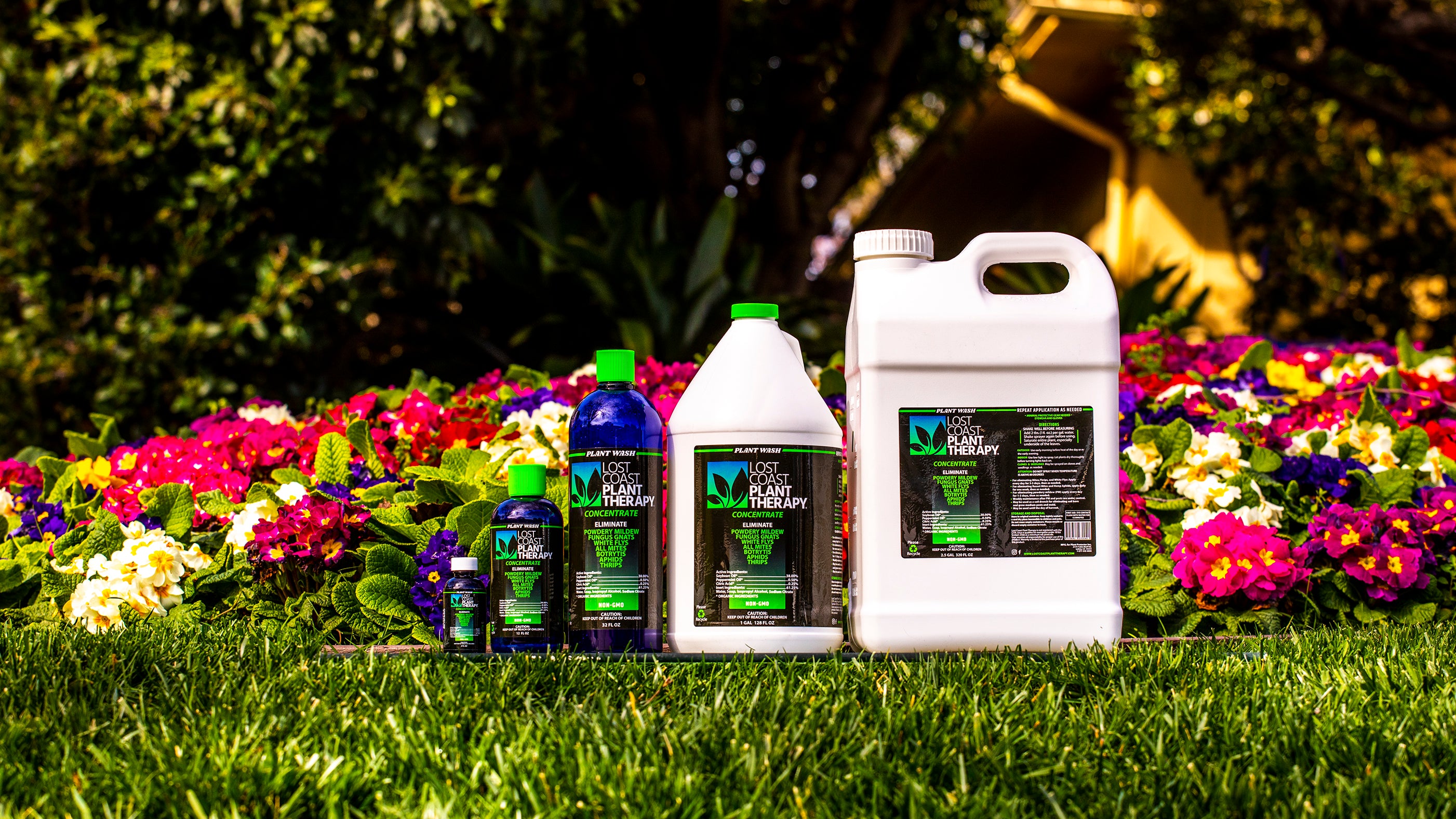
Choose your size.

Lost Coast Plant Therapy Concentrate is our Natural Plant Wash and Natural Plant Protector made with natural and organic ingredients. Once your citrus diagnosis points to a supported exposed pest, choose the size that fits the amount of foliage you need to cover.
12 oz Lost Coast Plant Therapy Concentrate bottle
Lost Coast Plant Therapy

12 oz

12 oz of Concentrate makes up to 12 gallons of application spray at the standard 1 oz-per-gallon mix.

Buy now
32 oz Lost Coast Plant Therapy Concentrate bottle
Lost Coast Plant Therapy

32 oz

32 oz of Concentrate makes up to 32 gallons of application spray at the standard 1 oz-per-gallon mix.

Buy now
1 gallon Lost Coast Plant Therapy Concentrate bottle
Lost Coast Plant Therapy

1 Gallon

One gallon of Concentrate makes up to 128 gallons of application spray at the standard 1 oz-per-gallon mix.

Buy now
2.5 gallon Lost Coast Plant Therapy Concentrate bottle
Lost Coast Plant Therapy

2.5 Gallon

2.5 gallons of Concentrate makes up to 320 gallons of application spray at the standard 1 oz-per-gallon mix.

Buy now