
Unfold young leaves and inspect the stem immediately below buds. Aphids can sit where new growth overlaps and remain hidden from a quick top-down look.
Dahlia pest diagnosis guide
Dahlia Pests. Common bugs & problems on dahlia plants
Common bugs and plant problems on dahlias, with a practical way to identify what is happening on new shoots, buds, blooms, leaves, stems, and chewed foliage before choosing the next step.

Start here
What bugs attack dahlia plants?
Dahlia pest diagnosis gets much easier when we start with where the damage is happening, because a scarred flower, a sticky shoot, a stippled leaf, and a ragged hole point in very different directions.
Thrips, aphids, spider mites, whiteflies, slugs, snails, earwigs, caterpillars, beetles, and other garden pests can all show up around dahlias. Thrips often hide deep in flowers and buds. Aphids collect around tender growth. Spider mites are easiest to confirm on leaf undersides. Chewing pests remove tissue entirely.
Dahlias also produce symptoms that are not caused by insects. Botrytis can brown flowers and buds, powdery mildew can coat foliage, viruses can distort or mosaic leaves, and heat, sun, rain, wind, handling, and old blooms can change petals. The goal is to match location + symptom + live clue.
Dahlia pest location guide
Where do you see the problem?
Choose the first place you noticed damage. The result shows the pest categories that move up the list, what to inspect next, and whether Lost Coast Plant Therapy can help.
Dahlia pest clues side by side.
This desktop matrix is a quick comparison tool. Use the sections below for the full diagnosis.
| What you see | Where it appears | Likely category | Best clue | Next direction | Lost Coast Plant Therapy relevance |
|---|---|---|---|---|---|
| Sticky curled growth | New shoots + buds | Aphids | Clusters + honeydew + ants | Confirm live aphids in tender tissue | Relevant |
| Scarred / streaked blooms | Buds + flowers | Thrips | Slender insects + black specks | Open flowers and inspect protected folds | Relevant |
| Fine stippling / bronzing | Leaves, especially undersides | Spider mites | Tiny moving dots + fine webbing | Inspect underside populations | Relevant |
| White insects fly up | Leaf undersides | Whiteflies | Adults fly; nymphs stay attached | Check underside stages | Relevant |
| Ragged holes / missing petals | Leaves + flowers | Slugs / earwigs / caterpillars / beetles | Tissue is physically removed | Identify the chewer | Different path |
| Brown fuzzy blooms / white powder | Flowers + foliage | Botrytis / powdery mildew | Disease growth, not insect feeding | Separate disease from weather injury | Relevant |
Aphids collect around dahlia buds and new growth.
Aphids are soft-bodied sap feeders that often gather where dahlia tissue is expanding. Honeydew and ant activity can make a colony easier to find before the insects seem obvious from a distance.

Honeydew can make dahlia foliage shiny or tacky. Ants moving repeatedly up a stem are another reason to inspect that area for sap-feeding insects.
Distorted leaves may stay twisted after a colony is reduced. Look for live aphids and fresh damage before deciding the problem is still active.
Sooty mold can grow on accumulated honeydew. If you see black surface growth, work backward toward the honeydew-producing pest.
Fine stippling and bronzing can point to spider mites.
Spider mites are often discovered through leaf damage before the mites themselves are easy to see. Early feeding can look like tiny pale dots scattered across the leaf. As pressure builds, foliage may dull, bronze, dry, or decline, and fine webbing may appear.
Turn the leaf over. Spider mites and eggs are commonly concentrated on the underside. Warm, dry conditions can make outbreaks more likely, but the mites, eggs, webbing, and matching stippling are stronger evidence than weather alone.
Undersides
Inspect leaves from both the outer plant and sheltered interior. The damage is visible from above, while the mites may be easier to confirm below.
Coverage
Lost Coast Plant Therapy works on contact, so underside coverage matters when an active spider-mite population has been confirmed.


Buds + open flowers
Thrips can hide inside dahlia buds and open flowers.
Thrips are one of the most important flower-damage branches on dahlias because the insect can stay hidden while the bloom records the feeding. Look for streaked or scarred petals, brown areas, distorted buds, black specks, and slender insects moving deep inside the flower.
Open affected blooms carefully
Inspect between petals, around the flower center, and where petals meet protected folds. Thrips may not be obvious until the bloom is opened.
Compare fresh and older flowers
Old blooms naturally brown and weather. Fresh feeding on newly opening flowers is more useful than damage limited to aging petals.
Look for black specks
Dark fecal specks near silvered or scarred tissue strengthen a thrips diagnosis and help separate it from aphid honeydew.
Follow the damage back to buds
Malformed flowers may have been injured before they opened. Check nearby buds for insects or concealed feeding instead of looking only at the finished bloom.
Whiteflies reveal themselves when dahlia foliage is disturbed.
Adult whiteflies often lift off in a small cloud when an infested leaf is moved. That flying clue is useful, but the underside tells you much more because eggs and immature stages remain attached there.
Check multiple leaves from the lower and middle canopy. Sticky honeydew, yellowing, adults, and flat immature stages together make the diagnosis stronger than seeing one white insect fly past the plant.


Inspect the bloom
The flower itself can be the best inspection tool.
Dahlia flowers create protected spaces where tiny insects can feed without being visible from the outside. When a bloom is scarred, streaked, malformed, or browning too early, inspect the flower before spraying the whole plant automatically.
1. Start with a fresh affected bloom
A new damaged flower tells you more than a bloom that is already aging or rain-marked.
2. Open protected folds
Look between petals and inside buds for slender insects, larvae, black specks, or feeding scars.
3. Tap over white paper
A gentle tap can make tiny thrips easier to see without relying on the naked eye inside a dense flower.
4. Compare with the leaves
Sticky new growth suggests aphids; uniform stippling points toward mites; missing tissue points toward chewers.
A different control branch
Ragged holes and missing petals need a different approach.
Chewing damage looks fundamentally different from sap-feeding damage.

Slugs & snails
Irregular holes, missing tissue, and slime trails point toward mollusk feeding, especially around lower leaves and moist sheltered areas.
Different control path
Earwigs
Earwigs can chew irregular holes in dahlia leaves and flower blossoms. Their feeding can resemble slug damage, but earwigs do not leave a slime trail.
Inspect at night / shelter
Caterpillars
Chewed margins, holes, frass, or rolled and webbed plant tissue point toward a chewing larva rather than a soft-bodied sap feeder.
Identify the larva
Beetles
Visible adult beetles and larger missing sections of foliage or petals belong to a beetle-management branch rather than a soft-bodied-pest branch.
Different target group
Botrytis / gray mold
Brown or blackened buds and flowers, petal spots, and gray fuzzy growth during wet or humid conditions can point toward Botrytis rather than insect feeding.

Powdery mildew
White powdery surface growth on foliage belongs to a disease branch. Dahlias are among the flowering plants that can develop powdery mildew.

Dahlia mosaic virus
Mosaic patterns, vein clearing, stunting, distorted leaves, or color breaking in flowers can point toward virus rather than a contact-pest problem.

Weather & old blooms
Heat, sun, heavy rain, wind, handling, and normal flower aging can brown or scar petals without an insect being the cause.
NOT ALWAYS A PEST ISSUE
Damaged dahlia flowers
A dahlia bloom can be injured by insects, disease, weather, or simple age, and several of those problems can occur at the same time.
Botrytis deserves special attention around flowers. Gray mold is a disease that can brown or blacken flowers and buds and thrive during wet weather or high humidity. Old or wounded tissue can become an infection point.
Dahlia pest pressure changes with conditions and bloom stage.
This is not a rigid national calendar. It is a practical way to understand why the pest you find in early growth may be different from what shows up once the plant is full of buds and flowers.
Tender growth
Fresh shoots and developing buds are high-value inspection points for aphids and early distortion.
Heavy bloom
As flowers open, thrips gain more protected feeding sites and flower damage becomes easier to notice.
Warm, dry stretches
Spider-mite pressure can rise under hot, dry conditions, especially when plants are stressed.
Wet or humid weather
Botrytis pressure can increase when blooms and plant tissue stay wet and air circulation is poor.
Late-season decline
Old blooms, weathered leaves, and accumulated damage make it more important to separate active pests from aging tissue.

Protecting blooms? Test first.
Dahlias vary by cultivar, bloom type, plant condition, and weather. Always test on a single plant first, start with the lowest listed rate, and avoid spraying when temperatures are above 80°F.
Flowering plants need extra observation
If a pest or plant disease is present during flowering, use as needed and follow the directions for use. Outdoors, apply early in the morning before the heat of the day or at dusk, and make sure the target is contacted directly. Give the test area time to show how that dahlia responds before treating the entire planting.
Where Lost Coast Plant Therapy fits.
Lost Coast Plant Therapy controls soft-bodied pests on contact. On dahlias, your target is often thrips, aphids, spider mites, or whiteflies. It also controls powdery mildew, mold, and botrytis.
The product works by contact, so complete coverage matters most in the places dahlia pests hide: flower interiors, buds, stems, and leaf undersides. Repeat applications matter because eggs and protected life stages may not be reached in one pass.
95% +/-
Western flower thrips efficacy in the Cornell lettuce treatment.
96% +/-
Powdery mildew efficacy across Cornell greenhouse trials.

FRequently asked
Questions dahlia growers have.
These are the questions gardeners usually ask once a dahlia bloom, bud, or leaf looks wrong but the pest is not obvious yet.
What bugs attack dahlias? +
Common dahlia pests include thrips, aphids, spider mites, whiteflies, slugs, snails, earwigs, caterpillars and beetles. Start by identifying where the damage appears: tender growth, buds, open flowers, upper leaves, leaf undersides, stems or large chewed areas.
Why are my dahlia flowers becoming brown or scarred? +
Brown, streaked or scarred dahlia petals can point to thrips feeding, especially when the insects or black specks are found inside blooms or buds. Botrytis, rain injury, heat, sun, physical rubbing and aging flowers can create similar damage, so open affected blooms and compare several flowers before deciding.
What causes distorted dahlia buds? +
Thrips can feed inside protected buds and aphids can cluster around developing buds and new shoots, leading to distortion. Weather injury, virus symptoms and physical damage can also affect bud development, so inspect the bud itself and nearby new growth for live insects.
What are the tiny bugs inside dahlia flowers? +
Thrips are a common reason gardeners find tiny slender insects inside dahlia flowers. Gently open affected blooms and inspect petal bases and the flower center for moving insects, larvae, black specks and scraped-looking tissue.
Why are my dahlia leaves stippled? +
Fine pale stippling that progresses toward bronzing is a strong spider-mite clue. Turn affected leaves over and look for tiny moving mites, eggs and fine webbing. Thrips can also scar leaves, but their damage is usually more streaked or scraped-looking.
What causes sticky dahlia leaves? +
Sticky dahlia leaves usually point toward honeydew from sap-feeding insects such as aphids or whiteflies. Check tender shoots, buds and leaf undersides for live insects, cast skins and ant activity. Black sooty mold can grow on honeydew later.
What is eating holes in my dahlia leaves? +
Large ragged holes or missing leaf tissue point toward chewing pests rather than aphids, mites or thrips. Slugs, snails, earwigs, caterpillars and beetles can all create this kind of damage, so inspect leaves, flowers and the soil surface for the actual chewer.
Do thrips damage dahlias? +
Yes. Thrips can hide in dahlia buds and flowers and cause streaked or scarred petals, browning, distorted buds and irregular feeding marks. Because they shelter inside plant tissue, careful flower inspection and thorough contact coverage are important when thrips are confirmed.
Can spider mites attack dahlias? +
Yes. Spider mites feed on leaf cells and can cause fine stippling, bronzing, decline and fine webbing. The mites and eggs are often concentrated on leaf undersides, so the top surface alone does not give a complete diagnosis.
Which dahlia pests can Lost Coast Plant Therapy control? +
Lost Coast Plant Therapy controls supported soft-bodied pests including thrips, aphids, spider mites and whiteflies on contact when used as directed. Lost Coast Plant Therapy also controls powdery mildew, mold and botrytis. Slugs, snails, earwigs, caterpillars, beetles, viruses and environmental flower damage need a different management path.
Sources & further reading
Dahlia references.
Independent university / Extension resources
Official Lost Coast Plant Therapy information
Penn State Extension:
Cut-flower thrips update describing petal discoloration, distortion, stunting and thrips-associated dahlia flower damage.
→
University of Minnesota Extension:
Aphid identification, soft-bodied colonies, feeding symptoms and honeydew.
→
University of Minnesota Extension:
Twospotted spider mite identification, stippling, leaf decline and garden management context.
→
University of Minnesota Extension:
Earwigs as garden pests, including irregular holes in dahlia leaves and blossoms and the distinction from slug feeding.
→
University of Minnesota Extension:
Gray mold / Botrytis in flower gardens, including brown dahlia blossoms, wet-weather pressure and sanitation/airflow context.
→
Utah State University Extension:
Powdery mildew on ornamentals, specifically including dahlias among commonly affected flowers.
→
Utah State University Extension:
Dahlia mosaic virus symptoms, including mosaic leaves, vein clearing, stunting and flower color breaking.
→
NC State Extension Plant Toolbox:
Dahlia plant profile and horticultural context.
→
Lost Coast Plant Therapy:
Current mixing, contact, saturation, temperature, test-application and flowering-stage directions.
→
Lost Coast Plant Therapy:
Thrips identification, flower and bud hiding behavior, petal scarring and contact-coverage guidance.
→
Lost Coast Plant Therapy:
Aphid control, tender-growth colonies, honeydew and direct-coverage guidance.
→
Lost Coast Plant Therapy:
Spider mite stippling, bronzing, webbing and underside-coverage guidance.
→
Lost Coast Plant Therapy:
Whitefly adults, underside immature stages and contact-control guidance.
→
Lost Coast Plant Therapy:
Independent Cornell greenhouse trial results for western flower thrips and powdery mildew.
→
Lost Coast Plant Therapy:
Existing cut-flower garden content and natural plant-protection context.
→
Ready to protect your dahlias?
Once you have identified an active thrips, aphid, spider-mite, whitefly, powdery mildew, mold, or botrytis problem, plan for thorough coverage.

Lost Coast Plant Therapy
Buy now
→
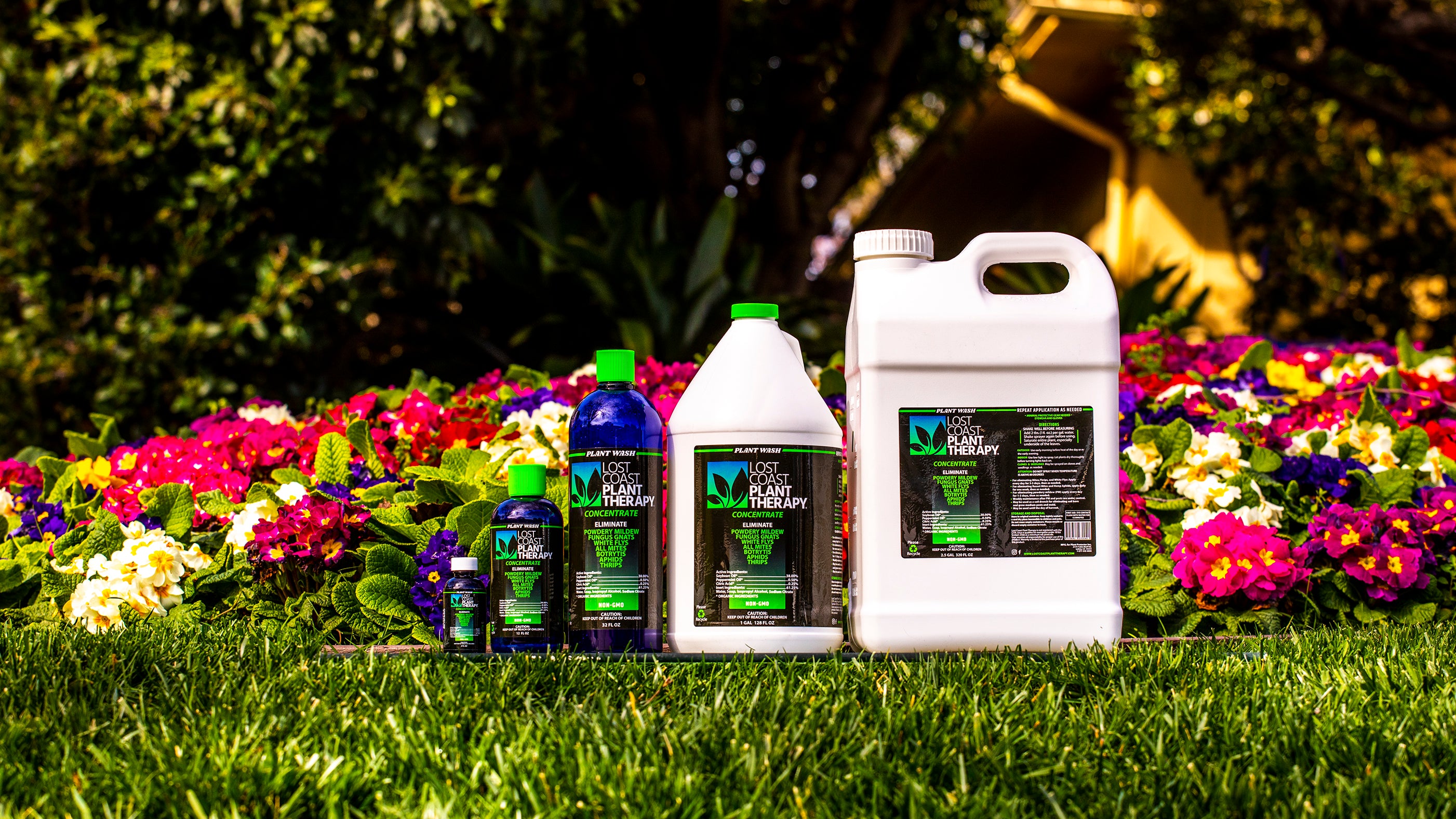
12 oz
Mixes with water to create 12 gallons of application spray.

Lost Coast Plant Therapy
Buy now
→
32 oz
Mixes with water to create 32 gallons of application spray.

Lost Coast Plant Therapy
Buy now
→
1 Gallon
Mixes with water to create 128 gallons of application spray.

Lost Coast Plant Therapy
Buy now
→
2.5 Gallon
Mixes with water to create 320 gallons of application spray.