01
Plants are close together
Leaves touch, benches repeat, and the next host may be inches away. That helps a local hot spot expand if the first infested plants are missed.

A greenhouse can turn one missed pest into several affected benches surprisingly fast. This guide shows you how to inspect by zone, read sticky cards, check incoming plants, trace hot spots, and build a repeatable response before a local problem becomes a greenhouse-wide problem.

The answer is a repeatable inspection system. Greenhouses protect crops from weather, but those same protected conditions can also give whiteflies, thrips, aphids, spider mites, fungus gnats, powdery mildew, Botrytis, and other problems a steady environment and a lot of nearby host plants.
A strong program does not treat the greenhouse like one uniform room. Doors, vents, propagation areas, dry corners, wet-media zones, perimeter benches, interior benches, and receiving areas can all behave differently. Once we know where a problem starts, we can inspect the right plant zone, confirm the pest or disease, and decide whether the next action is sanitation, isolation, irrigation correction, climate adjustment, biological control, a contact treatment, or a combination.
Inspecting is the control system that comes before the spray program. Sticky cards help us see movement. Plant inspection confirms what is actually feeding. Records show whether pressure is rising or falling. Treatment works best when it is tied to those observations rather than applied blindly to every bench.
Leaves touch, benches repeat, and the next host may be inches away. That helps a local hot spot expand if the first infested plants are missed.
Protected production can hold temperature, humidity, light, and moisture within ranges that also support pest reproduction or disease pressure.
Cuttings, plugs, liners, transplants, pots, and growing media can introduce pests into an otherwise clean house. Receiving is a pest-management zone.
A dry end bench can favor mites while a damp floor or wet-media area supports fungus gnats. A single greenhouse can contain several pest environments at once.

Adults can move between plants and are easy to pick up on yellow sticky cards, but the greenhouse diagnosis happens under the leaf. Check for adults and attached immature stages, then map which benches are producing the highest activity instead of assuming every captured whitefly came from the same place.

Thrips move through protected crops as adults while larvae feed on plants. Flowers, buds, tender leaves, and tight plant structures deserve close inspection. Silvering, scarring, streaking, distorted flowers, or tiny black specks can be more visible than the insect itself.

Winged aphids may appear on sticky cards, but most of the population will not. Open curled tips, inspect stems and leaf undersides, and look for sticky honeydew or cast skins. Aphids can multiply quickly on crops they favor, so a small colony deserves a location on the inspection map even if nearby plants still look clean.

Mites do not show up on sticky cards. Look for fine pale stippling that expands into bronzing, dull foliage, dusty undersides, and webbing in established infestations. Compare hot perimeter or vent-side plants with cooler interior plants; the greenhouse average can hide a mite-friendly microclimate.

Adult gnats are easy to trap, but larvae develop in moist organic media and wet areas where fungi and algae thrive. Check the media surface, under benches, floor drainage, algae, spilled mix, and irrigation patterns. Incoming plants can also bring fungus gnats in their growing media.

Scale insects spend most of their time attached directly to plant surfaces, so sticky cards are not the main scouting tool. Inspect stems, petioles, leaf veins, and protected junctions for stationary bumps or younger crawlers. Incoming and long-held plants deserve extra attention because a small resident population can be easy to overlook during a quick aisle check.

Example only: distribute cards by greenhouse zone, keep their positions repeatable, and add extra monitoring at doors, vents, receiving areas, susceptible crops, and fungus-gnat breeding zones.
Adult whiteflies, thrips, fungus gnats, shore flies, leafminers, and winged aphids. Counts can show when activity is rising and where movement is concentrated.
Spider mites, thrips larvae, immature whiteflies attached to leaves, wingless aphids, most scale stages, and many pests hidden inside plant structures.
Use canopy-level cards for thrips and whiteflies. Place some cards close to media or pot surfaces when fungus gnats are part of the question.
A card count only makes sense with its zone, crop, date, previous count, plant symptoms, and direct inspection. Trends are more useful than an isolated total.

Incoming plants deserve their own inspection routine before they are mixed into clean benches. A receiving zone does not need to be elaborate to be useful; the goal is to create time and physical separation so a new pest is easier to see, identify, and contain.
Hold incoming material apart from established production whenever your space allows.
Check leaf undersides, buds, stems, roots or media surfaces, pot rims, and visible residue.
Place sticky cards around new material and record what appears before plants move farther into the house.
If a pest is found, keep that material mapped and separated until the next step is clear.
Watch mite-sensitive crops, fast media dry-down, stressed leaves, and areas where warm air collects.
Check dense foliage, condensation, slow-drying leaves, powdery mildew, Botrytis-like symptoms, and poor circulation.
Look for fungus gnats, algae, runoff, standing moisture, organic debris, and chronically wet containers.
Track outside insect entry, changing temperatures, direct airflow, and the first rows exposed to incoming air.
Watch temperature, humidity, and airflow together. Keep fresh air moving through the growing space and run circulation fans consistently so humid conditions are less likely to encourage powdery mildew. Adjust watering based on the actual weather and how moist the growing media feels rather than following a fixed schedule.

Adults on sticky cards are only one part of the problem. Fungus gnat larvae develop in moist organic media and wet greenhouse areas where fungi and algae are available. High pressure often points us toward irrigation, drainage, algae, spilled media, or incoming pots in addition to the insect itself.
Which crops stay wet the longest? Which benches produce runoff? Which pots never seem to dry at the surface?
Standing water, algae, weeds, old media, and decaying debris can create breeding locations away from the crop canopy.
Infested growing media can introduce adults and larvae with newly received plants.
Adult monitoring, media management, and a root-zone strategy solve different parts of the life cycle.
Lost Coast Plant Therapy can be used as a soil drench for fungus gnats according to the current instructions, but drainage and moisture management remain part of long-term control. Treating adults without correcting a wet breeding zone leaves the greenhouse system unchanged.
Clear senescent leaves, fallen flowers, culls, and old crop material rather than letting it accumulate under benches.
Volunteer hosts can shelter aphids, whiteflies, thrips, mites, diseases, and moisture-loving pests around production.
Algae is an important clue that a surface stays wet, and those wet areas are especially relevant when fungus gnats or shore flies appear.
Fix chronic runoff and drainage areas instead of treating a wet-floor symptom as though it were only an insect problem.
Clean reusable materials between crops or problem zones so routine greenhouse work does not move plant material and debris from one problem area into another.
Overwintered or non-production plants can carry pests into a new crop. Include them in routine pest checks instead of treating them as background.
Lost Coast Plant Therapy is a minimum risk pesticide made with natural and organic ingredients that controls soft-bodied pests and powdery mildew on contact.
In Cornell greenhouse testing, the strongest treatment reported 95% +/- efficacy against western flower thrips and all soft-bodied insects and 96% +/- powdery mildew efficacy.

Record house, bay, bench, crop, symptoms, trap activity, and how far the issue extends beyond the first plant.
Identify the pest or disease and note the life stage. Do not let sticky-card identity stand in for plant inspection.
Isolation, sanitation, climate correction, media management, biological control, contact treatment, or a coordinated combination.
If Lost Coast Plant Therapy fits, train for full saturation of the exposed target and follow the current official instructions.
Return on schedule, compare trap counts and fresh plant symptoms, and expand or reduce the response based on what changed.
Commercial rule worth keeping: a treatment record without a follow-up observation tells you what was applied, not whether the greenhouse problem is improving.
A greenhouse program works best when diagnosis, zone mapping, coverage, recordkeeping, and follow-up stay connected. Once a supported target is confirmed, use the current Lost Coast Plant Therapy instructions and make the same application standard easy for every grower or employee to repeat.
The goal is not to treat every bench the same. The goal is to make sure the same evidence produces the same response, then return to the same zone and measure what changed.

When you confirm an applicable target such as whiteflies, thrips, aphids, spider mites, fungus gnats, powdery mildew, mold, or Botrytis, Lost Coast Plant Therapy provides contact control.
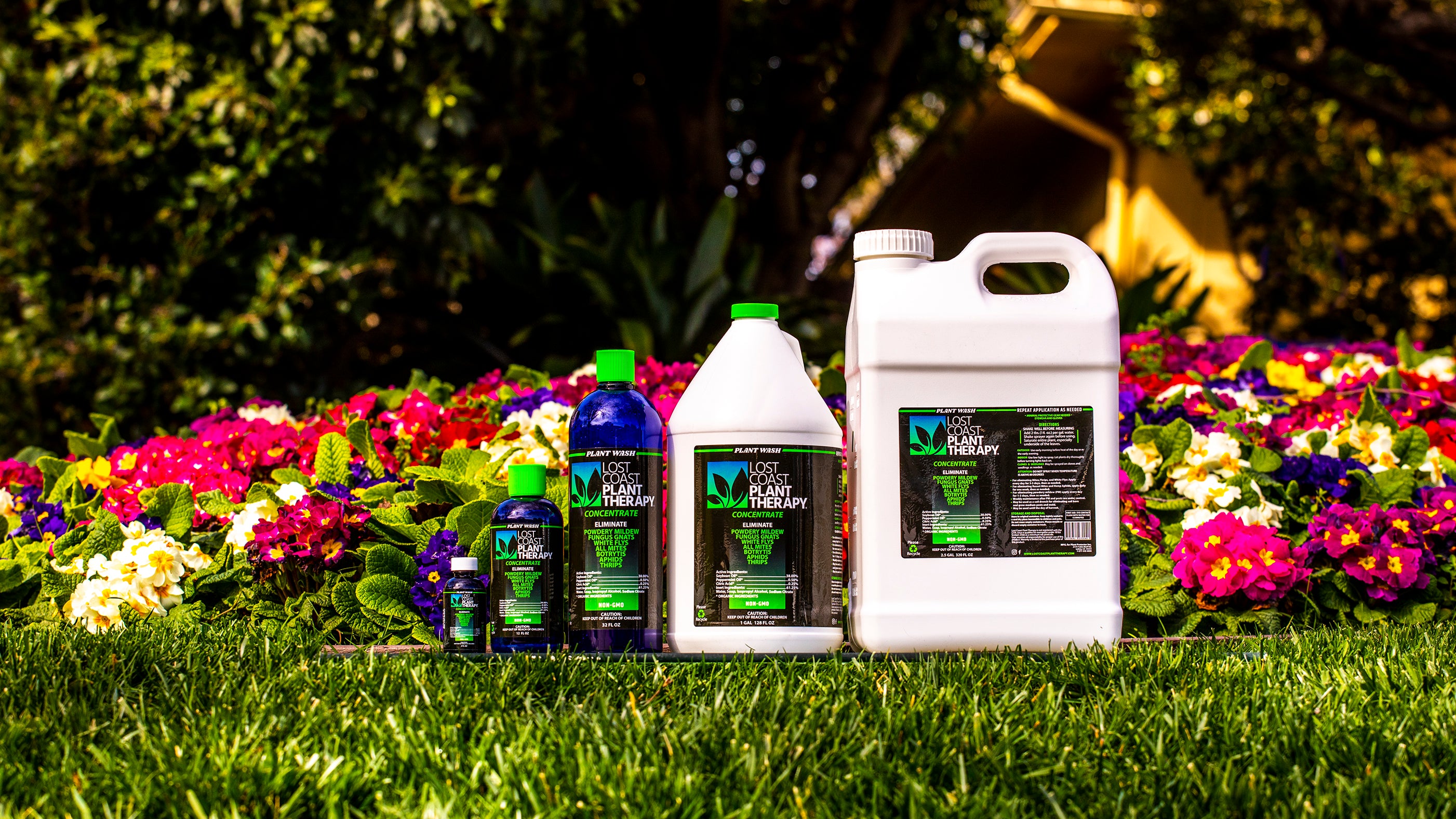
Growing at commercial scale? Turn your inspection records into a repeatable greenhouse program, then choose the product size and application approach that fits your facility. Lost Coast Plant Therapy offers farm and commercial sizes in addition to individual sizes.


Whiteflies, thrips, aphids, spider mites, fungus gnats, shore flies, mealybugs, scale insects, and other pests can all establish in protected crops. The strongest greenhouse diagnosis starts by separating flying adults, plant-resident pests, and media-level pests, then inspecting the plant zone each one actually uses.
Dense host plants, steady conditions, protected environments, and repeated crop movement shorten the distance between an infested plant and a new host. A missed receiving-area problem or localized hot spot can move into several benches before obvious damage appears.
Use a regular inspection schedule and increase the frequency in propagation, receiving, known hot spots, or when trap counts and fresh symptoms rise. Smaller houses may benefit from quick daily visual checks. The important part is consistency: revisit the same zones often enough to see change early.
Distribute cards throughout the house and add attention near doors, vents, incoming plants, and susceptible crops. Canopy-level cards are useful for thrips and whiteflies; lower cards near pot or media surfaces help monitor fungus gnat adults. Keep locations stable so trends can be compared.
Treat them primarily as monitoring tools. They catch flying or jumping adults but miss many non-flying life stages. A greenhouse can have spider mites, immature whiteflies, thrips larvae, or wingless aphids even when a sticky card looks quiet.
For thrips, inspect flowers, buds, tender growth, and leaves for silvering, scarring, black specks, and slender insects. For whiteflies, gently disturb plants and turn leaves over to look for adults and attached immature stages. Compare the plant findings with nearby sticky-card activity.
Humidity is most useful when read with temperature, airflow, leaf wetness, canopy density, and location. Still, humid pockets can keep foliage wet or slow drying and increase disease pressure. Ventilation, circulation, spacing, irrigation timing, and sanitation all help change that environment.
They develop in moist growing media and wet greenhouse areas rich in fungi, algae, and organic matter. Incoming plants can also bring infested media. A rise in adults should trigger a media, drainage, algae, and irrigation inspection rather than an adult-only response.
Yes, whenever the facility can create a practical receiving or holding area. Separation gives you time to inspect foliage and media, watch sticky cards, and identify a pest before new material is distributed across multiple crop zones.
Use written zone names, pest confirmation, life-stage notes, standard mixing and coverage procedures, application records, and scheduled follow-up. The protocol should tell the team what evidence triggers treatment and what evidence shows that treatment is working.

Adults, underside populations, honeydew, and contact coverage.

Hidden feeding, flower damage, silvering, and greenhouse pressure.

Tender growth, honeydew, colony detection, and root-aphid context.

Stippling, bronzing, webbing, and hot/dry greenhouse zones.

Larvae, moisture, greenhouse media, and soil-drench guidance.

Move from a greenhouse symptom to a pest- or disease-specific resource.

Mixes with water to create 12 gallons of application spray.

Mixes with water to create 32 gallons of application spray.

Mixes with water to create 128 gallons of application spray.

Mixes with water to create 320 gallons of application spray.
Your cart is currently empty.
Not sure where to start?