
Unfold curled leaves instead of inspecting only the outside surface. Aphids can sit deep in the newest growth where the leaf shape hides them.
Raspberry pest diagnosis guide
Raspberry Pests. Common bugs on raspberry plants & how to identify them
Common bugs on raspberry plants and how to identify what is affecting new canes, foliage, flowers, developing berries, ripe fruit, and the crown before deciding what to do next.

Start here
What pests attack raspberry plants?
Raspberry pest diagnosis gets much easier when we start with where the problem is showing up, because a bug on tender cane growth creates a very different clue from a pest feeding inside ripe fruit.
Aphids, spider mites, leafhoppers, thrips, spotted wing drosophila, Japanese beetles, leafrollers, root weevils, raspberry crown borers, raspberry horntails, and other pests can all show up in raspberry plantings. Some feed openly on leaves and shoots. Others hide in flowers, berries, or canes. That difference matters because the next inspection step and the right control strategy change with the pest.
Raspberries also grow into dense walls of foliage quickly. Once canes overlap, leaf undersides and interior shoots are easy to miss. A patch can have mites on one set of leaves, aphids on new growth, and a completely separate fruit problem at the same time, so we want to diagnose the location + symptom + pest rather than treating the whole patch as one problem.
Raspberry problem map
Where do you see the problem?
Choose the first place you noticed damage. The panel shows the pest categories that belong near the top of the list, what to inspect next, and whether Lost Coast Plant Therapy is relevant.
Raspberry pest clues side by side.
| What you see | Where it appears | Likely category | Best clue | Next direction | Lost Coast Plant Therapy fit |
|---|---|---|---|---|---|
| Sticky curled new growth | Shoot tips + undersides | Aphids | Clusters + honeydew + ants | Confirm live aphids and cover tender growth | Relevant |
| Fine stippling / bronzing | Leaves, especially undersides | Spider mites | Tiny moving dots + fine webbing | Inspect underside populations and repeat-check | Relevant |
| Silver scars / black specks | Flowers + leaves + young fruit | Thrips | Slender insects in protected tissue | Open flowers and inspect developing fruit | Relevant |
| Soft ripe berries / larvae | Ripening + ripe fruit | Spotted wing drosophila | Fruit softens around internal larvae | Harvest sanitation + spotted wing drosophila-specific program | Different path |
| Skeletonized / chewed leaves | Foliage + sometimes berries | Japanese beetles / chewing pests | Missing tissue + visible beetles or larvae | Chewing-pest identification and management | Different path |
| Wilted cane + tunneling | Shoot / cane / crown | Borer or cane pest | Entry hole, tunnel, frass or internal larva | Pruning + pest-specific guidance | Different path |
Aphids often show up where raspberry growth is softest.
Aphids are a common raspberry pest, especially around tender new growth. As they feed, they can weaken and distort the plant, and some aphids can also spread viruses, so it’s worth catching an infestation early.

Honeydew from sap-feeding aphids can make foliage shiny or tacky. Ant activity can draw your eye toward colonies that are otherwise hard to see.
Old curled leaves may remain misshapen after insects move on. Confirm fresh aphids or new feeding before deciding the infestation is still active.
A local aphid colony can build on one group of shoots before the entire patch looks affected. Compare multiple canes so you know whether the problem is isolated or spreading.
Stippling that turns bronze can point to spider mites.
Spider mite damage is often easier to spot than the mites themselves. Look for tiny pale dots across the leaves, a dull or bronze appearance as the problem gets worse, and fine webbing underneath the leaves or along the veins. Spider mites tend to become more common during hot, dry weather and in protected growing spaces like high tunnels.
Hot, dry conditions can be a useful clue, but they don’t confirm spider mites on their own. Check the affected leaves closely for mites, eggs, or webbing before deciding what you’re dealing with.
Undersides
Turn over leaves from both the outer canopy and dense interior. Mites and eggs can be concentrated below while the visible stippling is easiest to see from above.
Contact
Lost Coast Plant Therapy works on contact, so thorough coverage of leaf undersides matters when an active mite population has been confirmed.


Flowers + developing fruit
Thrips can hide where raspberry flowers and young berries are hardest to inspect.
Thrips are small enough to disappear between flower parts and protected folds. When they are involved, the clue is often scarring or damaged tissue rather than a large visible insect.
Open affected flower clusters
Do not inspect only the outside of the blossom. Look between petals and around the center for slender insects, larvae, black specks, or scraped-looking tissue.
Follow scars onto young fruit
Feeding around bloom or fruit set can leave dry, rough or silvered marks as the berry develops. Compare new scars with older weather or rubbing damage.
Separate thrips from mites
Thrips tend to leave irregular silver or bronze scarring and dark specks. Spider mites produce more even stippling and may create fine webbing.
Do not blame every poor berry on insects
Flower injury, uneven pollination, heat, rain, disease, and physical damage can all change berry shape. Live insects or a repeatable feeding pattern should support the diagnosis.
Other small raspberry pests can look similar at first.
Aphids, mites and thrips deserve the most space on this page because they create the clearest crop-specific patterns and fit Lost Coast Plant Therapy's supported soft-bodied-pest use. Still, not every tiny insect on raspberry foliage is the same pest, and not every tiny insect is harmful.
Use the quick comparison below when the pest is small, fast-moving or easy to misread.

🍃 Leafhoppers
Fast-moving foliage feeders
Leafhoppers can be an issue for raspberries. They can contribute to stippling, discoloration or curling, and adults often hop quickly when foliage is disturbed.

🪵 Scale crawlers
Small crawlers, then fixed bumps
Scale is listed among Rubus pests by UC IPM. The crawler stage is mobile and exposed, while older attached scales can look more like part of the cane or petiole.

🪰 Whiteflies
More likely in protected mixed crops
Whiteflies are not usually the first outdoor raspberry pest to assume, but nearby protected crops can bring them into the picture. Confirm adults and underside nymphs.

🐞 Beneficial insects
Not every tiny insect is the problem
Predators and parasitoids can be active in a healthy berry patch. If the insect does not match the damage pattern, identify it before assuming it belongs in a treatment plan.
Dense patch inspection
A thick raspberry patch has blind spots.
Once canes overlap, the outside of the row can look clean while pests build inside the canopy. Use the same route each time so the interior does not disappear from the inspection.
Start with fresh tips
Check several new shoots for aphids, distortion and fresh feeding before moving deeper into the patch.
Turn leaves over
Sample outer and interior leaves. Mites and aphids can be easy to miss from above.
Open flower clusters
Thrips and tiny insects can shelter where petals and fruiting structures overlap.
Separate green and ripe fruit
Scarring on developing fruit and softening ripe berries belong to different diagnostic branches.
Finish at the cane base
Check holes, frass, weak canes and crown symptoms before assuming wilt started in the leaves.

Rot is not automatically an insect
Botrytis and other fruit rots can soften berries without an insect being the original cause. Fuzzy growth, blossom infection and wet fruit need a disease branch.

Sun and weather leave marks
Heat, rain, wind, hail and rapid drying can scar or discolor fruit. Compare exposure pattern and recent weather before choosing a pest treatment.

Physical damage can start rot later
Rubbing, handling, birds or fruit touching supports can break tissue. Secondary decay can make the original cause harder to see.

Whole-cane decline needs a wider diagnosis
Cane blights, Phytophthora crown or root rot and other diseases can mimic pest stress. Follow symptoms into the cane, crown and root zone.
Fruit symptoms without insects
A damaged berry does not always mean a bug did it.
Ripe raspberries are soft, exposed fruit. Disease, sun, rain, birds, handling and physical rubbing can all change berry color or texture. If you see rot or collapse, inspect the berry itself, the flower history, nearby fruit and the rest of the cane before deciding whether insects belong in the diagnosis.
Applying Lost Coast Plant Therapy while raspberries are fruiting.
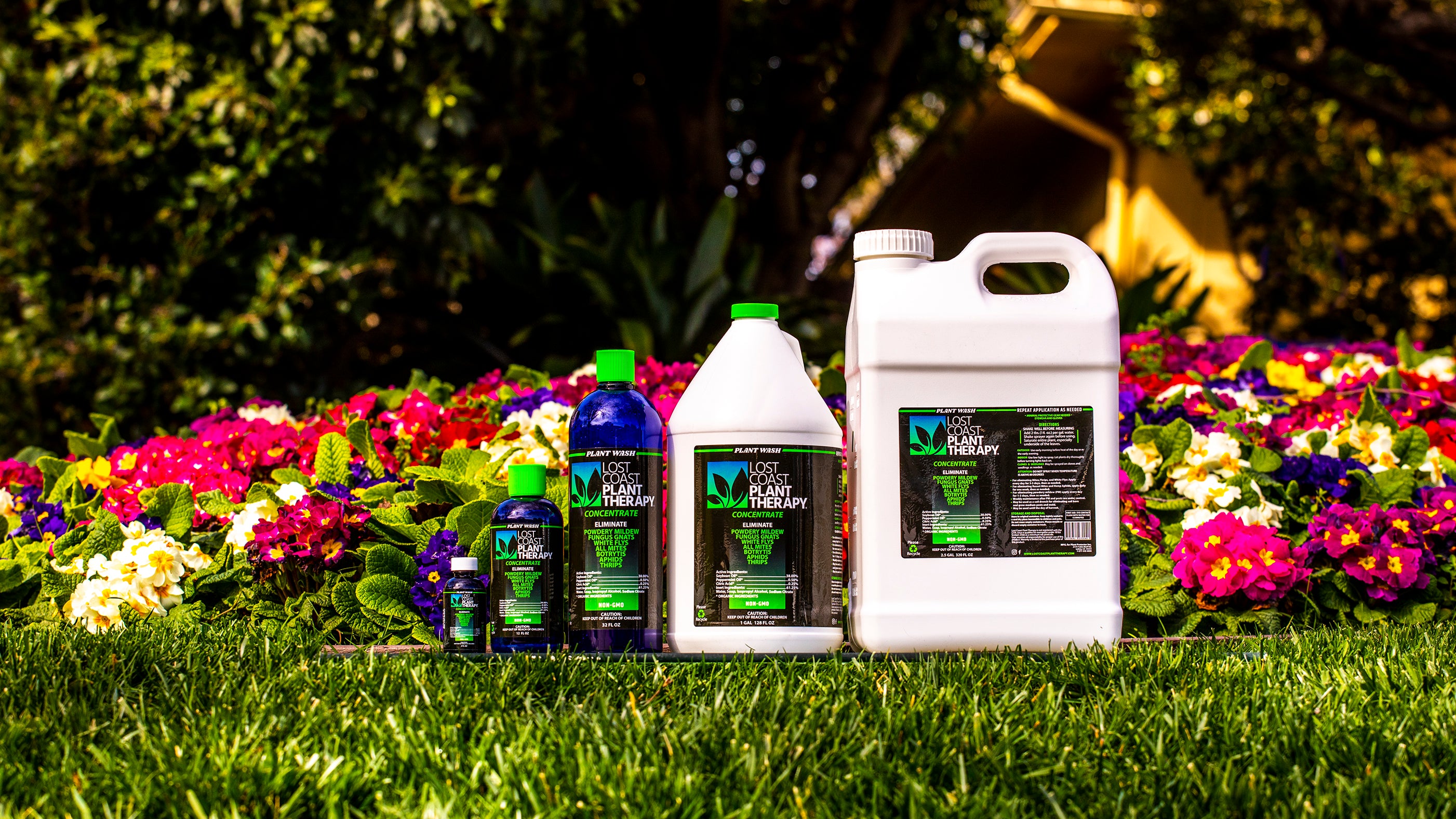
Lost Coast Plant Therapy can be used up to the day of harvest when applied as directed. If you notice a supported pest or plant-surface disease while your plants are flowering or fruiting, you can continue using it as needed while following the current application instructions.
During flowering and fruiting
Test on one plant first so you can observe how your raspberry variety responds. Lost Coast Plant Therapy works by contact, so the spray needs to reach the insect, mold, mildew or fungus. Full plant saturation improves coverage, especially through dense raspberry foliage and leaf undersides.

Where Lost Coast Plant Therapy fits.
Lost Coast Plant Therapy is a Natural Plant Protector, made with natural and organic ingredients that controls powdery mildew and soft bodied pests. On raspberries, the strongest fit is after you have confirmed a supported exposed soft-bodied target such as aphids, spider mites or thrips and can physically reach the pest with the spray.
The product is contact-based. Current instructions say it must contact the insect, mold, mildew or fungus to work, and that complete saturation is the most powerful way to use it. Dense raspberry foliage makes underside and interior-canopy coverage especially important.

Common questions
Questions raspberry growers ask.
These are the questions that usually come up once a gardener has found damage but has not yet identified the pest.
What bugs attack raspberry plants? +
Raspberries can be attacked by aphids, spider mites, leafhoppers, thrips, spotted wing drosophila, Japanese beetles, leafrollers, root weevils, raspberry crown borers, raspberry horntails and other pests. The most useful first step is to identify where the damage begins: tender growth, leaves, flowers, developing fruit, ripe fruit or the cane and crown area.
What causes sticky raspberry leaves? +
Sticky raspberry leaves usually point toward honeydew from sap-feeding insects, especially aphids. Check tender shoots, petioles and leaf undersides for clustered insects, cast skins and ants. Black sooty growth can develop on honeydew later, so the sticky residue may appear before the black coating.
Why are raspberry leaves stippled or bronzed? +
Fine pale stippling that progresses toward bronzing is a classic spider-mite clue. Inspect leaf undersides closely for tiny moving mites, eggs and fine webbing. Dry, hot conditions can increase mite pressure, especially in protected or high-tunnel production, but the visible feeding pattern and mites themselves are more useful than weather alone.
What pests hide under raspberry leaves? +
Spider mites, aphids, leafhoppers and other small pests can shelter or feed on raspberry leaf undersides. Turn over leaves from the outer canopy and the dense interior of the patch. Compare several leaves rather than relying on one damaged leaflet.
What is damaging raspberry flowers? +
Flower damage can come from thrips and other insects feeding in protected blossom tissue, but weather injury and disease can also damage flowers. Open several affected flower clusters and look for slender insects, black specks, feeding scars or distorted tissue before choosing a pest-control path.
What causes scarred or damaged raspberries? +
Scarred or damaged berries can come from flower-stage feeding, spotted wing drosophila, Japanese beetles, sap beetles, birds, physical rubbing, sun or weather injury, or fruit rot. Soft or collapsing ripe fruit deserves a different inspection from dry surface scarring on developing berries.
Can I treat raspberries while they are fruiting? +
Lost Coast Plant Therapy may be used until the day of harvest when used as directed. Follow the directions for use, test on one plant first, and make sure the product reaches the target because contact and thorough saturation are important to successful application.
Which raspberry pests can Lost Coast Plant Therapy control? +
Lost Coast Plant Therapy is a good fit when you’ve confirmed a supported soft-bodied pest such as aphids, spider mites, or thrips and can spray the pest directly. It isn’t the right solution for every raspberry problem. Cane borers, Japanese beetles, spotted wing drosophila larvae inside fruit, root weevils, and other types of fruit damage need a different approach.
Sources & further reading
Raspberry pest references
Independent university / IPM resources
Official Lost Coast Plant Therapy information
UC Statewide IPM:
Blackberry and Raspberry pest and disease overview, including aphids, leafhoppers, spider mites, thrips, cane pests, spotted wing drosophila and caneberry diseases.
→
UC Statewide IPM:
Caneberry pest-management guidelines and commercial monitoring context.
→
UC Statewide IPM:
Raspberry Horntail guidance for an important cane-boring differential.
→
University of Minnesota Extension:
Raspberry insect pests, including spotted wing drosophila, Japanese beetles, spider mites, leafhoppers and fruit-feeding insects.
→
University of Minnesota Extension:
Spotted Wing Drosophila biology and its preference for thin-skinned ripening fruit such as raspberries.
→
University of Minnesota Extension:
Raspberry diseases, including Botrytis fruit rot, cane blights, Phytophthora crown and root rot, and powdery mildew.
→
University of Minnesota Extension:
High-tunnel raspberry guidance noting increased spider-mite pressure in drier protected conditions.
→
Oregon State University Extension:
Raspberry insect problems including root weevils, raspberry crown borer, leafrollers, spider mites and aphids, plus root-rot context.
→
Oregon State University Extension:
Large Raspberry Aphid, cultivar resistance and the connection between aphid pressure and Rubus virus spread.
→
Oregon State University Extension:
Primocane raspberry production and heavy spider-mite pressure observed in high tunnels.
→
Lost Coast Plant Therapy:
Instructions for contact, saturation, repeat application, flowering-stage use, testing and day-of-harvest use.
→
Lost Coast Plant Therapy:
Cornell greenhouse trial results.
→
Lost Coast Plant Therapy:
Official product-use characteristics for food plants, harvest timing and contact control.
→
Ready to protect your raspberries?

Lost Coast Plant Therapy
Buy now
→
12 oz
12 oz of Concentrate makes 12 gallons of application spray.

Lost Coast Plant Therapy
Buy now
→
32 oz
32 oz of Concentrate makes 32 gallons of application spray.

Lost Coast Plant Therapy
Buy now
→
1 Gallon
1 gallon of Concentrate makes 128 gallons of application spray.

Lost Coast Plant Therapy
Buy now
→
2.5 Gallon
2.5 gallons of Concentrate make 320 gallons of application spray.