Distorted buds
Inspect tender growth for aphids, then open a damaged flower and check the interior for thrips.

Aphids crowding a rosebud, thrips hidden inside a bloom, mites feeding under a leaf, and roseslug larvae skeletonizing foliage all need different responses. This guide helps you find the pest first, then choose the control that fits what you found.

Aphids are easy to find when they crowd around tender shoots and unopened buds. Thrips can ruin flowers while staying hidden between petals. Spider mites feed on leaf undersides long before webbing becomes obvious. Scale insects may look like stationary bumps on canes. Rose sawfly larvae can skeletonize leaves so dramatically that a gardener who searches for “bugs on roses” may assume every pest belongs in the same spray category.
Cornell CALS greenhouse trials reported 95% +/- efficacy for Lost Coast Plant Therapy against western flower thrips and all soft-bodied insects.
Aphids, spider mites, thrips, and active scale infestations are strong product-fit branches because Lost Coast Plant Therapy controls supported pests on contact. Rose sawfly larvae, beetles, and other larger chewing pests belong in a different management branch.
| Pest | Where it hides | Visual clue | Damage | Can Lost Coast Plant Therapy help? | Deeper guide |
|---|---|---|---|---|---|
| Aphids | Bud exteriors, tender shoots, leaf undersides | Pear-shaped insects in visible colonies | Sticky honeydew, curling, distorted new growth | Yes | Aphids |
| Thrips | Inside buds, flowers and tight new growth | Slender insects, pale larvae, black specks | Silver or brown petal scarring, distorted blooms | Yes | Thrips |
| Spider mites | Leaf undersides, veins, sheltered canopy | Moving specks, fine webbing later | Pale stippling, bronzing, dry foliage | Yes | Spider Mites |
| Scale | Canes, stems, leaf veins | Stationary bumps plus mobile crawlers | Yellowing, dieback, honeydew with some species | Yes | Scale Insects |
| Roseslug sawfly | Leaf undersides | Slug-like green larvae | Windowpane feeding, skeletonized leaves, holes | Use another approach | Sawflies |
| Rose beetles | Flowers and leaf surfaces | Obvious hard-bodied beetles | Chewed petals, ragged holes, missing tissue | Use another approach | Rose Pests |
Inspect tender growth for aphids, then open a damaged flower and check the interior for thrips.
Turn over several leaves and use magnification. Spider mites often reveal themselves underneath.
Look above the sticky leaf for honeydew-producing aphids or soft scale. Ants often lead you toward the source.
Check leaf undersides for roseslug sawfly larvae. Young larvae scrape tissue before larger holes appear.
Investigate chewing insects rather than mites or aphids. Hard-bodied beetles and larvae need a different plan.

Rose aphids prefer soft, expanding tissue. Look around new shoots, the neck of a bud, young leaves, and flower stems. Colonies can be green, pink, brown, or dark, so the grouped feeding habit is often more useful than color. Honeydew can make leaves glossy, attract ants, and support sooty mold. Heavy feeding can leave new leaves twisted or buds weakened.

Thrips are easy to miss because the place they feed is also the place casual inspection skips. They work deep inside buds and between petals, scraping tender tissue before the flower fully opens. White and pale roses can show damage especially clearly as tan edges, brown streaks, distorted petals, or buds that open poorly. Tiny black specks near the scars add another clue.

Spider mites usually announce themselves through damage before the gardener sees the mite. Fine pale dots spread across the leaf surface while the mites feed underneath. With heavier pressure, foliage can bronze, dry, or drop and fine silk webbing may appear. Hot, dry weather favors rapid buildup, so check the undersides of several leaves instead of waiting for webs.

Scale can look more like a plant bump than an insect. Mature insects may stay fixed under waxy or shell-like coverings while the immature crawler stage moves over stems and foliage. Some soft scale species produce honeydew, while armored scale do not. Check canes, stem junctions, leaf veins, and pruning scars when roses show unexplained yellowing or cane decline.

Roseslug sawfly larvae look caterpillar-like but belong to a different insect group. Young larvae scrape the underside of a leaf, leaving translucent window-like patches. Older larvae may skeletonize the leaf or chew holes through it.

Hard-bodied beetles can chew petals, notch leaf edges, or remove larger areas of tissue. The exact pest varies by region, but the damage is fundamentally different from stippling, honeydew, or petal scarring caused by small sap feeders.
Independent greenhouse trials conducted by Cornell University’s College of Agriculture and Life Sciences compared Lost Coast Plant Therapy treatments with a water-only control. After five applications, the strongest treatment produced 95% +/- efficacy against total western flower thrips and all soft bodied insects.


Aphids sit where you can usually see them. They cluster around the outside of buds, young stems, and expanding leaves.

Thrips hide where you may not see them until you open the flower. They feed between petals and inside tight buds.

A hole in a leaf does not close when the beetle leaves. Thrips scarring stays on a petal after the insect moves. Mite stippling remains even after live mites are controlled. Before treating, confirm that the pest or fresh feeding is still present.
Check tender shoots and unopened buds for aphid colonies and distorted new leaves.
Inspect tight buds and the first opening blooms for thrips before petal scarring becomes obvious.
Turn over several leaves and use magnification for spider mites, especially inside dense or dusty plantings.
Increase scouting frequency until you know whether the active pest population is shrinking or spreading.
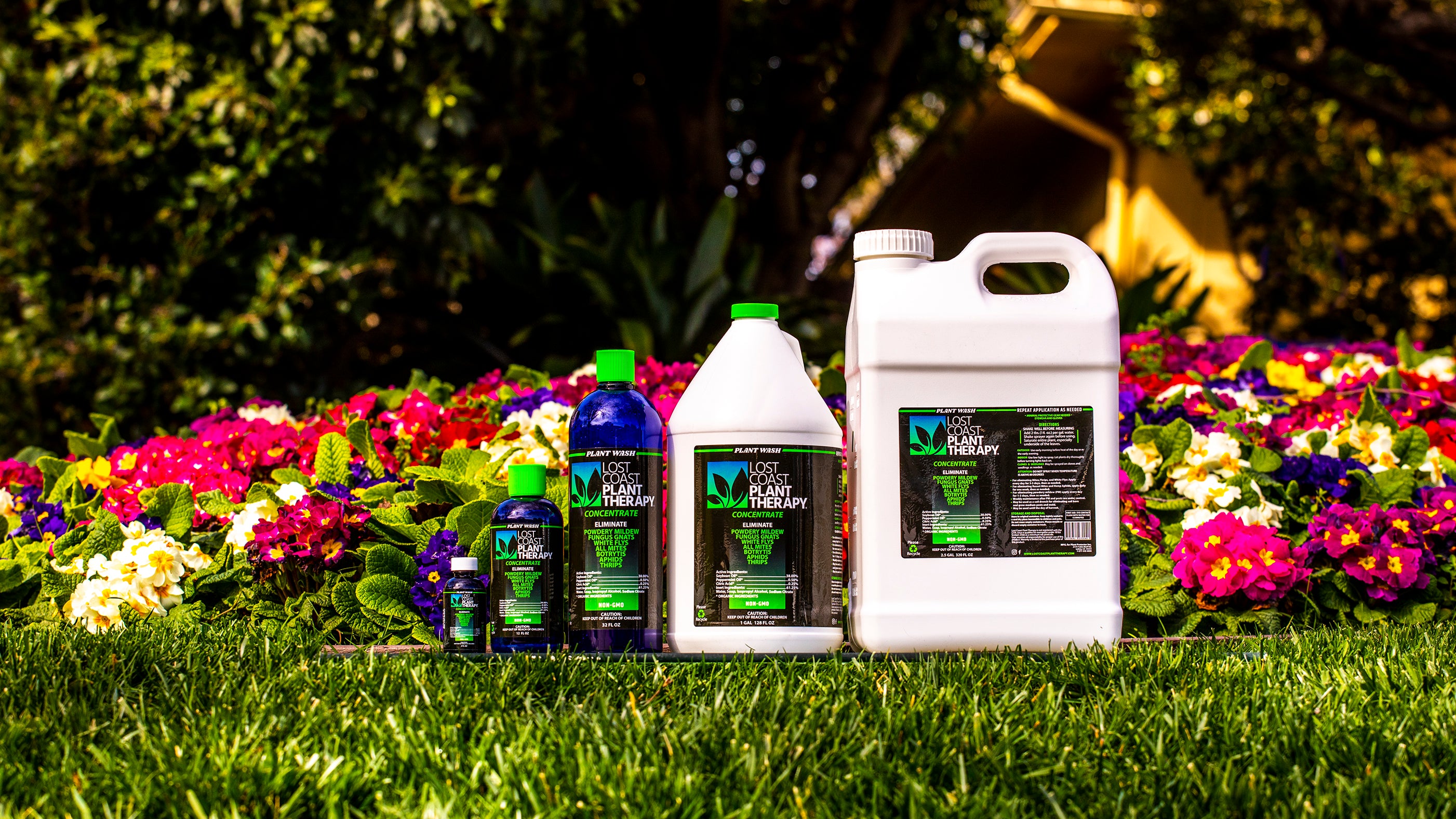
Lost Coast Plant Therapy is a 3-in-1 minimum risk pesticide that controls supported soft bodied pests on contact.
Aphids crowd around folds and new shoots. Thrips can sit deep inside a flower. Spider mites and eggs concentrate beneath leaves. Scale can sit along woody stems and cane crevices.
Thorough coverage with our product determines whether the spray reaches the pest you identified.
Add 1 to 3 fl oz of Concentrate per gallon of water, starting with the lowest amount, and repeat application for heavier infestations. Always follow the label instructions.

Coat colonies around buds, leaf undersides and curled new growth.

Reach flower interiors, buds, stems and sheltered tissue where they hide.

Saturate leaf undersides, veins and visible webbing where mites and eggs collect.

Cover stems, leaf surfaces and infested areas thoroughly, especially where crawlers are active.
Once you confirm a supported soft bodied rose pest, build the application around where that pest actually lives. Lost Coast Plant Therapy controls supported pests on contact, so complete saturation and repeat scouting matter more than spraying the easiest surfaces.


When the rose problem is an identified aphid, spider mite, thrips, scale, or another supported soft bodied pest, Lost Coast Plant Therapy is a strong plant-protection option. It controls pests on contact, so the spray must reach the pest, eggs, larvae, crawlers, or sheltered feeding area that you found during inspection.
Tiny bugs on roses are often aphids, thrips, spider mites, scale crawlers, or other small sap-feeding pests. Location helps narrow it down. Aphids cluster on tender shoots and buds, thrips hide inside flowers, spider mites concentrate on leaf undersides, and scale crawlers move along stems before settling. Start with where the pest or damage appears, then use magnification if the insects are too small to identify by eye.
Clusters around rosebuds and tender shoots are strongly associated with aphids. Rose aphids gather on soft new tissue where sap is easy to reach. Heavy colonies can leave sticky honeydew, attract ants, and distort expanding leaves or buds. Thrips can also damage buds, but they are usually hidden deeper inside the flower rather than forming obvious colonies on the outside.
Sticky rose leaves usually mean honeydew from a sap-feeding insect. Aphids are a common cause on roses, and some soft scale species can also produce honeydew. Look above the sticky leaf for colonies on buds, shoots, stems, or leaf undersides. Ant activity and black sooty mold are useful supporting clues because both often follow honeydew-producing pests.
Scarred, streaked, browned, or distorted rose petals often point to thrips, especially when the damage starts before the flower fully opens. Thrips hide deep inside buds and between petals, so the pest can be easy to miss. Open a damaged bloom and inspect the inner petals and flower center for slender insects, pale larvae, and tiny black specks.
Fine pale stippling on rose leaves is a classic spider mite clue. Mites feed on the undersides of leaves, so the upper surface may show tiny pale dots before you can see the pest. As populations build, leaves can bronze or dry and fine webbing may appear along veins, stems, or new growth. A white-paper tap test can help confirm moving mites.
Skeletonized rose leaves commonly point to roseslug sawfly larvae. Young larvae feed from the undersides of leaves and scrape away tissue, leaving thin window-like patches or a lacy skeletonized look. Older larvae can chew holes through the leaf. This is a chewing-pest pattern, so it belongs in a different control branch from aphids, mites, thrips, and scale.
Aphids are pear-shaped and often sit in visible groups on buds, tender shoots, and leaf undersides. Their feeding can create sticky honeydew and attract ants. Thrips are slender and much more likely to hide inside flowers or tight buds. Thrips leave silver, tan, or brown scarring on petals and may leave tiny black specks near the damaged tissue.
Spider mites usually feed and lay eggs on leaf undersides, especially along veins and in protected parts of the canopy. Early infestations can be easy to miss because the damage is visible from above before the mites are. Check several leaves from the middle and lower canopy with magnification and use a white sheet of paper beneath the leaf when tapping for moving specks.
Scale insects are one of the first groups to check when rose stems or canes are dotted with stationary bumps, shells, or waxy coverings. Adult scale may look fixed in place, while immature crawlers are mobile and much smaller. Some scale species produce honeydew and sooty mold. Also inspect cane crevices and pruning scars where small insects can shelter.
Lost Coast Plant Therapy is a minimum risk pesticide made with natural and organic ingredients that controls supported soft bodied pests on contact. On roses, the strongest fits include aphids, spider mites, thrips, and active scale infestations when the spray reaches the pest. Cornell CALS greenhouse trials reported 95% +/- efficacy against total western flower thrips and all soft bodied insects in the strongest treatment after five applications.

Mixes with water to create 12 gallons of application spray.

Mixes with water to create 32 gallons of application spray.

Mixes with water to create 128 gallons of application spray.

Mixes with water to create 320 gallons of application spray.
Your cart is currently empty.
Not sure where to start?