
When most people hear the words pest control, they picture large farms or commercial fields, but in reality this conversation starts much closer to home. It shows up in backyards, raised beds, patios, and houseplants. Over the years, we have watched concern grow among everyday gardeners who want to protect their home and garden without relying on harsh chemicals or products that feel risky to use around family, pets, or pollinators.
There has been a clear shift away from chemical pesticides and traditional pesticides that depend on toxic chemicals or synthetic pesticides. Many gardeners are realizing that the pesticides they use can also affect soil life, water, and even the air around their home or business. Products once considered normal are now known to be toxic to mammals, disruptive to beneficial insects, or persistent in the environment long after application. This growing awareness is what leads many people to look for environmentally responsible options that feel safer and more aligned with how they want to garden.
Eco-friendly pest control is the natural evolution of pest management as we learn more about how ecosystems function and how our choices shape them. This approach focuses on reducing pest populations while protecting the systems that keep plants healthy, creating home gardens that are easier to care for and more resilient over time.

Understanding the Garden Ecosystem
A garden is a living system made up of soil life, insects, moisture, air movement, and tiny microorganisms that most of us never see. Every one of these elements plays a role in how plants grow and how pests behave. When we talk about environmentally friendly pest control, this is where it begins. Looking at the garden as a whole helps explain why some pest control solutions work well over time, while others create ongoing problems.
A healthy garden is balanced, and that balance comes from relationships rather than force. Plants, insects, and soil organisms are constantly interacting, responding to changes in weather, water, and nutrients. When those relationships are supported, plants tend to be stronger and better able to handle pressure from pests without constant intervention.

Pests are part of this system, whether we like it or not. They exist naturally in outdoor spaces, and trying to completely wipe them out is neither realistic nor healthy for the garden. When pest control products promise total elimination, it usually means they are broad and aggressive, affecting far more than the intended target.
Eco-friendly pest control takes a different approach. It focuses on controlling unwanted pests efficiently while preserving the balance that keeps the rest of the garden functioning well. The goal is not zero insects, but a garden where pest pressure stays manageable and plants continue to thrive.

Why Pests Appear in Home Gardens
Pests rarely show up without a reason. In our experience, a pest problem is often a sign that something in the garden is out of balance. Stressed plants are easier targets because they are less able to defend themselves. Poor soil, uneven watering, overcrowding, or sudden environmental changes can all create conditions that invite pests in. These pressures weaken plants and make them more appealing to insects looking for an easy food source.

It is also important to understand the difference between a target pest and insects that are simply present. Not every bug needs to be controlled. Some insects are just passing through, while others help break down organic matter or support soil life.
When gardeners rush to spray without observing, they often miss this distinction. Over time, we have learned that pests usually point to underlying conditions rather than isolated failures. A sudden surge in aphids can signal excess nitrogen or tender new growth. Ant activity may point to moisture issues or nearby food sources. These clues are valuable if we take the time to notice them.
Treating every insect as a problem often leads to unnecessary control treatments and disrupts the garden ecosystem. Before reaching for pest control products, we always recommend slowing down and watching what is happening. Notice where pests are gathering, which plants are affected, and what the surrounding conditions look like.
See if you are accidentally inviting in garden pests here.

The Hidden Downsides of Traditional Pest Control
Traditional pest control sometimes relies on chemical pesticides and synthetic pesticides that are often marketed as strong, fast, and powerful. Many of these pesticides are broad-spectrum insecticides, meaning they are not selective. They do not just affect the pest you are trying to manage, but also many other insects that come into contact with them. In a home and garden setting, that can mean wiping out helpful insects right alongside the problem ones, even if that was never the intention.
One of the biggest concerns with traditional pest control is the risk tied to toxic chemicals. Some products are toxic to both pets and people, especially when used repeatedly or incorrectly. Others are harmful to beneficial insects that play an important role in keeping pest populations in check naturally.

Another issue is resistance. When the same chemical pesticides are used over and over, certain pests can adapt. Over time, these pests survive treatments that once worked, leading to the use of stronger doses or different toxic pesticides. This does not mean the products are more effective. It often means they are more aggressive, with more side effects and less long-term success. Stronger does not always mean better when it comes to pest control.
There is also the issue of environmental persistence. Many traditional pesticides linger in soil, wash into nearby water sources through runoff, or remain on plant surfaces longer than expected. This can lead to unintended exposure, even outside the area where the product was applied.
Understanding these downsides helps explain why so many gardeners are now looking for safer, more environmentally friendly pest control options.
See more on the types of pesticides here.

What Eco-Friendly Pest Control Really Means
Eco-friendly pest control is not about ignoring pests or hoping problems solve themselves. It is a thoughtful, practical approach to pest management that works with natural systems instead of trying to overpower them. Rather than reacting with force, it asks us to slow down, observe, and respond in ways that support the garden as a whole.
The focus is on effectively managing a target pest while keeping the rest of the garden functioning as it should. Some insect activity is normal and even helpful, and eco-friendly approaches accept that reality.

Environmentally safe pest control relies on lower-risk principles whenever possible. These approaches are designed to be safe to use around people, pets, and beneficial insects, and they break down naturally rather than lingering as harsh chemicals in soil or water. Eco-friendly pest control methods are meant to fit into real routines and work best when used consistently.

In practice, this approach blends observation, prevention, and selective action. Integrated pest management is best understood as a philosophy rather than a product list. It combines preventative care, regular monitoring, and targeted treatments only when needed, keeping pest populations manageable while protecting the systems that support plant health.
Read more on protecting your garden and the environment with natural and organic pest control here.

Common Garden Pests and How to Spot Them Early
Catching pest issues early is one of the most effective ways to reduce pest populations without relying on aggressive treatments. Early identification gives gardeners more control and more options.

Visible signs of pest presence usually show up before major damage occurs. Leaves may look chewed, curled, or spotted. Some plants develop sticky residue, discoloration, or slowed growth. These changes are often subtle at first, which is why regular observation matters. Aphids are a good example of a pest that can multiply quickly. A few aphids on new growth can turn into a large pest population in a short time if left unnoticed.
Local conditions also shape pest pressure. Different regions and seasons bring different challenges. What shows up in early spring may not be the same pest you see in midsummer. Weather patterns, temperature, and surrounding landscapes all influence which pests are active. Knowing what is common in your area helps you respond early instead of reacting after damage spreads.

Fungal Issues Often Mistaken for Pest Damage
Not all plant problems are caused by insects, and one of the most common mistakes we see is confusing disease symptoms with pest damage. Fungal issues such as powdery mildew or leaf spotting can look similar to insect activity at first glance. Discoloration, surface residue, or slowed growth may lead gardeners to assume pests are responsible when the real issue is environmental.
Sprays designed for insect control do not always address fungal problems. This is why it is important to pause and diagnose before choosing what to apply. Fungal issues are often tied to humidity, poor airflow, or moisture sitting on leaves for too long. These conditions create an environment where disease can spread even when pests are not present.
Some natural garden pest control products, like our Natural Plant Wash, also act as surface cleaners, helping wash away spores and residue from plant leaves.

Cornell University Trial Results
Independent greenhouse trials conducted in collaboration with Cornell University’s College of Agriculture and Life Sciences evaluated the curative performance of Lost Coast Plant Therapy under controlled conditions. Using repeat applications and thorough plant coverage, the trials showed that our product achieved 99 percent efficacy against powdery mildew and 97 percent efficacy against thrips across multiple crops. These results reinforce what experienced gardeners already know. Consistency and coverage are what make eco friendly solutions work.

Preventative Care Is The Foundation of Healthy Gardens
Prevention is the most effective long-term pest management strategy we know. Healthy gardens naturally experience fewer pest problems because strong plants are more resilient. When plants are growing well, pests have a harder time gaining a foothold. This is where eco-friendly pest control truly begins.

Healthy soil supports steady growth and strong roots. Proper spacing improves airflow and reduces excess moisture that attracts pests and disease. Consistent watering helps plants avoid stress that makes them vulnerable. These basics may seem simple, but together they create conditions that discourage pests from settling in.

Weekly preventative applications of Lost Coast Plant Therapy can also help remove soft-bodied pests or disease pressure that may be present but not yet visible. By keeping plant surfaces clean, these treatments support early control without waiting for damage to appear.
When prevention is part of routine care, pest control becomes less disruptive and supports a healthier garden that is easier to manage and more enjoyable to grow.

Eco-Friendly Pest Control Solutions Support Pollinators
One of the clearest benefits of natural and organic garden pest control solutions is how they support pollinators and other beneficial insects that keep gardens productive. Traditional pesticides often disrupt these insects because they are designed to act broadly. When a spray does not distinguish between a target pest and a helpful insect, bees and ladybugs and praying mantises can be affected alongside the pest.
Over time, this weakens pollinator populations and creates gaps in the natural balance that gardens rely on. We have seen gardens lose resilience after repeated use of traditional pest control simply because the insects that once helped manage pests were no longer there.

By using environmentally safe practices and products like Lost Coast Plant Therapy, gardeners can reduce pest populations without interfering with pollination. This matters because pollinators are directly tied to plant health, flowering, and food production. When they thrive, gardens become more self-supporting and less dependent on constant intervention.
See how to attract bees to your garden here.

Understanding Minimum Risk Pesticides
Minimum risk pesticides are regulated under a specific category known as FIFRA 25(b), which includes pesticide ingredients considered minimum risk by the Environmental Protection Agency. These products are made from ingredients with a long history of safe use and do not require the same level of regulatory oversight as traditional pesticides. Lost Coast Plant Therapy falls into this category.
Minimum risk pesticides work differently from conventional products. Instead of relying on residual toxicity that stays active for long periods, they control pests through direct contact. They work at the plant surface level, addressing insects and residues present at the time of application. Because there is no lingering toxic layer, they do not continue affecting insects days or weeks later. This is why they are considered environmentally safe when used as directed.

How to Protect Your Home Garden Naturally with Lost Coast Plant Therapy
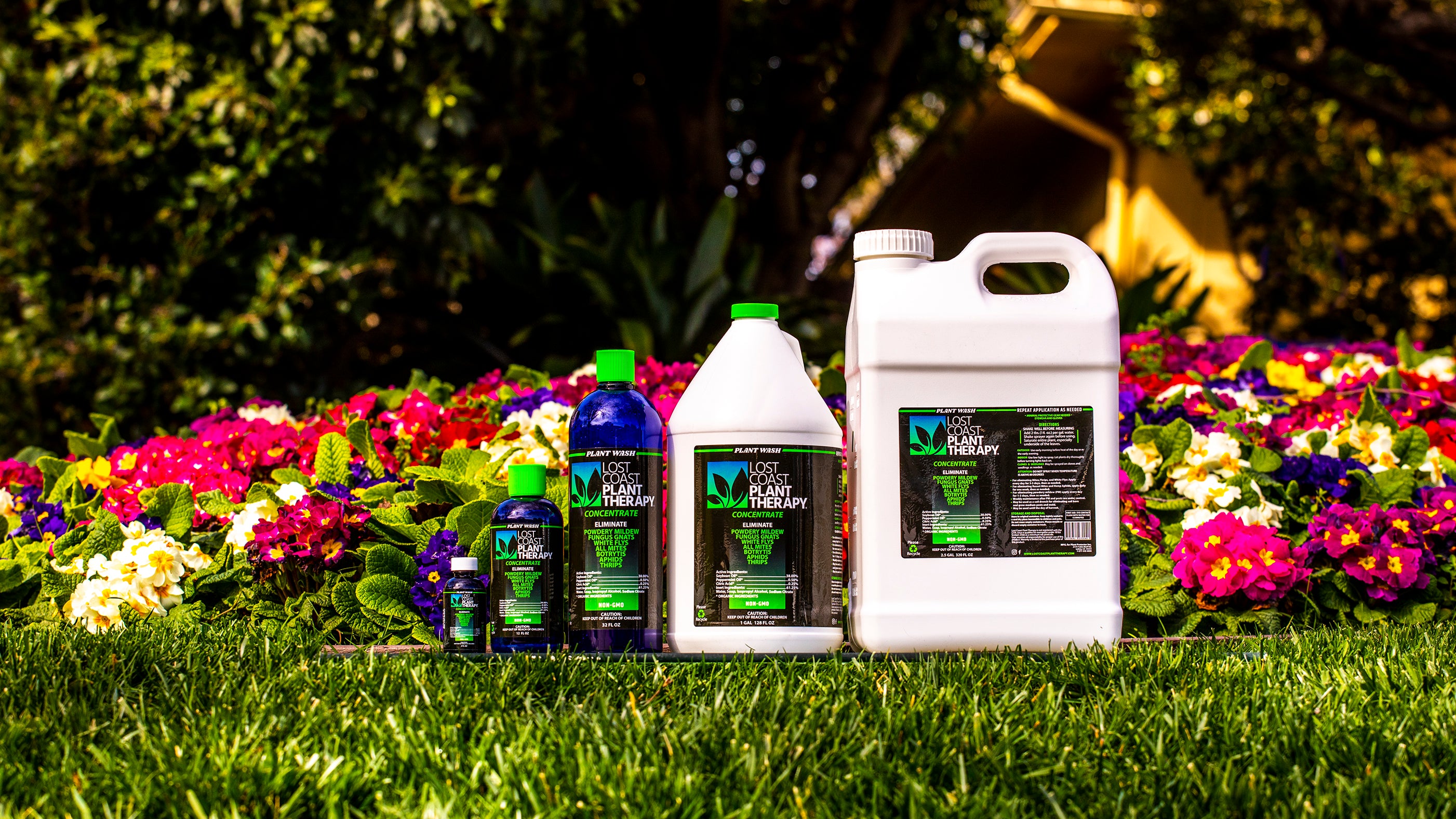
Lost Coast Plant Therapy is an ally for your garden. It is not a shortcut or a replacement for good gardening practices. Instead, it works alongside them. Our product is made with natural and organic ingredients, designed to support gardeners who want safe pest control options that fit into everyday routines.
We are often asked about the difference between a concentrate and a ready-to-use spray. A concentrate gives gardeners flexibility. You mix only what you need, which reduces waste and allows you to adjust based on the size of your garden. This approach also supports regular use without relying on single-use packaging, making it easier to stay consistent without overapplying.
At the surface level, our Natural Plant Wash helps remove pests, residues, and buildup from leaves and stems. This keeps plants cleaner and reduces the conditions that allow pest populations to grow.

When and How to Apply Lost Coast Plant Therapy
We recommend applying treatments in the early morning or evening, when temperatures are cooler and direct sunlight is lower. Heat and sun can cause sprays to dry too quickly, reducing coverage and effectiveness while increasing the risk of plant stress.
Pest control treatment frequency with eco-friendly products is different from chemical approaches. Lost Coast Plant Therapy works by contacting pests present on the plant at the time of application. Instead of relying on long-lasting residues, treatments are applied as needed based on observation. This allows gardeners to target pests without stressing plants or exposing the environment to unnecessary chemicals.

Conclusion
Pest issues are a normal part of gardening, and experiencing them does not mean you are doing something wrong. Even the most experienced gardeners encounter pests season after season. What changes over time is how we respond. With experience comes a better understanding of when to act, how to act, and when to let the garden do some of the work on its own.
Eco-friendly pest control is really about paying attention and making choices that feel right for your garden and the space around it. When we focus on prevention, regular observation, and steady care, pest problems become easier to manage and far less overwhelming.
Instead of reaching for harsh chemicals, gardeners can rely on natural pest control solutions like Lost Coast Plant Therapy, our minimum risk pesticide made with natural and organic ingredients, to help control pests while still protecting beneficial insects, soil life, and the environment. This approach supports healthier gardens over time and makes pest control feel like a natural part of gardening rather than a constant battle.

Additional Resources
Home Plant Pest Management – UT Extension Resources – University of Tennessee
Integrated Pest Management (IPM) – Gardening Solutions – University of Florida IFAS Extension
Don’t Panic: Manage Garden Pests with Smart, Safe Strategies – Oregon State
Preventing Pests in Your Yard and Garden – University of Minnesota Extension
Integrated Pest Management (IPM) for Home Gardeners – New Mexico State University Extension