
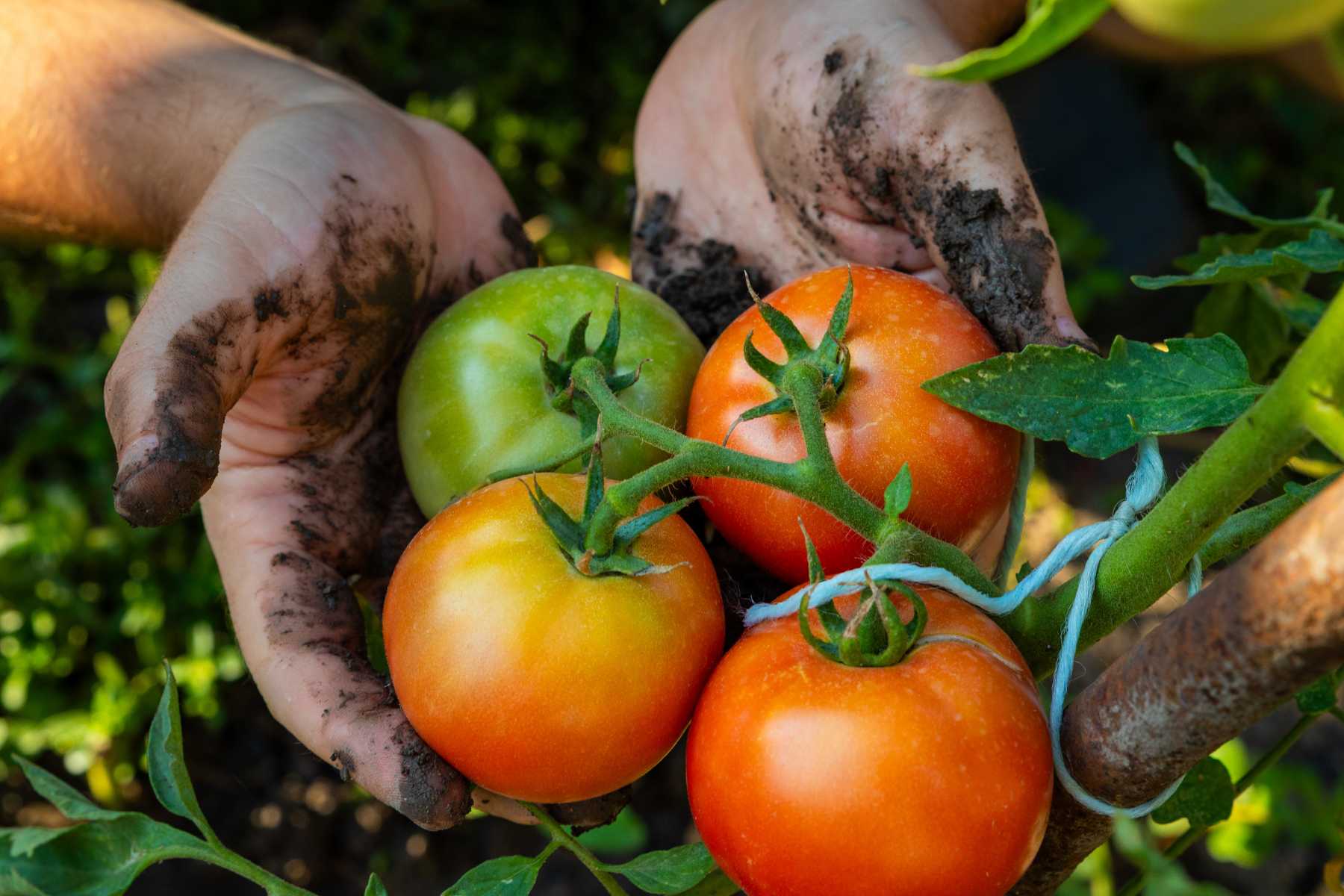
There’s a moment in the garden a lot of us know well. You grow something that looks absolutely beautiful. The color is right, the shape is right, and after waiting all season, it feels like it should be perfect. Then you taste it, and it falls flat.
It is missing the richness, depth, and flavor you expected after all that time and care. That is where heirloom seeds really start to make sense.
We stop focusing only on whether something grew well and start paying attention to how it actually tastes, how it holds up, and whether it feels worth the effort.
Once you start growing heirloom seeds, the difference becomes hard to ignore. The flavor is fuller, the plants often feel more resilient, and over time, the whole experience of gardening starts to change. You begin noticing which plants thrive in your space, saving seeds from the ones that perform best, and building a garden that feels more connected, more personal, and genuinely more rewarding.

What Are Heirloom Seeds?
Heirloom seeds are open-pollinated seed varieties that have been passed down from generation to generation, typically for at least 50 years and in many cases for hundreds of years or more. They are varieties that gardeners, farmers, and homesteaders grew, selected, saved, and shared because they consistently produced something worth keeping. They are valued for their flavor, resilience, genetic diversity, and the ability to save and replant seeds year after year.

Where Heirloom Varieties Come From
Most heirloom varieties were developed through generations of careful observation. A farmer would grow a field of tomatoes, notice that one plant produced fruit with exceptional flavor or held up particularly well through a dry summer, and save seeds from that plant to grow the following year. Over many seasons of this kind of selection, a variety would become stable and reliable, true to type year after year.
This is why heirloom varieties often have such strong regional character. A tomato variety developed in a hot, dry climate developed drought tolerance because generations of farmers in that climate selected for plants that performed well under those conditions. The genetics of an heirloom variety are shaped by the place and the people who grew it.

What Open-Pollinated Means
Heirloom seeds are always open-pollinated, which means the plants are pollinated naturally by wind, insects, or other natural processes, rather than through controlled crossing managed by breeders. Open-pollinated varieties produce seeds that grow into plants genetically similar to the parent plant. When you save seeds from an open-pollinated heirloom tomato and plant them the following year, you get the same tomato.
This is the foundation of seed saving, and it is what makes heirloom seeds so valuable for gardeners who want to be self-sufficient, reduce their seed costs over time, or simply maintain a connection to the varieties they love.

Are Heirloom Seeds Better Than Hybrid Seeds?
Heirloom seeds are often preferred by home gardeners because they offer better flavor, the ability to save seeds, and greater adaptability to local growing conditions. Hybrid seeds can provide uniformity and specific traits, but they do not reproduce true to type and must be repurchased each season.
What Are Hybrid Seeds?
Hybrid seeds are created through controlled cross-pollination between two distinct parent varieties. Plant breeders select parent plants with specific traits and cross-pollinate them deliberately to produce offspring, labeled as F1 hybrids, that combine characteristics from both parents. The result is often a plant with predictable, specific traits, uniformity in size and shape, disease resistance bred for commercial production, or fruit that ships and stores well.
Hybrid seeds are designed for predictability. Heirloom seeds are designed for adaptability. That single distinction explains most of the differences you will notice in the garden.

Why Hybrid Seeds Were Developed
Most hybrid seed development in the twentieth century was driven by the needs of commercial agriculture, not home gardeners. Commercial farms needed crops that ripened all at once for mechanical harvest, produce that was uniform enough to meet supermarket standards, and plants that could be grown in large monocultures with predictable inputs. Hybrid breeding delivered on those requirements effectively.
The problem is that the traits most useful for commercial production, uniformity, shelf life, visual appeal, are not the same traits most useful for a home garden or small farm. A tomato bred to survive weeks in a shipping container does not need to taste particularly good.

What You Give Up With Hybrid Seeds
Here is where things get interesting. Beyond flavor, hybrid seeds come with a practical limitation that every gardener should know before they start growing... you cannot save seeds from them reliably. The seeds inside a hybrid fruit will not grow true to type. They may revert toward one of the parent varieties, or produce something unpredictable entirely.
This means that if you grow hybrid varieties, you are buying new seeds every single season, a dependency that adds cost over time and disconnects you from the natural cycle of growing, harvesting, and replanting. For gardeners who want to build toward greater self-sufficiency, that dependency matters a great deal.

Are Heirloom Seeds GMO or Non-GMO?
Heirloom seeds are always non-GMO. They are naturally open-pollinated varieties that have been developed through traditional seed saving and selection over generations, not through laboratory genetic engineering. If non-GMO status is important to you, heirloom varieties can be your best choice.
But an important distinction that often gets blurred is hybrid seeds are also non-GMO. Hybridization is a plant breeding technique that involves controlled cross-pollination between two parent varieties. It happens through natural reproductive processes, just guided by breeders rather than left entirely to nature. It is not the same as genetic modification, which involves laboratory techniques to insert, remove, or alter genetic material at a molecular level.

So the real breakdown looks like this. Heirloom seeds are open-pollinated, non-GMO. Hybrid seeds are cross-pollinated, non-GMO, but do not reproduce reliably. GMO seeds involve laboratory-level genetic engineering that goes well beyond what either traditional breeding or hybridization involves.
Many gardeners prefer heirloom and open-pollinated non-GMO seeds for reasons that go beyond the GMO question itself. Transparency matters. When you grow an heirloom variety that has been around for a hundred years, you know exactly what you are growing and where it came from. You understand its history, its strengths, and what it needs to thrive. That clarity is genuinely valuable, both for the gardener and for the broader ecosystem the garden is part of.
Learn more about non-GMO here.

Key Differences Between Heirloom and Hybrid Seeds
Flavor, Vigor, and Resilience
This is where the difference shows up most clearly. Heirloom varieties have been selected over generations specifically because they produced something worth eating and flavor was the primary criterion. Plants that tasted good got their seeds saved. The result is a selection history built entirely around quality rather than commercial convenience.
Grow a commercial hybrid tomato and an heirloom variety side by side, and by the time harvest arrives, the contrast in flavor is usually striking. The heirloom tomato has depth, sweetness, and complexity. The hybrid may look more uniform, but it tastes like the supermarket produce that sent you looking for something better in the first place.

Disease Resistance and Pest Pressure
One of the most consistent observations from experienced growers who have shifted toward heirloom varieties is how much less time they spend battling pest and disease problems. Heirloom varieties have developed natural resilience over centuries of selection under real growing conditions. Plants that survived drought, pest pressure, disease, and environmental stress passed those survival traits to their offspring.
They are not invincible, and every garden has pest pressure, but starting with seed that carries multi-generational resilience gives your plants a good head start.

Uniformity vs Adaptability
Heirloom varieties show more natural variation than hybrids. Some plants in a planting will be stronger than others. Some fruit will differ slightly in size or shape. Within that natural diversity lies the adaptability to local conditions that allows heirloom plants to respond to environmental stress, unusual weather, and specific soil conditions in ways that uniform hybrid populations simply cannot.

Can You Save Seeds From Each Type?
Seed saving is one of the most rewarding practices in gardening, and heirloom seeds are built for it. Because heirloom varieties are open-pollinated, their seeds grow true to type. The plant you grow from a saved seed will be essentially the same variety as the plant you saved it from.
The approach that experienced seed savers use is beautifully simple, just pick the seeds from the strongest plants, the most flavorful fruit, the most vigorous growers. Then grow more of that. You are doing more of what worked best, which is the same process that created heirloom varieties in the first place. Every gardener who saves seeds is participating in that long tradition of selection and stewardship.
Over time, saving seeds from your best performers allows you to develop a strain that is increasingly well-suited to your specific growing conditions. Your heirloom tomatoes, saved from the plants that did best in your particular climate and soil, will gradually become better adapted to your garden than anything you could buy from a catalog.

How to Collect, Dry, and Store Heirloom Seeds
The practical side of seed saving is more accessible than most people expect. For tomatoes, scoop the seeds and gel into a jar of water and allow them to ferment for two to three days. This breaks down the germination-inhibiting gel coating. Rinse the seeds, spread them on a paper plate or screen, and allow them to dry completely over one to two weeks depending on humidity. Store in an airtight container in a cool, dark location.
For flower seeds, allow seed heads to fully dry on the plant before collecting. Most flower seeds can be collected by shaking dried seed heads into a paper bag or cutting and hanging seed heads upside down over a collection surface.

One thing experienced growers emphasize is to test viability before the planting season by sprouting a few seeds on a damp paper towel. Seeds that have been stored for a few years may lose their vigor if conditions were not ideal. If they sprout, you are good to go.
The Seed Savers Exchange, based in Decorah, Iowa, is one of the most important resources for gardeners interested in heirloom seeds and preservation. They maintain a collection of thousands of heirloom varieties and connect gardeners who are passionate about preserving seed diversity. Their catalog is worth exploring for anyone building a collection of open-pollinated garden seeds.

Why Heirloom Seeds Matter for Soil Health and Biodiversity
The case for heirloom seeds goes well beyond individual garden results. It connects to the health of the broader food system and the agricultural heritage that sustains it.
When large-scale commercial agriculture shifted toward a small number of high-yielding hybrid varieties in the twentieth century, thousands of regional heirloom varieties disappeared from cultivation. Some estimates suggest that over ninety percent of the vegetable varieties that existed at the turn of the twentieth century are now extinct or critically rare. That loss of genetic diversity represents a profound reduction in the resilience of our food system.
Genetic diversity is what allows plant populations to adapt to changing conditions. A food system dependent on a small number of genetically uniform varieties is fragile in the face of new diseases, climate shifts, and environmental stress.

Heirloom Seeds and Regenerative Gardening
Heirloom seeds and regenerative gardening are deeply aligned. Both are built around the idea that working with natural systems produces better long-term results than trying to override them. Heirloom varieties developed their resilience through interaction with real growing environments, real soil biology, and real pest pressure. They are already adapted to thriving in conditions that support biodiversity and healthy soil.
Growing heirloom seeds is one of the most direct ways a home gardener can contribute to preserving agricultural heritage and supporting a more diverse, resilient food system.

Heirloom Vegetables, Flowers, and Herbs Worth Growing
The range of heirloom varieties available to gardeners today is extraordinary. Heirloom tomatoes alone include hundreds of distinct varieties in colors ranging from deep purple to bright yellow to striped green. Heirloom flower seeds include snapdragons, zinnias, marigolds, and countless others that have been grown and loved for generations.
Crops that particularly reward the heirloom approach include tomatoes for flavor, cantaloupe for sweetness, basil for aromatic complexity, and radishes for how easily they grow in early spring beds. For flowers, heirloom snapdragons are a favorite among experienced growers. As long as they are happy where they are planted, they will last for years and re-seed without any help at all. That kind of naturalized abundance is one of the quiet joys of working with open-pollinated varieties.

How to Get Started With Heirloom Seeds
Starting with heirloom seeds does not require a complete overhaul of how you garden. The simplest approach is to swap out one or two of your usual varieties for heirloom equivalents this season and compare the results directly. Plant them side by side with whatever you usually grow and pay attention to what you notice. The differences in vigor, flavor, and resilience tend to speak for themselves.

Keeping Heirloom Plants Healthy Through the Season
Even the most resilient plants still face pressure during the season. Strong genetics give you an advantage, but they do not make your garden immune.
Heirloom varieties are genuinely more resilient than most hybrids, and experienced growers consistently find they need less intervention for pest and disease problems. But certain plants, regardless of how robust their genetics are, benefit from consistent attention during specific times of the year.
Roses are a good example. Experienced gardeners who grow both heirloom and hybrid roses note that even their sturdier heirloom varieties benefit from a regular preventive spray schedule in spring, when pest activity picks up and powdery mildew pressure builds. Mid-spring is when a lot of gardeners should really be paying close attention, the weather is warmer, everything is hatching. It is good to get on a regular spray schedule to prevent a damage from happening.

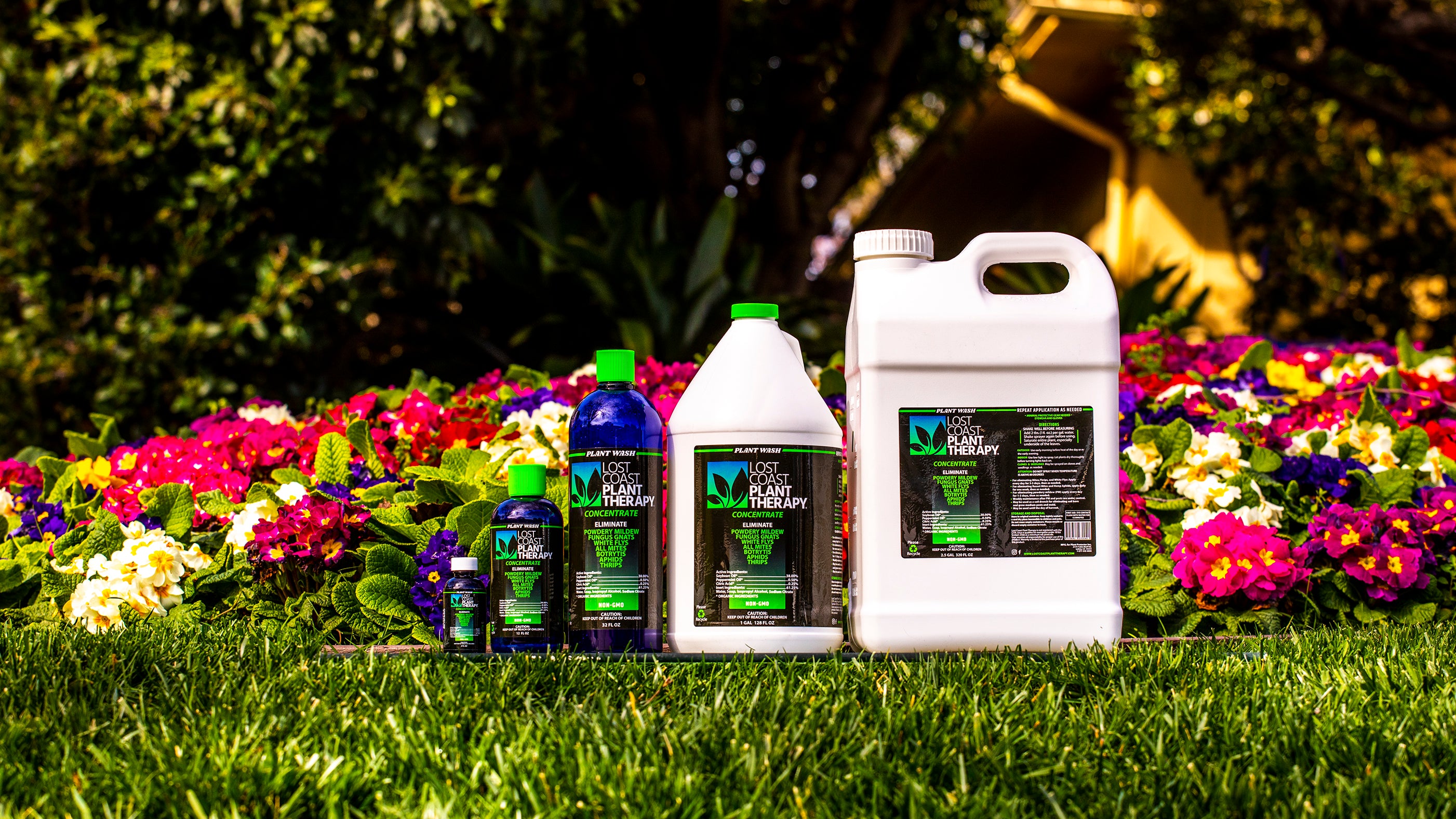
Lost Coast Plant Therapy is a 3-in-1 insecticide, miticide, and fungicide. It helps control pests and common plant diseases like powdery mildew through direct contact on plant surfaces, while supporting a balanced garden environment.
It is a FIFRA 25(b) minimum risk pesticide made with natural and organic ingredients. It leaves no synthetic residues in the soil, does not disrupt beneficial insects when used as directed, and carries a zero-hour re-entry interval so you can continue working in your garden right after application. For growers who have invested in heirloom varieties and healthy, biologically active soil, having a treatment option that is compatible with that system is important. Lost Coast Plant Therapy is approved for certified organic production and for use on Demeter Biodynamic Certified farms.
The combination that works best for most growers is consistent observation, attention to soil health, choosing varieties that suit your environment, and reaching for Lost Coast Plant Therapy when pest or disease pressure appears. It is a simple, sustainable approach that keeps your garden productive without creating the kind of overwhelming workload that sends gardeners back to square one every spring.

Conclusion
Choosing heirloom seeds is about growing with more attention, more connection, and more trust in the natural rhythm of the garden.
Hybrid seeds have their place, but heirloom varieties offer something that feels harder to replace. They carry history, flavor, resilience, and the possibility of saving something good for next season. Over time, that changes the way you garden. You start to notice more, taste more, and understand your growing space in a deeper way.

Frequently Asked Questions About Heirloom Seeds
What is the difference between heirloom and hybrid seeds?
Heirloom seeds are open-pollinated varieties that grow true to type and can be saved reliably. Hybrid seeds are produced by controlled crossing of two parent varieties and do not produce true-to-type plants when their seeds are saved. Heirloom varieties tend to have stronger flavor, greater adaptability, and natural resilience developed over generations. Hybrid varieties are bred for uniformity and commercial production traits.
Are heirloom seeds GMO?
No. Heirloom seeds are always non-GMO. They are naturally open-pollinated varieties developed through traditional seed saving and selection, not laboratory genetic engineering. It is also worth knowing that hybrid seeds are non-GMO as well. Hybridization involves controlled cross-pollination through natural reproductive processes, which is different from genetic modification at the molecular level.

Can you save seeds from hybrid plants?
You can collect seeds from hybrid plants, but the offspring of a hybrid plant will show unpredictable traits from the parent varieties. For reliable seed saving, heirloom and open-pollinated varieties are the right choice.
How do you save seeds from heirloom vegetables?
For most vegetables, allow a few of your best plants to fully mature past eating stage, collect the ripe seeds, dry them thoroughly, and store in an airtight container in a cool, dark location. For tomatoes, ferment the seeds in water for two to three days to remove the gel coating, then rinse and dry completely. Test viability before planting by sprouting a few seeds on a damp paper towel.

Are heirloom seeds more disease resistant?
Heirloom varieties have developed natural resilience over generations of growing under real conditions, including disease and pest pressure. Many experienced gardeners find that heirloom varieties require less intervention than hybrids. However, all plants benefit from attentive care, and appropriate treatment when disease or pest pressure appears is still part of good garden management.
Shop Lost Coast Plant Therapy here.

Where can I buy heirloom seeds?
Good sources include the Seed Savers Exchange, Botanical Interests, and many smaller regional seed companies that specialize in open-pollinated varieties. Look for seeds described as open-pollinated, heirloom, or non-GMO, and read variety descriptions for history, flavor, and growing guidance.
How long do heirloom seeds stay viable?
Most heirloom seeds remain viable for two to five years when stored properly in a cool, dry, dark location in an airtight container. Viability varies by crop. Onion seeds decline relatively quickly, while tomato and cucumber seeds often remain viable for five years or more. Test older seeds by sprouting a few on a damp paper towel before the planting season.

Do heirloom plants take more work to grow?
Not necessarily more work, but sometimes different attention. Their natural resilience means they often require less intervention for pest and disease problems over time. Many gardeners who grow both find that heirloom varieties are more rewarding and less frustrating to work with once they find the right varieties for their specific growing conditions.
See more FAQ's here.

Additional Resources
Seed Saving Basics - Penn State Extension
Saving Vegetable Seeds - University of Minnesota Extension
A Step-by-Step Guide to Saving Seeds - Oregon State University Extension
Save Seeds Now for Next Year's Garden - Oregon State University Extension