
How do we get rid of powdery mildew? That’s the question we set out to answer when we created our formula. Because the truth is, powdery mildew has a way of sneaking up on you.
One day your plants look full, green, and thriving. Then you notice a faint white dusting on a leaf. Easy to ignore at first. But within days, it spreads. Leaves start looking tired, growth slows down, and suddenly your healthy garden feels like it is slipping in the wrong direction.
That is exactly why finding the right powdery mildew treatment matters so much. Gardeners and growers dealing with powdery mildew on plants do not need vague promises or a list of home remedies that only slow things down. They need something that actually helps when disease pressure is building and a way to treat it that truly holds.

Independent greenhouse trials conducted in collaboration with Cornell University's College of Agriculture and Life Sciences evaluated Lost Coast Plant Therapy under active powdery mildew pressure on tomato, melon, and hemp. The results showed up to 99% curative efficacy when plants received repeat applications and thorough coverage.
In this guide, we’re going to walk through what actually works when powdery mildew is already present, why so many treatments fall short, and how to approach it in a way that gives you real, lasting control. We’ll also look at what research-backed results tell us about effective treatment, and how to apply that in a real garden or greenhouse without overcomplicating things.

What Is the Best Powdery Mildew Treatment?
The best powdery mildew treatment is one that makes thorough contact with all infected plant surfaces and is repeated on a consistent schedule. In Cornell CALS greenhouse trials, Lost Coast Plant Therapy demonstrated up to 99% curative control of powdery mildew when applied with complete coverage and repeat applications.

What Makes Powdery Mildew Different From Other Plant Diseases?
Walk through the standard list of plant fungal diseases and most of them share a common pattern. A spore lands on a leaf, germinating in wet conditions, driving root-like structures down through the leaf surface and into the tissue beneath. By the time you see yellowing, lesions, or rot, the pathogen has already colonized the inside of the plant. Surface treatments can slow the spread, but they cannot reach what is already deep inside the tissue.
Powdery mildew is a fungal disease, but it is genuinely different from most of the others. Understanding how it differs is the first step toward treating it correctly.

It Lives On the Surface, and That Changes Everything
Powdery mildew fungi are what plant pathologists call obligate biotrophs. They require living plant tissue to survive, and they do almost all of their damage at the surface level. The white, powdery coating that appears on infected leaves is not a symptom of something happening inside the plant. It is the actual fungal body, the mycelium and the spores, sitting right there on the leaf surface and feeding through tiny structures that penetrate only the outermost cell layer.
This is significant for two reasons. First, it means that powdery mildew is theoretically very treatable. The pathogen is accessible. A treatment that achieves full, direct contact with the leaf surface has a direct path to the organism causing the problem. Second, any portion of the leaf surface that does not receive treatment coverage is a portion where the pathogen remains alive, reproduces, and recolonizes the areas you just cleaned. Surface access is everything.
Powdery mildew is a common problem across a wide variety of plants, and many different species of powdery mildew exist, but the surface-dwelling biology is consistent across all of them. What works to treat it on one susceptible plant also applies to another.

Why Warm, Dry Conditions Are Where It Thrives
Most fungal diseases love moisture. Botrytis, downy mildew, pythium, these pathogens need water on leaf surfaces or high relative humidity to germinate and spread. Powdery mildew is the exception. It spreads most aggressively in warm temperatures with moderate humidity, and it does not need free moisture on the leaf to germinate. In fact, powdery mildew thrives in conditions that many growers associate with a healthy growing season, warm days, moderate airflow, and dry leaf surfaces.
This is why even experienced growers are sometimes caught off guard by it. They see no signs of overwatering. Airflow seems fine. Nothing looks wet. And yet powdery mildew spreads through a grow space with remarkable speed, carried by air currents and landing on surfaces where it establishes itself within hours of spore contact.
Understanding this tells you something important about when and how to apply a powdery mildew treatment. You are not fighting a wet disease. You are fighting a contact disease, one where the pathogen is physically present on the leaf, spreading rapidly, and entirely dependent on your foliar spray reaching it directly.

How to Identify Powdery Mildew Early
Catching powdery mildew early makes treatment significantly more manageable. By the time white powdery spots are covering large portions of a plant, the infection has already been active for days.
The symptoms of powdery mildew start small. Look for faint gray powdery patches or slightly raised white spots on the upper surfaces of leaves, often appearing first on the youngest growth or on leaves in areas with reduced air circulation around the plant. As the infection progresses, those powdery spots expand and merge, and the leaf surface begins to look uniformly dusty or coated.

Powdery mildew affects both the upper and lower leaf surfaces, though early stages tend to show most visibly on top. Stems, petioles, and even flower buds can become infected as the disease spreads. On flowering plants, infection during bud development can affect bloom quality and plant vigor throughout the rest of the growing season.
Plants that are particularly susceptible to powdery mildew include cucumbers, squash, zucchini, melons, roses, and a range of other flowering plants and perennials. If you are growing any of these, being proactive about monitoring during warm, dry periods is one of the best practices you can build into your routine.
If you are not sure what you are seeing on your leaves, use our issue identifier guide to identify powdery mildew and other common plant pests and diseases.

Why Most Powdery Mildew Treatments Fail
There is a concept in plant pathology known as the difference between suppressive and curative control. Most people treating powdery mildew in home gardens or grow operations have never heard these terms, but understanding them is what makes the difference between a treatment that works temporarily and one that actually holds.
Suppressive vs. Curative Control
Suppressive control means you have applied something that slows the spread of disease. New growth looks cleaner. Progression appears to have stalled. But the existing colonies on the leaf surface are still alive. Some are dormant. Some are already producing powdery mildew spores that will germinate as soon as your treatment window closes.
Curative control means you have applied something that actively reduces or eliminates an existing, established infection. Not just preventing new spores from landing, but actually disrupting and destroying the fungal colonies already present on the plant. Managing powdery mildew curatively is harder than preventing it, but it is what growers with active infections actually need.
Most powdery mildew treatment products are designed to do both. The problem is that achieving curative results requires more from the grower than achieving suppressive ones. It requires more applications. It requires better coverage. And it requires understanding that the first spray is rarely the last step.

Why Most Home Treatments Stall at Suppression
In most cases, powdery mildew is treated by spraying what you can see. A spray bottle is filled, the visible spots are targeted, and most of the focus goes to the tops of the leaves where that white coating stands out. At first, it looks promising. The treated areas start to clear up, and it feels like the problem is under control.
What that application missed is almost the entire underside of the leaf canopy, the inner stems, the areas where leaves overlap, the back surfaces of foliage, and any colonies that had not yet produced enough mycelium to be visible. Those areas remain untreated. The pathogen regrouping there will recolonize the visible surfaces within days.
This is the treatment gap. It comes down to coverage, and it is almost entirely preventable when you understand what you are actually trying to reach. Even well-formulated products tend to disappoint when applied this way, not because they lack efficacy, but because they were never given a real chance to work.

What Cornell CALS Greenhouse Trials Revealed about Lost Coast Plant Therapy
Independent greenhouse trials conducted in collaboration with Cornell University's College of Agriculture and Life Sciences evaluated the curative performance of Lost Coast Plant Therapy under controlled conditions. These trials were specifically designed to measure curative efficacy against active, established powdery mildew infections that had already taken hold before any spray was applied.
That distinction matters. It is the difference between a test that tells you a product works in ideal conditions and a test that tells you whether a product can actually reverse a real problem once it is already present in your grow.
The trial followed a defined 14-day protocol with applications on a Monday, Wednesday, Friday, Monday, Wednesday schedule. Researchers applied treatments thoroughly to both the upper and lower leaf surfaces and physically separated dense foliage during application to ensure the spray reached areas that would otherwise be missed.
Disease progression was measured using standardized scientific methods, specifically the Area Under Disease Progression Curve and Abbott's formula, which together produce a mathematically verified efficacy percentage rather than a subjective visual impression.

Powdery Mildew Results on Tomato, Melon, and Hemp
Across all three crops evaluated for powdery mildew control, the results were consistent. Treated plants showed dramatically reduced disease compared to untreated controls, with efficacy reaching 99% on powdery mildew across the crop types evaluated.
On hemp, researchers documented something that directly illustrated the coverage principle in action. In areas where leaves overlapped during application and the spray did not achieve full contact, residual powdery mildew persisted. In every area that received complete coverage, the existing powdery mildew was effectively controlled. The same product. The same application. The only variable was whether the formula actually reached the fungal colonies.

The tomato results were especially noteworthy because they showed that strong curative performance is possible even on sensitive vegetable crops. Across multiple tomato treatment replicates, Cornell observed a clear visual difference between treated plants and the untreated water control. The treated tomato plants stayed noticeably cleaner and healthier looking, while the untreated control remained heavily affected.
The melon results added another important layer. Cornell ran seven total melon spray replicates across plants at different developmental stages, including younger material and older plants. That matters because growers are rarely dealing with a perfectly uniform crop at exactly one stage. The trial showed that Lost Coast Plant Therapy performed consistently across those different growth stages, reinforcing that it can be a flexible option when disease shows up in a mixed planting or across a longer crop cycle.

Why Coverage Matters So Much
You can find reviews of almost any powdery mildew treatment that range from complete success to frustration when the problem comes back within days. In many cases, those growers used the same product, at the same dilution rate, on similar plants susceptible to powdery mildew. The difference almost always comes down to application coverage. Even with our Lost Coast Plant Therapy Concentrate, results depend on how thoroughly the product reaches every affected surface.
A grower who applies a treatment slowly and deliberately, working from the base of the plant upward, lifting leaves to reach undersides, separating dense foliage to ensure interior branches receive coverage, and finishing with a pass across the top canopy, is getting full contact. The formula reaches the colonies.

A grower who mists quickly across the top of the canopy from above, hitting the most visible surfaces and moving on, is achieving maybe 30 to 40 percent of the coverage the plant actually needs. The visible results look similar immediately after application. The difference shows up in about five days.
As shown in the Cornell greenhouse trial, consistent repeat applications combined with thorough coverage were the factors that produced 99 percent curative results. Neither element alone was enough. Both together were what closed the gap between a treatment that suppresses and one that actually cures.
To understand why coverage is so important, read more about how Lost Coast Plant Therapy works.

How to Spray for Full Curative Contact
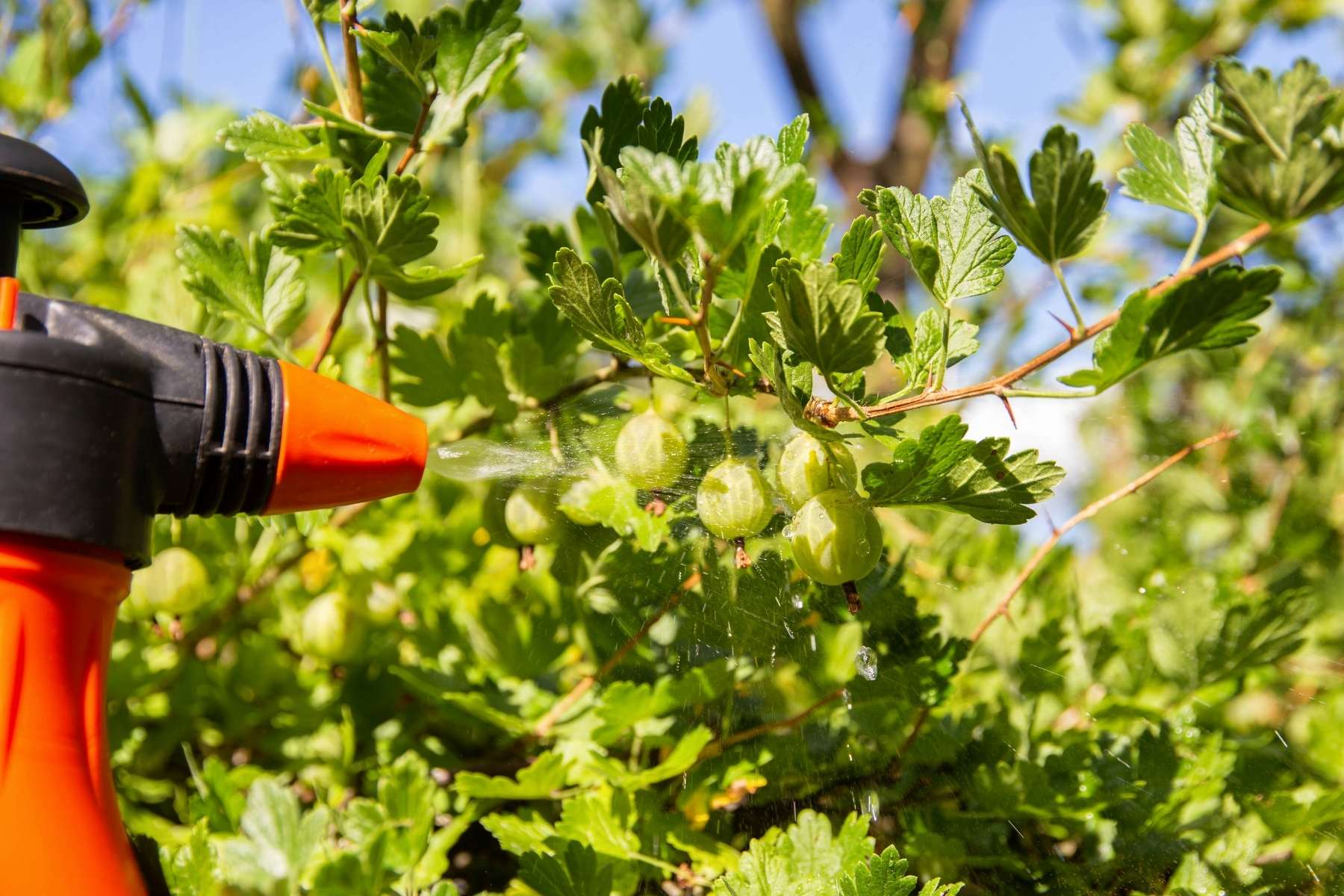
Approaching a powdery mildew treatment application with the same attention you would give a plant that needs a thorough bath is the right mindset. The goal is saturation, not misting.
Start at the base of the plant. Work upward and inward before treating the outer canopy. Lift large fan leaves and spray the undersides before letting them fall back into place. In crops with layered canopies, physically separate the branches or leaves to expose the interior and apply spray directly to those surfaces. Do not assume that spray reaching the tops of leaves will travel down or drip onto the undersides in any useful amount.

Pay particular attention to areas where leaves overlap. Because the pathogen remains exposed on the surface wherever spray does not reach, overlapping foliage creates a literal physical barrier to coverage. Working those areas by hand during application is not optional in a curative program.
Good air circulation around plants also plays a role in how effectively treatments work. Dense, crowded canopies trap humidity and create microclimates that favor the spread of powdery mildew. Where possible, prune crossing branches and crowded growth before beginning a treatment program. This improves your spray access and reduces the favorable conditions for powdery mildew to persist between applications.
Finish the application with a pass over the tops and outer surfaces of the canopy. Apply enough product that surfaces glisten. A plant that has received thorough treatment will look uniformly coated and slightly shiny. That appearance is confirmation that the formula has reached what it needs to reach.

How Often to Apply Powdery Mildew Treatment
A single application is rarely enough to achieve curative results on an established infection. Understanding how to structure a treatment program over time is what separates growers who permanently resolve powdery mildew from those who cycle through repeated partial improvements.
Setting Up a Spray Schedule
As shown in the Cornell CALS trial, consistent repeat applications on an alternating-day schedule over two weeks were key to achieving curative results. For most growers managing active infections, a similar approach makes sense. Treat on alternating days for the first two weeks, maintaining thorough coverage with each application. Do not skip applications in the middle of a curative cycle because the plant is starting to look better. Early visual improvement does not mean the infection has been eliminated. It means the visible colonies have been disrupted. Remaining colonies and any new powdery mildew spore germination require the same treatment pressure until the cycle is genuinely broken.

Once active infection has been resolved, shift to a maintenance schedule. Weekly or twice-weekly applications maintain a treated environment on leaf surfaces and reduce the likelihood of reestablishment, particularly in conditions where temperature and humidity favor reinfection. This transition from curative treatment to preventive measure is an important part of a complete program.
When mixing your product, follow the label instructions carefully. For Lost Coast Plant Therapy, mixing at the recommended rate per gallon of water and applying with thorough technique produces the results the trial documented.
See Instructions here.

What to Look for After Treatment Begins
Within the first 48 to 72 hours after a thorough application, treated areas of powdery mildew should show visible disruption. The white coating will begin to look less uniform, losing the powdery texture and appearing more translucent or broken up in areas where coverage was good.
By the fifth to seventh day, plants that have received proper treatment should show clear improvement on treated surfaces. New growth emerging during this period should remain clean if the plant is under ongoing treatment pressure.
Watch for any areas where powdery mildew appears to persist unchanged after two to three applications. This is almost always a coverage problem. Identify those specific spots, assess whether overlapping foliage or canopy density is preventing the spray from reaching them, and adjust your technique for the next application.

Why a Minimum Risk Pesticide Can Outperform Harsh Chemicals
There is a persistent assumption in gardening and commercial growing that stronger chemistry produces better results. For contact-based pathogens like powdery mildew, this assumption often leads growers toward harsher inputs when the problem they actually have is not chemical strength but physical coverage.
A minimum risk pesticide formulated for direct contact with fungal pathogens, applied with full and thorough coverage across all leaf surfaces, can consistently outperform a stronger chemical product. The mode of action in contact-based treatments is physical disruption of the pathogen at the point of contact.
More contact, more disruption. Less contact, less result.

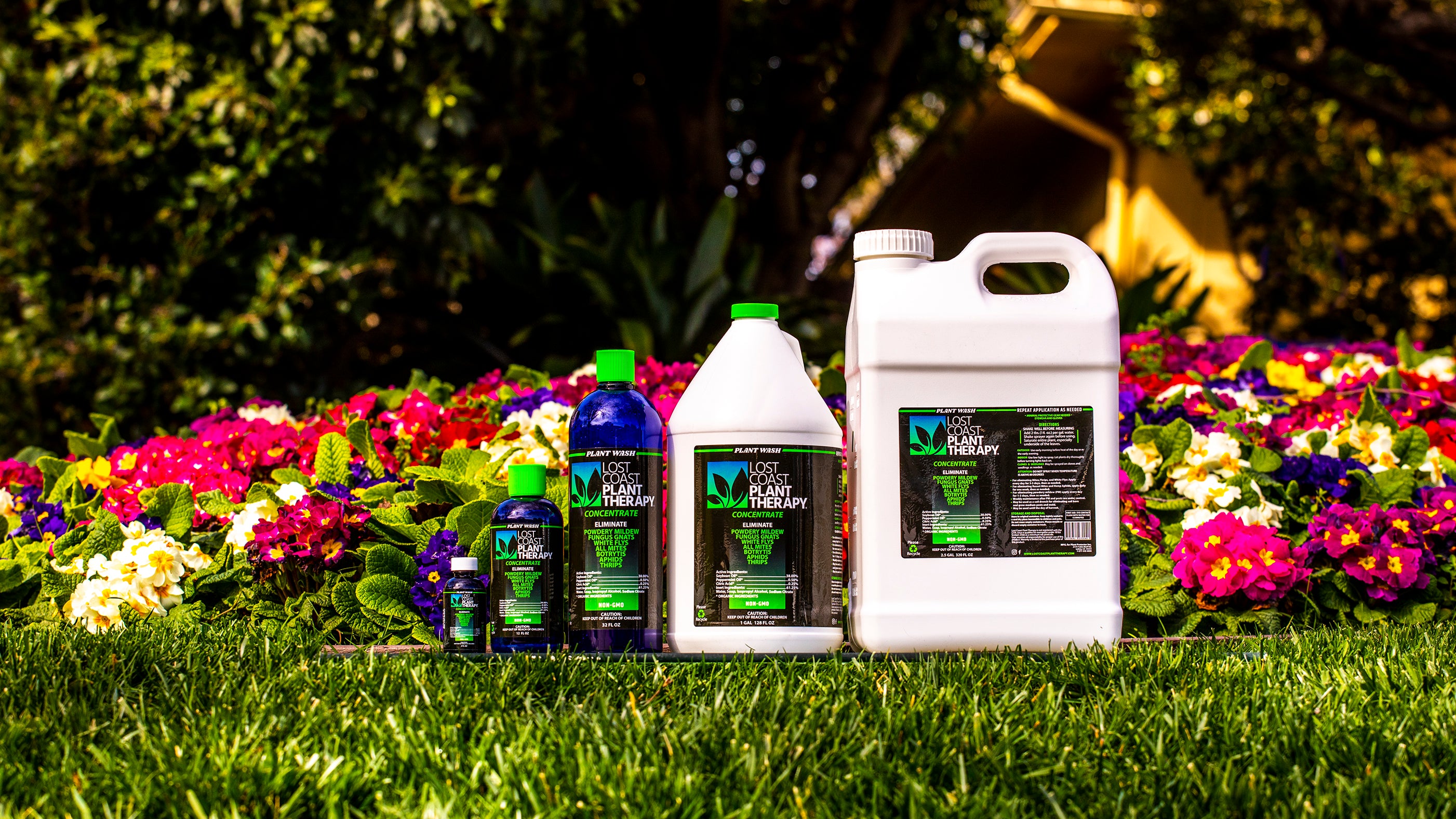
Lost Coast Plant Therapy is a FIFRA 25(b) minimum risk pesticide, made with food-grade, natural and organic ingredients. It is not a fungicide in the traditional chemical sense. It works through direct physical contact, disrupting the fungal colonies where the formula touches them, without leaving toxic residues behind. It is approved by the California Certified Organic Farmers and permitted for certified organic production. It carries a zero-hour re-entry interval, meaning workers or household members can return to treated areas immediately after application with no waiting period and fits into a cleaner growing routine without sacrificing performance.
Shop Lost Coast Plant Therapy Concentrate here.

What Causes Powdery Mildew to Develop
Powdery mildew fungi require living plant tissue, moderate humidity, and warm temperatures to establish and spread. They do not need rainfall or saturated conditions the way many other fungal diseases do. What they do need is a susceptible plant, limited air movement, and a surface where powdery mildew spores can land and germinate undisturbed.
Different plants carry different levels of vulnerability. Some varieties have been bred to be resistant to powdery mildew, and choosing resistant cultivars where available is one of the most straightforward ways to reduce pressure in your growing space.

Powdery mildew survives from one season to the next on infected plant debris, in the soil around plants, and on infected stems and buds that were not removed before dormancy. That means mildew survives from one season into the next if cleanup at the end of the growing season is incomplete.

Managing Humidity and Air Circulation
High humidity combined with poor airflow creates the conditions most likely to cause powdery mildew to spread rapidly once it is present. While powdery mildew does not require wet surfaces to germinate, humidity levels that stay consistently elevated reduce the plant's natural surface resilience and create an environment where spores establish more easily.
Managing humidity in enclosed growing spaces means monitoring airflow patterns, avoiding overcrowding, and ensuring that ventilation keeps air moving around your plants consistently. In outdoor growing situations, spacing plants with enough room for air to pass freely between them helps reduce the localized humidity pockets that can develop in dense plantings.

Prune and Space Plants to Reduce Mildew Spread
One of the most practical ways to prevent powdery mildew from gaining a foothold is to prune plants regularly and give them room to breathe. Dense canopies trap moist air close to leaf surfaces, reduce light penetration, and create the kind of stagnant growing environment that powdery mildew is well suited to exploit.
Pruning removes crowded and crossing growth, improves air circulation, and also gives you regular close contact with your plants, which makes early identification significantly easier. When you are already pruning regularly, you are also more likely to notice the first faint signs of infection before they develop into a serious problem.
Spacing decisions made at the start of the season pay off during growing season. Many plants that are susceptible to powdery mildew grow quickly and fill their space faster than expected. Giving them more room than seems necessary at transplant reduces how quickly they shade and crowd each other as the season progresses.

Apply Treatments Proactively, Not Just Reactively
One of the most effective ways to manage powdery mildew is to treat your plants with Lost Coast Plant Therapy before visible symptoms appear, as a preventative measure, particularly during periods when growing conditions favor infection. This does not mean spraying every day or using high rates of product. It means incorporating routine, lower-frequency preventive applications into your care schedule during the parts of the growing season when temperature and humidity conditions are most favorable for powdery mildew.
Powdery mildew usually spreads faster than it is noticed. By the time the white coating is clearly visible on leaf surfaces, the infection has typically been active for several days and spores have already moved to nearby plants. A preventive application schedule helps prevent the powdery mildew from establishing at a density that requires intensive curative intervention.

Common Mistakes That Let Powdery Mildew Come Back
Treating only the visible infection is the most common and most damaging mistake because it addresses a portion of the infection while leaving the rest to recover and recolonize. Controlling powdery mildew on your plants requires treating the whole plant, not just the parts you can easily see.
Stopping treatment too early is a close second. The visual improvement that happens after one or two thorough applications can be genuinely dramatic. Plants that looked white and dull can look surprisingly clean within a few days of good treatment. That visible improvement is a sign the treatment is working. It is not a sign that the job is done. Stopping at this point allows any surviving colonies to rebuild without the continued treatment pressure they need to stay suppressed.

Using the wrong dilution rate in the wrong direction is also a real problem. More concentrated does not automatically mean more effective for contact-based treatments. If a formula is mixed too strongly, it can cause phytotoxicity on sensitive plants, meaning the treatment itself causes leaf stress or burn rather than solving the disease problem. Follow the label instructions carefully, and understand that the concentration parameters reflect the actual research behind the product.
Treating in the heat of the day is a practical mistake that undermines results on a physical level. Early morning or evening applications allow the formula to remain in contact with the leaf surface longer, which is where the curative work happens.
And finally, treating the symptom without addressing the environment. A grow space where humidity spikes regularly, air circulation is poor, or plants are overcrowded will continue producing favorable conditions for powdery mildew to reestablish itself regardless of how good your treatment program is.

Getting This Right Is Super Simple
Powdery mildew has a reputation for being relentless. It comes back. It spreads fast. It shows up in grows where growers have done everything else right. After a while, it starts to feel personal.
The Cornell CALS trial results are a useful reminder that this problem is genuinely solvable. 99% percent curative control of established powdery mildew, across multiple crops, across multiple growth stages, using a minimum risk pesticide made with natural and organic ingredients. That result is something that growers can actually replicate at home or at scale.
What the research confirms is something growers who have cracked this problem already know intuitively, you do not need something harsher. You need something applied better. Slow down, treat every surface, repeat consistently, and the results follow.
When powdery mildew stops winning, growing gets easier. You spend less time reacting and more time watching your plants thrive. That is exactly the outcome a good treatment program is supposed to deliver, and it is absolutely within reach.

Frequently Asked Questions About Powdery Mildew Treatment
Does Lost Coast Plant Therapy control powdery mildew?
Yes it does! In Cornell CALS greenhouse trials, Lost Coast Plant Therapy demonstrated up to 99% curative control of powdery mildew when applied with complete coverage and repeat applications.
How do you treat powdery mildew on plants?
Treat powdery mildew by spraying the entire plant thoroughly, including upper and lower leaf surfaces, stems, and overlapping foliage. Repeat applications over about two weeks are often needed for active infections. Complete coverage matters because powdery mildew lives on the leaf surface and survives wherever spray does not reach.
Why does powdery mildew keep coming back?
Powdery mildew usually comes back when treatment misses hidden leaf surfaces, overlapping foliage, or dense interior growth. Even if the visible white coating disappears, untreated areas can keep producing spores and recolonize the plant within days.

Is Lost Coast Plant Therapy safe to use on edible crops?
Lost Coast Plant Therapy is a FIFRA 25(b) minimum risk pesticide made with food-grade, natural and organic ingredients. It is approved for use in certified organic production in California and Florida and carries a zero-hour re-entry interval. It is safe for use on edible crops when used as directed.
What is the difference between powdery mildew and downy mildew?
Powdery mildew appears as a white, powdery coating primarily on the upper surfaces of leaves and thrives in warm, dry conditions. Downy mildew tends to appear on the undersides of leaves as a gray or purplish fuzz and requires cooler, wetter conditions to spread. They are caused by entirely different types of organisms and respond to different treatment approaches. Identifying powdery mildew versus downy mildew correctly before choosing a treatment is an important first step.

Additional Resources
Powdery Mildew on Vegetables - UC Statewide IPM Program, University of California
Powdery Mildews - Colorado State University Extension
Powdery Mildew in the Flower Garden - University of Minnesota Extension
Powdery Mildew on Trees and Shrubs - University of Minnesota Extension
Powdery Mildew - Penn State Extension
Addressing Downy Mildew and Powdery Mildew in the Home Garden - Penn State Extension
Powdery Mildew Disease on Trees and Shrubs - University of Maryland Extension
Powdery Mildew - West Virginia University Extension
Powdery Mildew on Ornamental Plants - Utah State University Extension
Powdery Mildew on Caneberries - UC Statewide IPM Program, University of California
Powdery Mildew on Cucurbits - UC Statewide IPM Program, University of California