
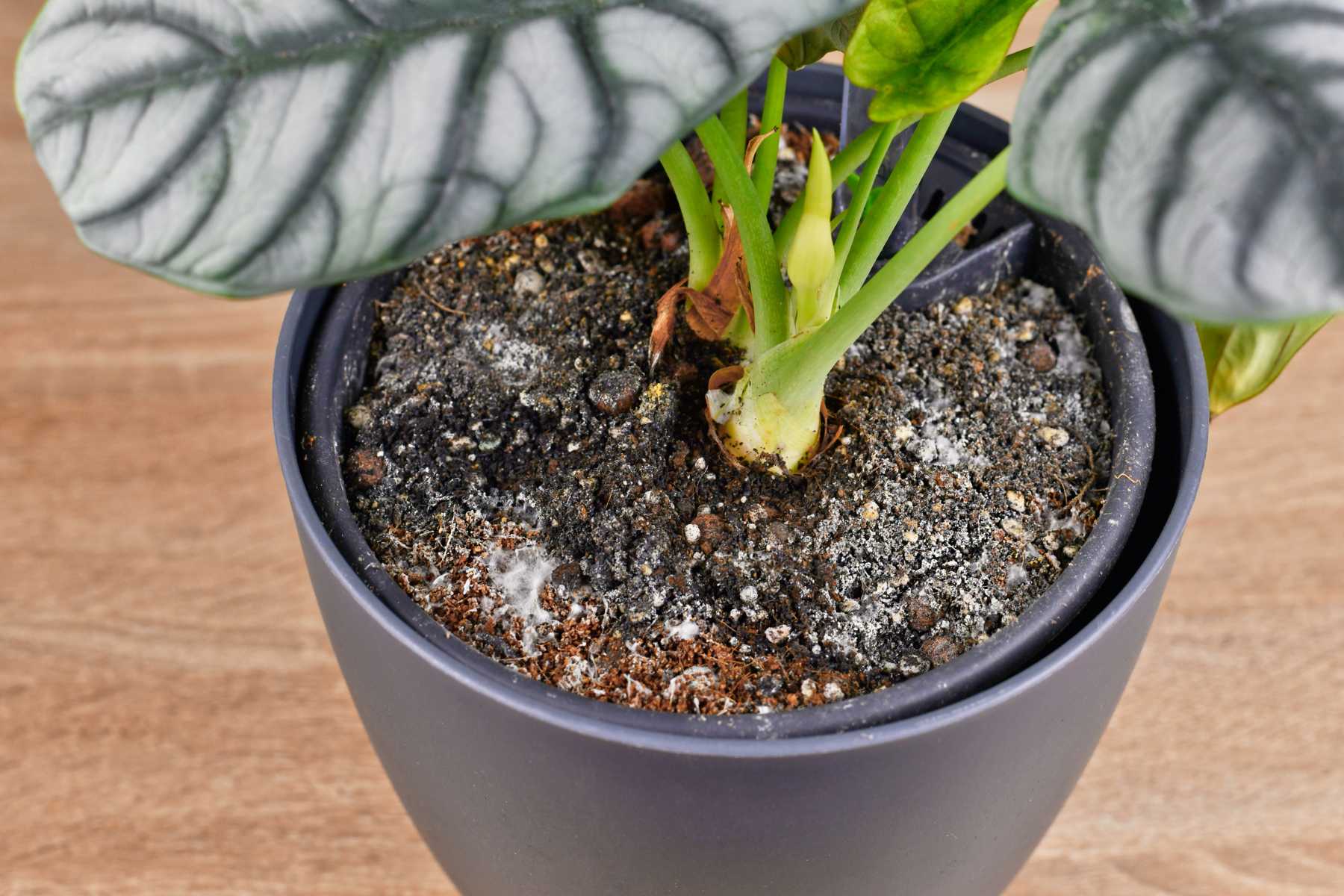
You walk over to water a favorite houseplant, glance down, and there it is: a patch of fuzzy white growth spreading across the soil like a thin cobweb or a dusting of cotton.
Finding mold on houseplant soil is one of the most common things that sends plant owners straight to their phones, convinced that something has gone wrong.
Fortunately, the white growth is usually a harmless saprophytic fungus feeding on decaying organic matter in the potting mix, not on your plant. In most cases, it simply means the soil is staying too damp or the area needs better air circulation. Your plant does not need to be thrown out, but its growing conditions may need a few simple adjustments.

What That White Fuzz Usually Is
Potting soil is alive. A good houseplant mix is full of bark, peat moss, coconut coir, and compost, and it carries millions of microorganisms along with mold spores that are already floating in the air around you. That is normal and healthy. Those spores sit quietly until conditions invite them to grow.
The fuzzy white mold on soil that most people find is a saprophytic fungus. Saprophytic simply means it lives on dead and decaying plant matter, which is exactly what the bark and other bits in your potting mix are. The fungus sends out fine, thread-like strands called mycelium across the surface, which is why it can look like white fuzz, a soft web, or a powdery film. It feeds on the mix, not on living roots. It does compete a little for nutrients in the soil, but this is not an infected plant situation.

Think of this growth less like a disease and more like a messenger. It appears when the surface of the soil stays moist, cool, dark, and still long enough to create an inviting environment for mold. Although the same fungus turns up in outdoor soil too, indoor pots see it more often because they get less air circulation and light. That makes the growth genuinely useful information, and it is the reason this houseplant soil fungus is worth addressing even though it is rarely an emergency on its own.

What Is the White Stuff on My Plant Soil?
Before you reach for any treatment, it helps to know which of these types of mold and lookalikes you are dealing with as each one needs a different response. If you want a quick visual reference for plant issues, our Issue Identifier is a good place to start.
Fuzzy White Mold on the Soil Surface
What mold on soil looks like in this case is white or greyish white, with a soft, white fuzzy, or cottony texture, and it spreads in a thin layer right across the top of the soil. Sometimes it shows up as a fine web, sometimes as scattered fluffy patches, and occasionally with a faint yellow tint.
It's almost always saprophytic fungus, it appears on damp, organic potting mix, it grows as mold on the surface rather than burrowing down, and it is not attacking the plant itself. Clear the fungus, and more importantly, change the conditions that grew it.

White Crusty or Chalky Patches
If the white stuff on plant soil looks dry, crusty, chalky, or grainy rather than soft and fuzzy, you are probably not looking at mold at all. You are looking at mineral or fertilizer salt buildup.
This type of growth usually comes from minerals in hard tap water or from feeding a little too generously. The salts are left behind as water evaporates, forming a pale crust on the surface and often a ring around the pot rim or the outside of a terracotta pot. It is not alive, it will not spread like fungus, and it does not respond to the moisture and airflow fixes below.
Ease back on fertilizer, switch to filtered or rainwater if your tap is hard, and flush the pot by running clean water through the soil a few times to leach the excess salts out the bottom.

Powdery Mildew on Leaves and Stems
Powdery mildew lives on plant tissue, not on the soil surface. It looks like a white or grey powder dusted over leaves and stems, almost as if someone shook flour over the plant. It is a true plant disease, and it is a notorious problem on tomatoes, squash, cucumbers, and many ornamentals.
If your white growth is on the foliage rather than the dirt, you are dealing with mildew, not surface soil mold, and the two should not be treated as the same problem. For a full walkthrough of identifying and clearing it, see more on powdery mildew here.

When Mold Signals a Deeper Problem
Surface mold that keeps returning can point to chronic overwatering, poor drainage, a heavy soil that holds too much water, low light, and dead, unmoving air. The fungus is thriving because the soil simply is not drying out. If that wet condition continues, prolonged sogginess leaves the plant vulnerable, and the real risks are root rot, which can quietly kill a plant from the bottom up, and fungus gnats, which breed in exactly that damp top layer.
There is also gray mold, or botrytis, a different fungus that attacks weak plant tissue rather than just the soil surface. If you start seeing grey, fuzzy growth spreading onto leaves and stems, read our breakdown of how to identify and control gray mold.

What Causes Mold to Grow on Houseplant Soil
Almost every case of moldy potting soil and surface mold growth traces back to the same handful of conditions.
Overwatering and Poor Drainage
The single most common trigger is overwatering your plant. Soil that is kept constantly wet never gets the dry spell that keeps fungus in check, and even careful watering causes mold when water cannot escape. Decorative pots with no drainage hole are a frequent culprit, because a pretty cachepot traps water at the bottom and keeps the root zone soggy.
The same thing happens when the soil simply stays wet too long, whether from a pot that is too large for the plant or from top-watering too often, which keeps the surface perpetually moist. Lingering surface soil moisture is exactly the condition mold needs.

The Soil and the Pot Itself
A quality houseplant mix is rich in organic matter like bark, compost, and peat moss, which is food for saprophytic fungus. This is normal, not a defect, but it does mean the raw material is always present. Old potting mix makes it worse, because as soil ages it compacts, drains poorly, and holds more water than it should, so the soil becomes a better and better home for fungus over time.

Air, Light, and Temperature
Low air circulation lets the surface stay damp far longer after watering, and crowded plants packed tightly together trap humidity and block the air movement that would otherwise dry things out. Low light slows evaporation, cool indoor rooms hold surface moisture longer, and high humidity from a bathroom or a dense plant shelf raises the moisture around the soil. Stack a few of these together and you create the perfect environment to encourage mold growth.

How to Get Rid of White Mold on Plant Soil
Work through these steps in order. You are not trying to sterilize the pot or shock the plant. You are gently removing the mold and correcting the conditions so it does not come back.
Step 1: Let the Top Inch of Soil Dry
Stop watering for now. Let the top inch of soil dry out before you do anything else. For many plants this small pause is enough to halt active mold growth, since the fungus needs that constant surface moisture to spread.

Step 2: Remove the Moldy Layer and Clear the Debris
Once the surface has dried, gently remove the moldy top layer with a spoon or small tool and discard it. Take only the affected soil at the surface. Do not gouge deep into the root zone or strip away healthy soil. While you are there, clear away any fallen leaves, spent flowers, and decaying plant matter sitting on the soil, because that material is part of what the fungus was feeding on.

Step 3: Open Up Air Circulation and Light
Give the plant some breathing room. Move it away from a crowded cluster of pots so air can circulate around the soil, and if the room is stuffy, a gently running fan nearby or an open window improves air circulation and makes a real difference in how fast the surface dries. If the plant can tolerate it, shift it to brighter indirect light. More light and more air movement keep that top layer dry, which is the condition the fungus cannot survive, and together they help inhibit mold growth going forward.

Step 4: Water Less Often, but More Correctly
Most houseplants prefer a cycle of thorough watering followed by a real dry-down, rather than frequent sips that keep the surface wet. Where the plant allows it, bottom-water by setting the pot in a tray of water and letting the soil draw moisture up from below, then removing it once the top is moist. Bottom-watering keeps the surface drier, which discourages both mold and the gnats that love it.

Step 5: Check Drainage and the Saucer
Lift the pot and confirm the drainage hole is open and not clogged with roots or compacted soil. Empty the saucer or cachepot after watering so the pot is never standing in collected water. This single habit prevents the soggy root zone that grows mold in the first place.

Step 6: Repot, Replace the Soil, and Rethink the Pot
If the soil simply stays wet too long no matter what you do, it is time to repot and replace the soil. Move the plant into fresh potting mix that drains better, and consider top-dressing the surface with a thin layer of grit, pumice, or coarse material, which dries quickly and makes the surface far less inviting to fungus. If you would rather not replace the existing soil entirely, that grit layer is a lighter option on its own. When you choose a potting soil to replace the old one, look for a free-draining blend.
If the plant type tolerates faster drying, a terracotta pot helps, because the porous clay wicks moisture out of the soil and lets it evaporate. Match the pot size to the plant too, since an oversized pot holds a large reservoir of wet soil that the roots cannot use up quickly.

Lost Coast Plant Therapy: A Minimum Risk Pesticide
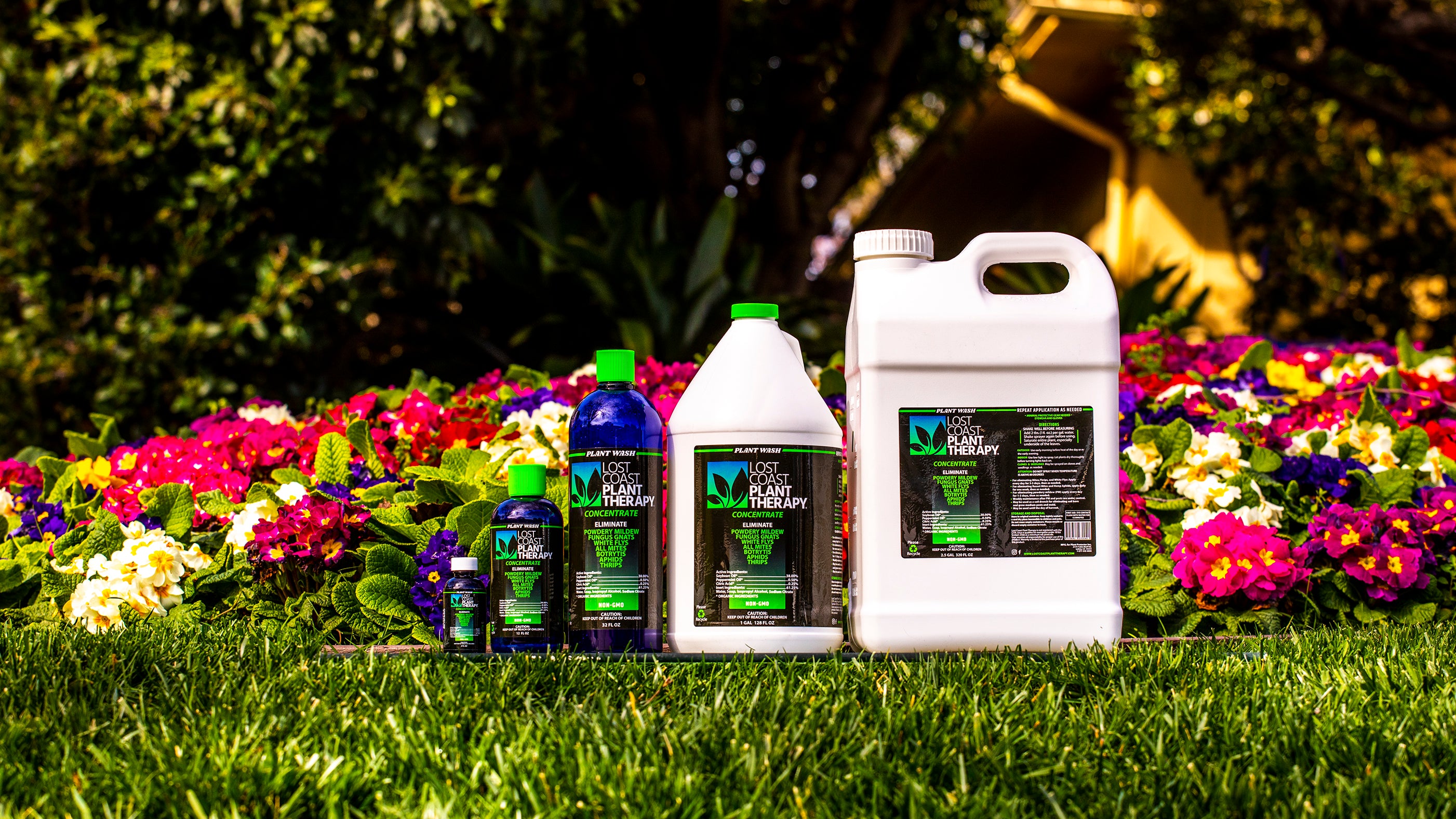
When a plant problem calls for treatment, the product you reach for matters as much as how you use it. Lost Coast Plant Therapy is a 3-in-1 pest control solution made with natural and organic ingredients, and it was built for exactly this kind of moment.
It is a FIFRA 25(b) minimum risk pesticide, a category the EPA recognizes for products made from ingredients determined to pose little to no risk to human health or the environment. The formula brings together citric acid derived from cassava root, organic peppermint essential oil, non-GMO soy oil, and plant-based soaps. You can read the full breakdown on our ingredients page.

What makes it well suited to mold and mildew is the way it works. It controls problems through direct contact rather than being absorbed into the plant. On powdery mildew, mold, and fungus, it washes the growth off on contact and adjusts the pH of the plant surface so the spores find conditions far less hospitable. On soft-bodied pests like aphids, spider mites, thrips, whiteflies, and fungus gnats, it works by suffocating and dehydrating them on contact, which is why insects cannot build resistance to it.
Because it stays on the surface and does not go systemic, it leaves no synthetic residue behind once it dries, and it can be used on indoor and outdoor plants alike. You can see this mechanism explained on our how it works page.
Read more about minimum risk pesticides here.

How to Prevent Moldy Soil
Clearing the mold once is satisfying. To prevent moldy soil from returning, the trick is building a few light habits rather than repeating the cleanup every month.
Make a quick soil check part of your routine. Before you water, press a finger into the top inch to check the soil moisture, and only water if it has dried, which turns proper watering into your default rather than a correction. The soil needs that dry spell between waterings. Refresh tired soil on a schedule, since potting mix compacts and holds more water as it ages, so repotting into fresh mix every one to two years quietly resets the conditions that grow fungus and lowers the risk of mold growth. Default to pots with real drainage holes, and treat any decorative cachepot as a cover you empty after watering, not a permanent home for standing water.

Give your plants room. Spacing pots so air can move between them does more to prevent mold than almost anything else, and it pays off across your whole collection. Stay aware of the season too, because cooler, darker winter months slow evaporation and call for less frequent watering than summer. Healthy, living soil and a balanced approach to care are the foundation of all of this, which is the same thinking behind regenerative agriculture.
And if you like to stay ahead of problems, a light preventive routine with Lost Coast Plant Therapy, applied roughly once a week or two to three times a month, keeps the surfaces of your plants inhospitable to the mildew spores and soft-bodied pests that thrive in the same damp conditions, which protects overall plant health.

Conclusion
White mold on plant soil can look alarming, but in most cases, it is manageable. The goal is not to panic, throw the plant away, or drench everything in chemicals. Instead, look at what the fungus is telling you and correct the moisture, airflow, and soil conditions that allowed it to appear.
Identify what you are actually seeing, whether that is harmless saprophytic fungus, a harmless salt crust, true powdery mildew, or the warning sign of a soggy root zone. Dry the soil, clear the surface gently, open up air and light, and water with intention. Reach for a minimum risk treatment like Lost Coast Plant Therapy when mold keeps returning, when mildew shows up on the leaves, or when fungus gnats join the party. You are the variable that changes the outcome, and most of the time, a few calm adjustments are all it takes to get your plant back to thriving plant health.
Frequently Asked Questions
How do I identify mold versus salt buildup or powdery mildew?
Soft, fuzzy, or cottony white growth on the soil surface is mold. Dry, crusty, chalky white patches on the soil or pot rim are mineral or fertilizer salt buildup, not mold. White powder on leaves and stems is powdery mildew, a separate plant disease.
Is white mold on plant soil dangerous to my plant?
Usually not. The fuzzy white growth on the soil surface is almost always a saprophytic fungus that feeds on organic matter in the potting mix, not on living roots. It is best understood as a sign that the soil is staying too damp with low airflow. Correct those conditions and the plant is typically fine.

Is Lost Coast Plant Therapy safe to use around pets and kids?
Yes, when used as directed. It is a FIFRA 25(b) minimum risk pesticide made with natural and organic ingredients, it works on contact, and it leaves no synthetic residue once dry. Common-sense caution still applies, and you should always follow the label directions.
What causes mold growth on plant soil?
It comes down to surface moisture sitting too long with too little air and light. Overwatering, poor drainage, decorative pots with no drainage hole, organic-rich mix, low air circulation, low light, cool rooms, high humidity, and crowded plants are the usual contributors.
How do I get rid of white mold on plant soil?
Let the top inch of soil dry, gently remove the moldy layer, clear away dead leaves and debris, improve air circulation and light, water less often but more thoroughly, empty any standing water from the saucer, and repot into better-draining mix if the soil simply stays wet too long.

Are fungus gnats related to white mold on soil?
Yes. Both thrive in the same damp, organic top layer of soil. If you see tiny black flies around the pot, you likely have both, and letting the soil surface dry between waterings helps with each. Learn more about fungus gnats and how to get rid of them here.
Does cinnamon or baking soda cure soil mold?
Cinnamon and baking soda are often suggested online, but neither is a guaranteed cure, and they should not replace correcting the conditions. The reliable fix is drying the soil and improving airflow, with a minimum risk treatment used if the problem persists.
Can I just scrape the mold off and be done?
Scraping removes what is visible, but it does not address why the mold grew. If you do not also fix the moisture, airflow, and light, it tends to return. Scrape gently and pair it with the watering changes.
See more FAQ's here.

Additional Resources
Indoor Plant Diseases - University of Maryland Extension
Diagnose Indoor Plant Problems - University of Maryland Extension
White Mold - University of Wisconsin-Madison Division of Extension (Wisconsin Horticulture)
Fungus Gnats - UC IPM - University of California Agriculture and Natural Resources
Fungus Gnats - Colorado State University
Mold on Indoor Plant Soil - University of Minnesota Extension (Ask Extension)
Preventing, Diagnosing, and Correcting Common Houseplant Problems - Penn State Extension