Skip to content
A Demeter Biodynamic farm field with diverse crops growing together
Approved input for Demeter Biodynamic farms

Demeter Biodynamic farming.

Biodynamic farms treat the whole farm as one living organism, and Demeter is the oldest ecological label in the world. Here is what the movement stands for, how its farms work, and why Lost Coast Plant Therapy is listed as an approved input for Demeter Biodynamic Certified Farms in the USA.

Approved for Demeter farms.

Direct answer

Lost Coast Plant Therapy is listed as an approved input for Demeter Biodynamic Certified Farms in the USA. It is a Natural Plant Protector and minimum risk pesticide made with natural and organic ingredients that controls soft bodied insects, mites, powdery mildew, mold and botrytis on contact. Because it works on contact rather than as a poison, it does not harm bees, ladybugs or praying mantis when used as directed.

On a Demeter farm every input is part of the farm organism, so nothing goes on a crop casually. Growers can find Lost Coast Plant Therapy on the approved input list kept by Demeter USA, the only certifier for Biodynamic farms and products in the United States.

Demeter Biodynamic

Demeter Biodynamic

Listed as an approved input for Demeter Biodynamic Certified Farms in the USA.

CCOF Approved

CCOF Approved

Approved for use by California Certified Organic Farmers.

Clean Green Certified

Clean Green Certified

Independently certified for sustainable growing practices.

25(b) Minimum Risk

25(b) Minimum Risk

Exempt from EPA registration under FIFRA 25(b).

CertifierDemeter Association, Inc.

What is Demeter Biodynamic?

In one paragraph

Demeter Biodynamic is a certification for farms and food grown with biodynamic agriculture, a holistic method that manages the entire farm as one self sustaining living organism. Certified farms build fertility from their own compost and animals, set aside at least 10 percent of their land for biodiversity, use the biodynamic preparations, and meet USDA Organic rules as a baseline before adding stricter Demeter requirements. Biodynamic is the farming method. Demeter is the nonprofit that certifies it.

The word itself carries the idea. "Bio" is the living side of the farm, the soil life, plants and animals. "Dynamic" is the energy and rhythm that connects them, from the seasons to the movement of the moon. Biodynamic growers look at a farm the way an ecologist looks at a forest. Nothing stands alone, so a choice made in the compost pile shows up later in the orchard, the pasture and the vegetable beds.

That whole farm thinking is what separates the Demeter label from most food certifications. Demeter does not certify a single field or a single crop. It certifies the farm as a complete system, inspected every year, from the soil all the way to the processed product on the shelf.

Rows of biodynamically grown crops with flowers planted between them for pollinators
Demeter farms in more than 60 countries follow the same standard while adapting to their own soil, climate and culture.

A global federation

Demeter USA is part of the Biodynamic Federation Demeter International, with 63 member countries and more than 7,000 farmers.

Organic, and then some

The Demeter Farm Standard requires compliance with USDA Organic regulations first, then adds stricter whole farm rules.

More than food

The label covers food, wine, honey, supplements, cosmetics, textiles, seeds and compost.

The farm as a living organism.

Every part of a biodynamic farm feeds another part. Tap any piece of the circle to see what it does and what the Demeter standard asks of it.

The farm organismEverything connects

Tap a piece of the circle, or swipe the card to explore.

01 of 08

Soil and compost

Soil is the foundation of the biodynamic farm, and compost is how the farm feeds it. Manure, crop residues and plant matter are composted on site, often with the biodynamic compost preparations stirred in, so fertility comes from inside the farm instead of a bag. Research cited by Demeter USA has found biodynamic soils with more microbial activity, better structure and more earthworms than conventionally farmed soils.

The standard asksFarmers generate as much fertility as possible from the farm itself and reduce reliance on imported materials.

02 of 08

Crops and seeds

Biodynamic growers favor diverse, locally adapted and heirloom varieties, and many save their own seed so plants grow more suited to the farm each year. Crop rotations, cover crops, green manures and nutrient catch crops keep the soil covered and feed it between harvests. A diverse planting is also harder for any single pest or disease to sweep through.

The standard asksRotations and cover crops are part of the farm plan, and stricter limits apply to imported materials, including extra precautions against GMO contamination.

03 of 08

Animals

Many modern farms separated animals from crops long ago. Biodynamic farms bring them back, because manure is the heart of a closed loop fertility system and grazing animals help manage pasture and vegetation. Animals are treated as partners on the farm, raised in herds or flocks, pasture fed and given room to behave the way they naturally would.

The standard asksAnimals are integrated into the farm system. Dehorning, debeaking, wing clipping and tail docking are prohibited, and preventive hormones and antibiotics are not allowed.

04 of 08

Wildlife habitat

Hedgerows, wetlands, forests, insectary strips and wild corners give birds, bats, bees and beneficial insects a place to live. Those allies pollinate crops and keep pest populations in check, which is why biodynamic farms are noticeably more alive than a monoculture. It is also why a broad spectrum pesticide has no place there. Wiping out the beneficial insects undoes years of habitat work in one spray.

The standard asksAt least 10 percent of total farm area is reserved for biodiversity, through wildlife habitat, restoration and enhancement.

05 of 08

The preparations

The biodynamic preparations are made from manure, minerals and medicinal herbs and applied in very small amounts. Some are sprayed on soil and plants. Others go into the compost pile to guide how it breaks down. They are the most distinctive part of biodynamic farming, and you can explore each one further down this page.

The standard asksRegular use of the preparations on fields and compost is required for Demeter certification.

06 of 08

Water and landscape

Every farm sits inside a watershed, a climate and a landscape that came before it. Biodynamic farmers read that context closely, protecting waterways and riparian corridors and choosing practices that hold soil in place through drought, flood and wind. Healthy soil with plenty of organic matter soaks up water like a sponge, which keeps both the crops and the streams downstream in better shape.

Why it mattersDemeter describes each farm as having its own individuality, shaped by its land, water, history and people.

07 of 08

People and community

Farmers and farm workers are part of the organism too. The biodynamic movement puts weight on safe and fair working conditions, on continual learning, and on fair economic relationships, including models like community supported agriculture where eaters share the risks and rewards of a season with the farm.

Why it mattersA farm only lasts if the people who run it can thrive, learn and stay connected to those who eat what they grow.

08 of 08

Sun, moon and seasons

Biodynamic farmers pay close attention to the seasons, the weather and the movements of the sun, moon and planets. Many use a biodynamic planting calendar to choose days for sowing, transplanting, harvesting and applying preparations. Whatever you make of the cosmic side, the habit it builds is valuable, because it trains a grower to observe the farm patiently instead of reacting to it.

Why it mattersCareful observation catches pest and disease pressure early, while it is still small and easy to manage.


A century of biodynamics.

Biodynamic farming started with farmers asking a scientist for help, and it became the first ecological certification in the world. Swipe or drag through the story.

1924

The Agricultural Course

European farmers noticing a fast decline in seed fertility, crop vitality and animal health asked Dr. Rudolf Steiner for guidance. His eight lectures at Koberwitz laid out the idea of the farm as a self contained living system.

1927

Farmers start testing it

The first growers experimented with the ideas, compared results and formed a cooperative to market biodynamic produce.

1928

The Demeter label is born

The Demeter brand was introduced in Germany, named for the Greek goddess of agriculture. It became the first ecological certification label in the world.

1931

Over a thousand farms

Within a few years more than a thousand biodynamic farms were operating, proof that the approach worked in real fields and not only on paper.

1985

Demeter comes to the USA

Demeter Association, Inc. was incorporated as a nonprofit with a mission to help people farm successfully by biodynamic practices and principles.

2002

USDA Organic arrives

The USDA National Organic Program took effect, seventeen years after Demeter USA was founded. Today the Demeter Farm Standard uses USDA Organic as its floor, not its ceiling.

2020

One global federation

Demeter International and the International Biodynamic Association joined to form the Biodynamic Federation Demeter International, which keeps the standards harmonized worldwide.

Today

A worldwide movement

63 member countries and more than 7,000 farmers. Lost Coast Plant Therapy is proud to be listed as an approved input for Demeter Biodynamic Certified Farms in the USA.

What makes a farm biodynamic.

These are the practices a Demeter inspector looks for. Together they explain why biodynamic farms look, sound and even smell different from conventional ones.

Aerial view of a diversified biodynamic farm with fields, trees and buildings01

Whole farm certification

The entire farm is certified or none of it is. Split farms and parallel production are not permitted, so a grower cannot run a biodynamic field next to a conventional one.

Wildflowers and insect habitat growing along the edge of a farm field02

Ten percent for biodiversity

At least a tenth of the farm is set aside as habitat. Forests, wetlands, hedgerows, insectaries and wildlife corridors all count, and they invite in the birds and beneficial insects that keep pests in balance.

Farm animals grazing on pasture on a biodynamic farm03

Animals belong on the farm

Livestock supply manure for compost, graze cover crops and complete the nutrient cycle. The welfare rules are strict, including protection for horned cattle breeds and a ban on dehorning.

A gardener turning a rich, dark compost pile04

Compost first

Fertility is grown on the farm through compost, crop rotation, green manures and catch crops. Biodynamic farmers aim to return to the soil what each harvest takes out.

Healthy, diverse vegetable beds growing on a regenerative farm05

Regeneration as a practice

Organic standards mostly list what a farm must avoid. Biodynamic farming adds a goal, leaving the soil, water and wildlife in better shape every year than the year before.

Freshly harvested biodynamic produce being handled carefully after harvest06

Gentle processing

Demeter has its own Processing Standard covering 16 product categories, from wine and cheese to olive oil and body care. It favors freshness, authenticity and an unbroken chain of accountability from farm to shelf.

A garden changing through the seasons with plants at different stages07

Working with the cosmos

Planting calendars based on the sun, moon and planets help farmers time sowing, transplanting and harvest. The deeper lesson is patient, daily observation of the land.

A group of farmers and growers working together on a biodynamic farm08

Healthy people and economies

Fair working conditions, continual learning and fair trade relationships are part of the picture. Many biodynamic farms sell through CSAs that connect eaters directly to the land.

Biodynamic vs organic vs conventional.

Organic and biodynamic both prohibit GMOs and synthetic fertilizers. The difference is scope. Organic focuses on what goes into a field. Biodynamic manages the whole farm as one system.

What it covers
Conventional
USDA Organic
Demeter Biodynamic
Synthetic fertilizers and pesticides
Allowed
Prohibited, with limited exceptions on an approved list
Prohibited, with a stricter list of approved inputs
GMOs
Allowed
Prohibited
Prohibited, with extra precautions against contamination
What gets certified
No ecological certification
The operation, and split production is possible with safeguards
The whole farm only, with no split or parallel production
Land for biodiversity
No requirement
Conserve natural resources, with no set amount
At least 10 percent of the farm set aside as habitat
Animals
Often separated from crops
Not required on crop farms
Integrated into the farm, with strict welfare rules
Where fertility comes from
Mostly imported synthetic fertilizer
Often imported organic inputs
Generated on the farm as much as possible
Biodynamic preparations
None
None
Required on fields and compost
Processing
Not covered
Organic handling rules
A dedicated Processing Standard for gentle processing

Organic aims to avoid harm. Biodynamic aims to regenerate. Requirements summarized from Demeter USA and the USDA National Organic Program. Always check the current standards for details.

The movement in numbers.

1928The year the Demeter label was created, the first ecological label in the world
63Member countries in the Demeter federation
7,000+Farmers worldwide working to the Demeter standard
10%Of every certified farm set aside for biodiversity

Figures from Demeter USA.

The biodynamic preparations.

Numbered 500 through 508, the preparations are what set biodynamic farming apart from every other system. Choose a number to learn what it is made from and how growers use it.

Field spray

500, horn manure

Cow manure is packed into a cow horn and buried in the soil over winter, where it ferments into a sweet smelling, humus rich material. A small amount is stirred into water for about an hour and sprayed over the soil, usually in the afternoon or evening.

Growers use it to support soil life, root growth and humus formation. A 2013 study of preparation 500 found a rich microbial community and suggested it may act as a biostimulant in the soil.

Field spray

501, horn silica

Finely ground quartz is packed into a horn and buried over the summer. A tiny amount is stirred into water and sprayed as a fine mist over the plants, usually early in the morning.

Where 500 works below ground, 501 is used above it. Biodynamic growers apply it to support light, leaf growth, flavor and ripening.

Compost preparation

502, yarrow

Yarrow flowers are prepared and a small portion is placed into the compost pile. Biodynamic tradition links yarrow with the way compost handles sulfur and potassium.

Like all six compost preparations, it is used in tiny amounts, inserted into holes made across the pile so its influence spreads through the whole heap.

Compost preparation

503, chamomile

Chamomile blossoms are prepared and added to compost. Biodynamic growers use it to help stabilize nitrogen in the pile so less is lost as the material breaks down.

Research summarized by Demeter USA found that compost treated with the preparations heated to higher temperatures and matured faster than untreated piles.

Compost preparation

504, stinging nettle

Whole stinging nettle plants are prepared and added to compost. Nettle is often called the backbone of the compost preparations and is associated with richer, more balanced finished compost.

Many home biodynamic gardeners already know nettle from making nettle tea for their plants.

Compost preparation

505, oak bark

Ground oak bark is prepared and added to compost. Oak bark is naturally high in calcium, and biodynamic growers use it to support plant health and resilience against disease.

It is one of six compost preparations that together are meant to guide decomposition toward a stable, living humus.

Compost preparation

506, dandelion

Dandelion flowers are prepared and added to the compost pile. In biodynamic practice, dandelion is associated with the way compost and soil manage silica and potassium.

Dandelion is also an early food source for bees in spring, one more reason biodynamic farms tend to welcome it.

Compost preparation

507, valerian

Valerian flower juice is fermented and sprayed over the finished compost pile, forming a protective layer. Biodynamic growers connect it with phosphorus activity and warmth in the pile.

Some farmers also spray diluted valerian on crops before a frost.

Field spray

508, horsetail

Horsetail, a plant very high in silica, is made into a tea and sprayed on soil and plants. Biodynamic growers use it to help crops resist fungal pressure in damp conditions.

Prevention like this works best alongside close observation. When powdery mildew, mold or soft bodied pests still break through, growers need a contact option that fits the standard, which is where an approved input like Lost Coast Plant Therapy comes in.

A handful of dark, crumbly soil full of organic matter

What the research says.

Biodynamic farming has been studied for decades, much of it comparing whole farming systems side by side. The strongest findings are about soil.

1993 · Science

Better soil, comparable profit

A study of paired biodynamic and conventional farms in New Zealand found the biodynamic farms had higher microbial activity, more earthworms and thicker topsoil, and were financially comparable to their conventional neighbors.

Reganold, Palmer, Lockhart and Macgregor
2002 · Science

A 21 year field trial

The Swiss DOK trial compared conventional, organic and biodynamic systems over 21 years. Yields in the organic and biodynamic plots averaged about 20 percent lower, while fertilizer and energy use dropped sharply and soil life was richer and more diverse.

Mäder, Fliessbach, Dubois, Gunst, Fried and Niggli
2000 · Compost

Preparations change compost

Compost treated with the biodynamic preparations showed measurable chemical and microbial differences, reaching higher temperatures and maturing faster than control piles.

Carpenter-Boggs, Reganold and Kennedy
2005 · Vineyards

Biodynamic grapes

Comparing biodynamic and organic vineyards, researchers found similar soil quality, while the biodynamic grapes in one season showed higher sugar levels, phenols and anthocyanins.

Reeve, Carpenter-Boggs, Reganold and colleagues

Why pest control is different on a biodynamic farm.

A biodynamic farm spends years building homes for bees, ladybugs, praying mantis and birds. The wrong spray can undo that in an afternoon.

Most conventional insecticides work by poison. They do not tell a pest from a pollinator, they can leave residues behind, and pests often build resistance to them over time. None of that fits a farm managed as a living organism. Biodynamic growers still face aphids, spider mites, thrips and powdery mildew, especially in greenhouses and dense plantings, so they need a tool that controls the problem without breaking the system around it. Lost Coast Plant Therapy controls plant diseases and soft bodied pests on contact.

And more. Mold, root aphids and other soft bodied pests. Not sure what is on your plants?Use the Issue Identifier
A bee gathering pollen from a flower

Safe for bees, ladybugs and praying mantis.

Lost Coast Plant Therapy does not harm hard bodied beneficial insects when used as directed. That matters on every farm, and most of all on a biodynamic one.

The formula works physically, not chemically. It coats soft bodied insects like aphids and spider mites, blocking how they breathe. Bees, ladybugs and praying mantis are built differently, with a hard outer shell that the spray does not get through. There is no poison for them to carry back to the hive and no harmful residue left on the flowers once the plants are dry.

Bees

They pollinate the fruit, vegetables and seed crops the whole farm depends on. Treated plants are safe to visit once dry.

Ladybugs

Ladybugs and their larvae eat huge numbers of aphids. Keeping them alive means fewer sprays later.

Praying mantis

Patient garden predators that hunt pests all season long. They stay on the job while you spray.

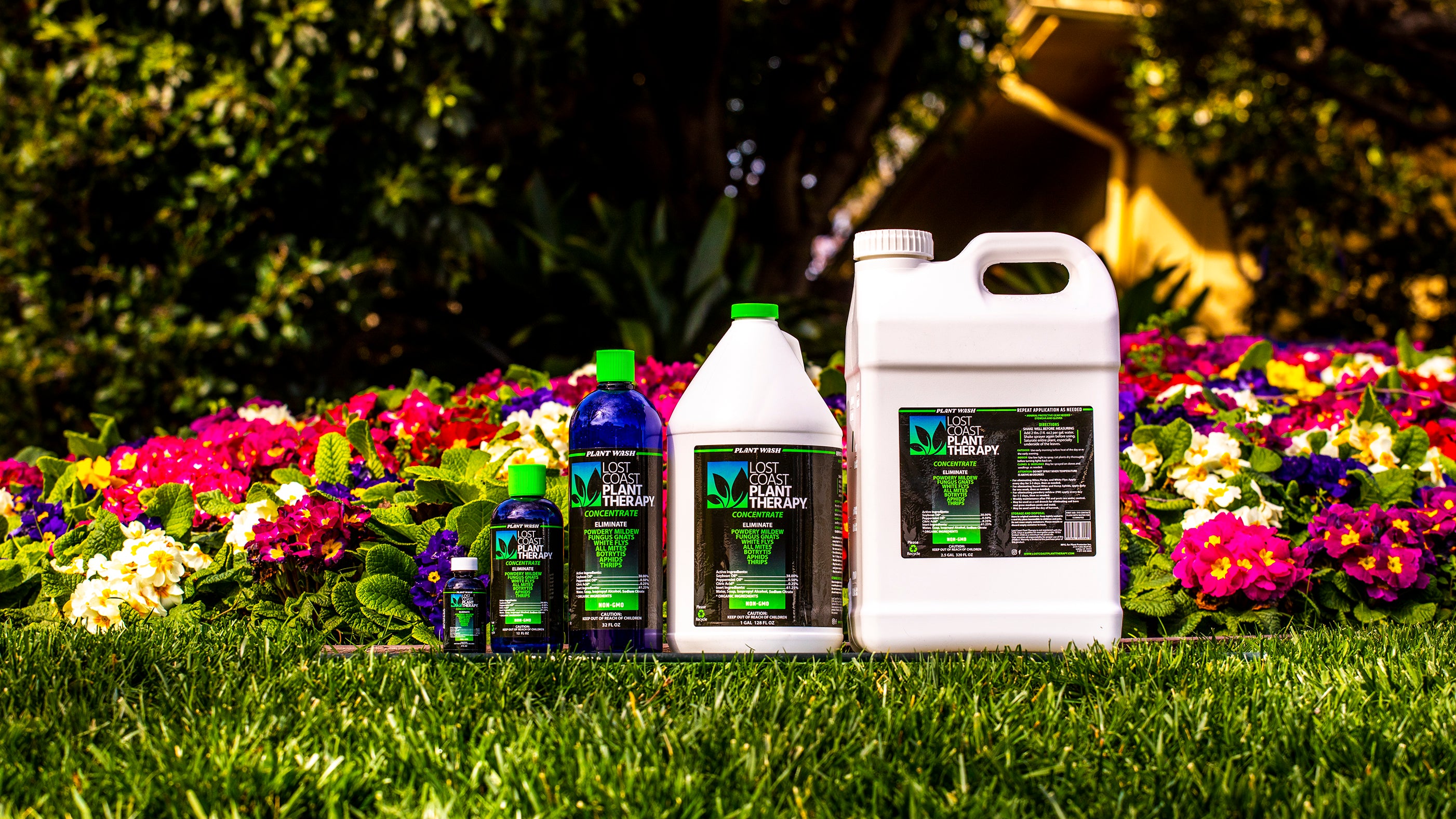
Lost Coast Plant Therapy natural plant wash concentrate in the garden Demeter approved input

The plant wash made for biodynamic growers.

Lost Coast Plant Therapy is a natural 3 in 1 insecticide, miticide and fungicide concentrate that controls soft bodied insects and plant diseases on contact, without harsh chemicals.

01 · COATS

The spray coats insects, larvae and eggs on contact.

02 · BLOCKS

It blocks respiration and disrupts digestion, drying pests out.

03 · NO RESISTANCE

Because the action is physical, pests cannot build resistance.

For powdery mildew, mold and botrytis, the formula disrupts fungal growth on the plant surface and helps normalize pH without leaving harmful residue. In greenhouse trials conducted with Cornell University's College of Agriculture and Life Sciences, it showed up to 96% +/- control of powdery mildew.

Mix rate
1 oz per gallon of water. Up to 2 oz per gallon for heavy pressure or russet mites.
How to apply
Foliar spray or soil drench at the same rate. Saturate the whole plant, especially leaf undersides.
Harvest
Can be used up to the day of harvest when used as directed.
Crew safety
No special equipment, no protective gear and no re-entry waiting period.
Timing
Outdoors, spray early morning or early evening at 80°F or below. Always test on one plant first.

Where do you fit in?

Some people come to biodynamics as farmers, some as gardeners and some as the people who buy what those farms grow. Pick the one that sounds like you.

A grower inspecting crop rows on a biodynamic farm

For Demeter certified farms and vineyards

You already juggle inspections, paperwork, weather and daily crop care. Lost Coast Plant Therapy gives you a contact option for soft bodied pests and powdery mildew that you can build into a Demeter compliant crop care plan with confidence.

  • Listed as an approved input for Demeter Biodynamic Certified Farms in the USA
  • Foliar spray or soil drench, mixed at 1 oz per gallon
  • Up to the day of harvest when used as directed, with no re-entry wait for your crew
  • Dries quickly, so it fits into early morning field work
  • Bulk pricing for farms in 1 gallon and 2.5 gallon sizes
A thriving home vegetable garden grown with organic and biodynamic methods

For biodynamic and organic gardeners

You do not need certification to garden the biodynamic way. If you compost, plant for pollinators and want every input in your garden to meet the same bar a Demeter farm would hold it to, this is a plant wash you can trust on vegetables, herbs, fruit, flowers and houseplants.

  • Made with natural and organic ingredients
  • Safe for bees, ladybugs and praying mantis when used as directed
  • Pleasant peppermint scent, with no harsh chemical smell
  • A 4 oz bottle makes up to 4 gallons of ready to use spray
  • Made in California by a family of organic gardeners
Fresh, colorful biodynamic fruits and vegetables just harvested

For people who choose Demeter food and wine

When you see the Demeter Certified Biodynamic mark, it means the whole farm behind that product was inspected, not just one field. It is a promise about soil, animals, wildlife and people as much as about the food itself.

  • Look for the Demeter Certified Biodynamic mark on food, wine, honey, cosmetics and textiles
  • Every certified farm is inspected each year
  • USDA Organic rules are the minimum, with stricter Demeter rules on top
  • Buying from these farms supports habitat for bees and other pollinators
  • Ask your local farmers market or CSA whether any growers farm biodynamically

Bring biodynamics home.

You can borrow the best ideas from Demeter farms in any backyard, balcony or community plot. Start with one and add more each season.

Homemade compost ready to spread on a garden bed

Make compost the center

Turn kitchen scraps, leaves and garden waste into compost. It is the single biggest step toward a garden that feeds itself.

A patch of wildflowers left to grow wild for pollinators

Leave a tenth wild

Copy the Demeter rule at small scale. A corner of native wildflowers or a hedgerow gives bees and beneficial insects a home.

Heirloom vegetables with varied shapes and colors

Grow and save heirlooms

Open pollinated varieties can be saved year after year, slowly adapting to your own soil and climate.

Cover crops growing on a garden bed between seasons

Rotate and cover crop

Move plant families around each year and sow a cover crop when beds would otherwise sit bare.

Flowers blooming among vegetables to attract pollinators

Keep something blooming

Plan for flowers from early spring to late fall so pollinators and predators always have food nearby.

A shallow water dish with stones for bees and insects in a garden

Invite the animals in

Worms, birds, bees and even a few backyard hens all play a part. A shallow water dish with stones helps bees drink safely.

A gardener walking through the garden observing plants in the morning

Watch the rhythms

Try a biodynamic planting calendar for a season, and walk your garden every morning. Daily observation catches problems while they are small.

Spraying a natural plant wash on a healthy garden plant

Choose gentle inputs

When pests show up, reach for something that controls them on contact and leaves your pollinators alone, like Lost Coast Plant Therapy.

The Lost Coast Plant Therapy family in Humboldt County, California

Growers who share the same values.

Our roots are literally in the soil. For more than 53 years our family of organic gardeners has grown in Humboldt County, California, among the redwoods, rivers and coastal fog of the Lost Coast. We learned to read the land the way biodynamic farmers do, by the feel of compost that crumbles just right, soil that smells alive and leaves that tell you how a plant is doing.

Lost Coast Plant Therapy started in our own greenhouse, fighting pests, mold and powdery mildew that no natural product could handle. Two years of research and another eighteen months of field testing later, we had a plant wash that works with nature instead of against it. Being listed as an approved input for Demeter Biodynamic Certified Farms is not just a badge for us. It tells us our product belongs on the kind of farms we admire most.

302,500Gallons of concentrate sold since 2017
38.7MGallons of a natural pest control solution

Demeter Biodynamic questions.

Answers for farmers, gardeners and anyone curious about biodynamic food and the inputs these farms rely on.

More product FAQ

Lost Coast Plant Therapy is listed as an approved input for Demeter Biodynamic Certified Farms in the USA, and you can confirm the listing directly with Demeter Association, Inc. by calling (541) 929‑7148 or visiting demeter-usa.org. Because Demeter certifies each farm against its own farm plan, add the product to your plan, keep the label and your application records together for your annual inspection, and let your certifier know before you add any new input. We are also approved for use by CCOF and is Clean Green Certified.

Yes. It is approved for Demeter farms, which include many biodynamic vineyards, and it controls powdery mildew, mites and soft bodied insects on contact. Mix 1 oz per gallon of water and saturate the canopy, especially leaf undersides, in the early morning or evening at 80°F or below. It can be used up to the day of harvest when used as directed and needs no re-entry wait, which keeps crews moving during busy weeks. Test it on a few vines before treating whole blocks.

Yes, Lost Coast Plant Therapy can be used during flowering when used as directed. It works by coating soft bodied pests, so hard bodied beneficials like bees, ladybugs and praying mantis are not affected. On a farm full of pollinators, an extra layer of care is to spray early in the morning or in the evening when bees are less active and let the plants dry before peak foraging.

Yes. Lost Coast Plant Therapy works as a soil drench at the same 1 oz per gallon rate used for foliar sprays. Growers use it this way for fungus gnats, root aphids and other soil dwelling pests, or as a weekly preventive treatment, and it does not stress the plant. Greenhouses build up humidity and pest pressure quickly, so pairing a drench with regular leaf inspections helps you catch problems while they are still small.

Absolutely. Certification matters for farms that sell under the Demeter label, but the practices work at any scale. Home gardeners can build compost, rotate crops, plant for pollinators, save heirloom seed, try the preparations and follow a planting calendar. Biodynamic associations and local groups offer classes, and some sell ready made preparations sized for small gardens. Start with compost and wildlife habitat, since those two habits change a garden faster than anything else.

A biodynamic planting calendar maps each day to the position of the moon against the constellations and groups days as root, leaf, flower or fruit days. Growers use it to time sowing, transplanting, harvesting and applying preparations, for example sowing carrots on root days and lettuce on leaf days. Scientific support for the calendar is limited, but many farmers value the discipline it brings, because it keeps them out in the garden observing their plants every day.

They overlap, but they are not the same. Regenerative agriculture is a broad set of practices focused on rebuilding soil, such as cover cropping, reduced tillage and composting, and the term has no single legal definition. Demeter Biodynamic includes those practices and adds certified requirements, including whole farm certification, the preparations, animal integration and a 10 percent biodiversity set aside. Many people describe biodynamic farming as one of the oldest and most demanding forms of regenerative agriculture.

You can order every size, from 4 oz to 2.5 gallons, from our online store, or find a garden center near you with our store locator. Farms, vineyards and commercial growers can apply for bulk pricing through our farm application, and garden stores can apply for wholesale pricing. Every bottle is a concentrate, so a 4 oz bottle makes up to 4 gallons of ready to use spray, and commercial growers usually start with the 1 gallon or 2.5 gallon size.

Grow the biodynamic way with Lost Coast Plant Therapy

A Natural Plant Protector approved for Demeter Biodynamic farms, gentle on the bees and beneficial insects your garden depends on. Available from 4 oz bottles to 2.5 gallons.

Shop all sizes

This page is for education. Demeter, Demeter Biodynamic and Biodynamic are trademarks of the Demeter Association, Inc., and Lost Coast Plant Therapy is not affiliated with or endorsed by Demeter beyond its listing as an approved input. Certified growers should confirm every input with their certifier and farm plan. Lost Coast Plant Therapy controls soft bodied insects, mites, powdery mildew, mold and botrytis on contact. It is not a fertilizer and does not correct nutrient, watering or root problems. Always read and follow the product label. For local growing advice, contact your county cooperative extension office.