Skip to content
An organic grower spraying a fruit tree with a natural plant protector
Certified for organic growers in New Zealand

BioGro certified input for organics.

Lost Coast Plant Therapy is now certified by BioGro, New Zealand's largest organic certifier, as an input for organic production. From Marlborough vineyards and Bay of Plenty kiwifruit orchards to Canterbury peony fields and backyard dahlia beds, organic growers can now control soft bodied pests and plant diseases with a Plant Protector that works with nature.

BioGro Certified Input for Organics logo, number 6404
  • Ingredient review
  • Non GMO
  • Factory audit
  • Renewed yearly
1983BioGro began as the Biological Producers and Consumers Society and wrote New Zealand's first organic standards
850+Certified organic licensees across New Zealand look to BioGro for approved inputs
Module 22The part of the BioGro standards used to evaluate every input
Every yearIngredients, labels and any changes are reviewed again.
BioGro Certified

What the BioGro logo means for growers.

BioGro is New Zealand's largest certifier of organic produce and products, and its tree logo appears on organic products across the country. When an input carries the BioGro Certified Input for Organics logo, it has been independently checked and approved for use in organic production.

For a grower, that means less guesswork. Before an input can carry the logo, BioGro reviews every ingredient, how the product is made and how it affects the environment, people and animals. It is then listed in the BioGro Certified Inputs Database, which licensees use to find products that fit their organic management plan.

Lost Coast Plant Therapy is certified under BioGro number 6404. It is the same Plant Protector growers already trust on certified organic and Demeter Biodynamic farms in the United States, now certified for organic orchards, vineyards, market gardens and flower farms across New Zealand.

Two labels, one standard.

BioGro certifies both the growers and the products they use. Here is how the two fit together, and why our label says certified input.

For farms and food

Certified organic

The farm, orchard or vineyard and everything that comes off it are audited against BioGro standards, so the food, wine or flowers can be sold as organic.

  • Organic kiwifruit, apples and wine
  • Certified organic dairy and honey
  • At least three years in conversion before full certification
For what growers use

Certified input for organics

Fertilisers, soil conditioners and plant protection products are assessed so growers know they can use them in an organic system. The input itself is certified for organic production, not certified as organic.

  • Permitted for use in certified organic production
  • Listed in the BioGro Certified Inputs Database
  • Assessed again every year

How a product earns the BioGro logo.

Input certification is not a form you fill in once. It is a full review of what goes into the bottle and how it is made, repeated every year.

Step 1

Ingredient review

Every ingredient and additive is listed with its quantity and percentage, along with specification sheets, GMO declarations and evidence that each one complies with the BioGro standards.

Step 2

Manufacturing review

The maker details how the product is made, how equipment and processing areas are cleaned.

Step 3

Proof of need and safety

The maker provides evidence that the product is needed in organic production and does not harm the environment, people or animals when used as directed.

Step 4

On site audit

An experienced BioGro auditor visits the facility to verify the application and organic management plan, inspect the site map and check the records.

Step 5

Certification decision

With the auditor's report complete, a member of the BioGro certification team reviews the case, makes the final decision and sends a written notice.

Step 6

Renewed every year

Certified inputs are assessed every year. Before each audit, BioGro reviews the organic management plan, ingredients, labels and any changes since the last certification.

New Zealand organics by the numbers.

New Zealand grows some of the most sought after organic food and wine in the world, and demand at home and overseas keeps climbing.

NZ$1.18BValue of the New Zealand organic sector, a new record
NZ$606.7MOrganic exports, growing nearly twice as fast as all primary exports
89,544Hectares of certified organic land across the country
95%Of New Zealand's organic wine producers are certified by BioGro

Where organic export dollars come from

  • 40.3% Fruit and vegetables
  • 35.3% Dairy
  • 12.2% Wine
  • 12.2% Everything else

Figures from the OANZ 2025 Organic Market Report, covering 2024, and the BioGro Organic Wine Report 2021.

Grown in New Zealand.

From the subtropical north to the frosty south, New Zealand grows an incredible range of crops. Tap a region to see what grows there and which pests organic growers face.

Northland

Avocados, citrus and kūmara

Subtropical warmth makes Te Tai Tokerau home to avocado orchards, citrus groves and the kūmara fields around Dargaville. Thrips, mites and scale are the soft bodied pests growers watch for most.

Auckland

Market gardens and island vineyards

The volcanic soils around Pukekohe feed some of the busiest vegetable gardens in the country, while Waiheke Island and Kumeū grow celebrated wines. Whitefly, aphids and the tomato potato psyllid keep market gardeners busy.

Waikato

Pasture, blueberries and asparagus

Rich soils and steady rain make the Waikato a powerhouse for dairy, with blueberries, asparagus and vegetables growing alongside. Aphids, mites and powdery mildew are common in berry plantings.

Bay of Plenty

Kiwifruit and avocados

Te Puke calls itself the kiwifruit capital of the world, and the Bay of Plenty grows most of New Zealand's kiwifruit along with avocados. Scale, mealybugs and mites are the soft bodied pests orchardists scout for.

Tairāwhiti Gisborne

Chardonnay, citrus and sweetcorn

One of the first places on earth to see the sun each day, Tairāwhiti is known for chardonnay, citrus and fertile river flats. Mealybugs in the vines and scale on citrus are regular visitors.

Hawke's Bay

Apples, stonefruit and red wine

Long called the fruit bowl of New Zealand, Hawke's Bay grows apples, pears, stonefruit and the bold reds of the Gimblett Gravels. Woolly apple aphid, mites and powdery mildew top the watch list.

Wairarapa

Pinot noir and olives

Around Martinborough, small family vineyards grow pinot noir on free draining terraces, with olive groves and market gardens nearby. Powdery mildew and botrytis are the big worries in the vines.

Nelson Tasman

Apples, hops and boysenberries

Sunny Nelson Tasman grows apples, kiwifruit, the hops of the Motueka valley and the boysenberries the region is famous for. Aphids, mites and powdery mildew are common in hop gardens and berry rows.

Marlborough

Sauvignon blanc

New Zealand's largest wine region put sauvignon blanc on the world map. Organic vineyards here manage powdery mildew, botrytis bunch rot and mealybugs with careful canopy work and approved inputs.

Canterbury

Blackcurrants, seed crops and peonies

The wide Canterbury Plains grow grain and seed crops, blackcurrants and berries, Waipara makes aromatic wines and flower farmers cut peonies for export. Aphids and botrytis can mark the blooms.

Central Otago

Cherries, apricots and pinot noir

Hot summers and frosty winters give Central Otago its famous cherries, apricots and some of the world's most southerly pinot noir. Aphids on cherries and powdery mildew in the vines are the pests to watch.

Southland

Peonies, pasture and vegetables

Long summer days in the deep south suit late season peonies flown to buyers overseas, alongside dairy pasture and cool climate vegetables. Aphids, thrips and botrytis can all show up in the flower fields.


Seasons of the south.

Down under, summer peaks at Christmas and the grape harvest comes in autumn. Here is what to watch for through the New Zealand growing year.

SpringKōanga
SummerRaumati
AutumnNgahuru
WinterHōtoke

September to November

What is happening
Orchards blossom, vines burst into leaf and growers plant out tomatoes, cucumbers and dahlia tubers.
Pests to watch
Aphids on soft new growth, thrips in blossom and the first powdery mildew in vines and berries.
Grower tip
Scout new shoots every week and spray at the first sign of aphids, before colonies build.

December to February

What is happening
Cherries, berries and peonies are picked, kiwifruit sizes up and gardens are in full swing.
Pests to watch
Two spotted mites in hot dry spells, whitefly, the tomato potato psyllid and powdery mildew.
Grower tip
Spray in the cool of early morning or evening, and always cover the undersides of the leaves.

March to May

What is happening
Vintage begins in the vineyards, apples are picked and the kiwifruit harvest gets under way.
Pests to watch
Mealybugs, botrytis in tight bunches, mites and scale.
Grower tip
Keep canopies open for airflow and follow your organic management plan for any spray close to harvest.

June to August

What is happening
Pruning, cover crops and planning outside, while glasshouse crops keep going under cover.
Pests to watch
Scale and mealybugs sheltering in bark, plus fungus gnats and whitefly in glasshouses.
Grower tip
Clean up old leaves and fruit and treat overwintering scale while the trees are bare.

What are you growing?

Pick your crop to see the pests and diseases New Zealand growers face most, and how Lost Coast Plant Therapy fits an organic programme.

Organic vineyards and wine

Organic vineyards and wine

From Marlborough sauvignon blanc to Central Otago pinot noir, organic wine is one of New Zealand's great success stories. Open canopies and good airflow do most of the work, and a contact spray that is gentle on the vines handles flare ups without leaving harmful residue.

Pests and diseases to watch

  • Powdery mildew
  • Botrytis bunch rot
  • Mealybugs
  • Two spotted mites
  • Thrips
Strawberries, blueberries and boysenberries

Strawberries, blueberries and boysenberries

Strawberries, blueberries, boysenberries and blackcurrants grow from Waikato to Canterbury. Berries are picked often and eaten fresh, so growers need protection that is safe on the fruit and kind to the bees that pollinate every flower.

Pests and diseases to watch

  • Two spotted mites
  • Aphids
  • Thrips
  • Powdery mildew
  • Botrytis grey mould
Dahlias, peonies and cut flower farms

Dahlias, peonies and cut flower farms

Kiwi flower farmers grow dahlias, peonies, ranunculus and roses for local florists and export buyers, and home gardeners fill whole beds with them. One scarred petal can make a stem unsellable, so catching thrips and mildew early really matters.

Pests and diseases to watch

  • Thrips
  • Aphids
  • Spider mites
  • Powdery mildew
  • Botrytis grey mould
Kiwifruit, apples and stonefruit

Kiwifruit, apples and stonefruit

Kiwifruit in the Bay of Plenty, apples in Hawke's Bay and Nelson, and cherries and apricots in Central Otago. Organic orchardists rely on beneficial insects and thorough canopy coverage, with a dormant season clean up to cut pest pressure in spring.

Pests and diseases to watch

  • Scale insects
  • Mealybugs
  • Woolly apple aphid
  • Mites
  • Powdery mildew
Avocados, citrus and subtropicals

Avocados, citrus and subtropicals

Northland, the Bay of Plenty and Gisborne grow avocados, lemons, mandarins and feijoas in warm coastal sun. Thrips and mites scar the fruit skin, while scale and mealybugs hide in dense canopies.

Pests and diseases to watch

  • Thrips
  • Mites
  • Scale insects
  • Mealybugs
  • Whitefly
Glasshouses and market gardens

Glasshouses and market gardens

Tomatoes, cucumbers, capsicums and salad greens grow under cover all year. The warm, still air that plants love suits whitefly, mites and the tomato potato psyllid too, so a quick, contact spray is a big help.

Pests and diseases to watch

  • Whitefly
  • Tomato potato psyllid
  • Two spotted mites
  • Thrips
  • Powdery mildew
Home gardens and lifestyle blocks

Home gardens and lifestyle blocks

Kiwi backyards grow everything from feijoas and lemons to tomatoes, roses and dahlias. The same BioGro certified Plant Protector used on organic farms is easy to use in the garden, with a fresh peppermint scent instead of a chemical smell.

Pests and diseases to watch

  • Aphids
  • Whitefly
  • Mites
  • Mealybugs
  • Powdery mildew
A grower spraying Lost Coast Plant Therapy on tomato plants in a glasshouse BioGro Certified Input for Organics

The Plant Protector for New Zealand.

Lost Coast Plant Therapy is a natural 3 in 1 insecticide, miticide and fungicide concentrate made with food grade, natural and organic ingredients. It controls soft bodied pests and plant disease on contact, without synthetic chemicals that build up in your soil or waterways.

Demeter approved input, USACCOF approved, USAClean Green Certified25(b) minimum risk, USA
01 · COATS

The spray coats insects, larvae and eggs on contact.

02 · BLOCKS

It blocks respiration and disrupts digestion, drying pests out.

03 · NO RESISTANCE

Because the action is physical, pests cannot build resistance.

For powdery mildew, mould and botrytis, the formula disrupts fungal growth on the leaf surface and helps normalise pH without leaving harmful residue.

96% +/-Efficacy against powdery mildew
95% +/-Efficacy against western flower thrips and all soft bodied insects

Greenhouse trials conducted in collaboration with Cornell University's College of Agriculture and Life Sciences showed 96% +/- efficacy against powdery mildew and 95% +/- efficacy against western flower thrips and all soft bodied insects.

Lost Coast Plant Therapy controls plant diseases and soft bodied pests on contact.

The pests New Zealand growers know too well

From two spotted mites in a Hawke's Bay orchard to the tomato potato psyllid in a Pukekohe glasshouse, the same soft bodied pests and fungal diseases turn up across the country.

Broad spectrum insecticides kill the ladybirds, lacewings and parasitic wasps that keep pests in balance, and pests bounce back faster than their predators. Lost Coast Plant Therapy works on contact instead, coating soft bodied pests and their eggs so they cannot breathe, then breaking down without building up in your soil.

And more. Mould, root aphids and other soft bodied pests. Not sure what is on your plants?Use the Issue Identifier
A bee gathering pollen from a flower

Safe for bees, ladybirds and praying mantis.

Organic growing depends on beneficial insects, and Lost Coast Plant Therapy does not harm bees, ladybirds or praying mantis when used as directed.

The formula works physically, not as a poison. It coats soft bodied insects like aphids and mites, while hard bodied beneficials are built differently and are not affected. Spray in the early morning or evening when bees are not foraging, and once your plants are dry, pollinators go right back to work.

Bees

From mānuka hives to backyard bumblebees, bees pollinate the kiwifruit, berries and seed crops New Zealand depends on.

Ladybirds

Ladybirds and their larvae eat huge numbers of aphids. Keeping them alive means fewer sprays later in the season.

Praying mantis

New Zealand's own bright green native mantis is a patient hunter that stays on the job while you spray.

The Lost Coast Plant Therapy family in Humboldt County, California

From our family to yours.

Our family of organic gardeners has grown in Humboldt County, California, for more than 53 years, among the redwoods, rivers and coastal fog of the Lost Coast. It is a place a lot like parts of New Zealand, where people care deeply about the land and the water that runs through it.

Lost Coast Plant Therapy started in our own greenhouse, fighting pests, mould and powdery mildew that no natural product could handle. After two years of research and eighteen more months of field testing, we had a Plant Protector that works with living systems instead of against them. Earning BioGro certification means we can now share it with organic growers across New Zealand.

302,500Gallons of concentrate sold since 2017
38.7MGallons of spray replacing pesticides

BioGro and organic growing questions.

Answers for New Zealand growers about BioGro certification and how the Plant Protector fits an organic operation.

More product FAQs

BioGro is New Zealand's largest certifier of organic produce and products. It began in 1983 as the Biological Producers and Consumers Society, wrote the country's first organic standards and is a registered charity. Today more than 850 certified organic licensees, from kiwifruit orchards and vineyards to dairy farms and beekeepers, carry the BioGro logo.

It means a product used by growers, such as a fertiliser or a plant protection spray, has been independently assessed against the BioGro organic standards and approved for use in organic production. BioGro reviews the full ingredient list, how the product is made and its effects on the environment, people and animals, inspects the operation on site and repeats the review every year.

Input products are not certified as organic themselves, because they are not food. Lost Coast Plant Therapy is certified by BioGro as an input for organic production under BioGro number 6404, which is the correct certification for a product that organic growers use on their crops. You will see that number on the BioGro Certified Input for Organics logo.

Yes. It is a BioGro certified input, which means it has been approved for use in organic production.

Lost Coast Plant Therapy controls soft bodied insects and mites on contact, including aphids, two spotted mites, thrips, whitefly, mealybugs, psyllids, scale crawlers and fungus gnats. It also controls powdery mildew, mould and botrytis. It is not designed for chewing pests like caterpillars or for nutrient problems.

Yes. It works physically rather than as a poison, coating soft bodied pests so they cannot breathe. Bees, ladybirds and praying mantis are hard bodied and are not harmed when the product is used as directed. For the gentlest approach, spray early in the morning or in the evening when bees are not foraging, and let the leaves dry.

Lost Coast Plant Therapy can be used on fruit, vines, berries, vegetables, herbs, flowers and ornamentals, indoors and out. Growers use it in vineyards, orchards, glasshouses, flower farms and home gardens. Always read and follow the label, test a small area first on sensitive plants and avoid spraying in the heat of the day.

Mix the concentrate with water as shown on the label, shake well and spray every surface of the plant until it is evenly wet, especially the undersides of the leaves where pests hide. Because it works on contact, coverage is everything. Repeat applications as the label directs to catch eggs that hatch after the first spray.

You can purchase Lost Coast Plant Therapy directly from our official New Zealand distributor at lostcoastplanttherapy.nz. Whether you're a home gardener, commercial farmer, orchard owner, vineyard grower, flower grower, or retailer, visit their website to explore available products and inquire about bulk orders and wholesale supply.

Grow organic with Lost Coast Plant Therapy

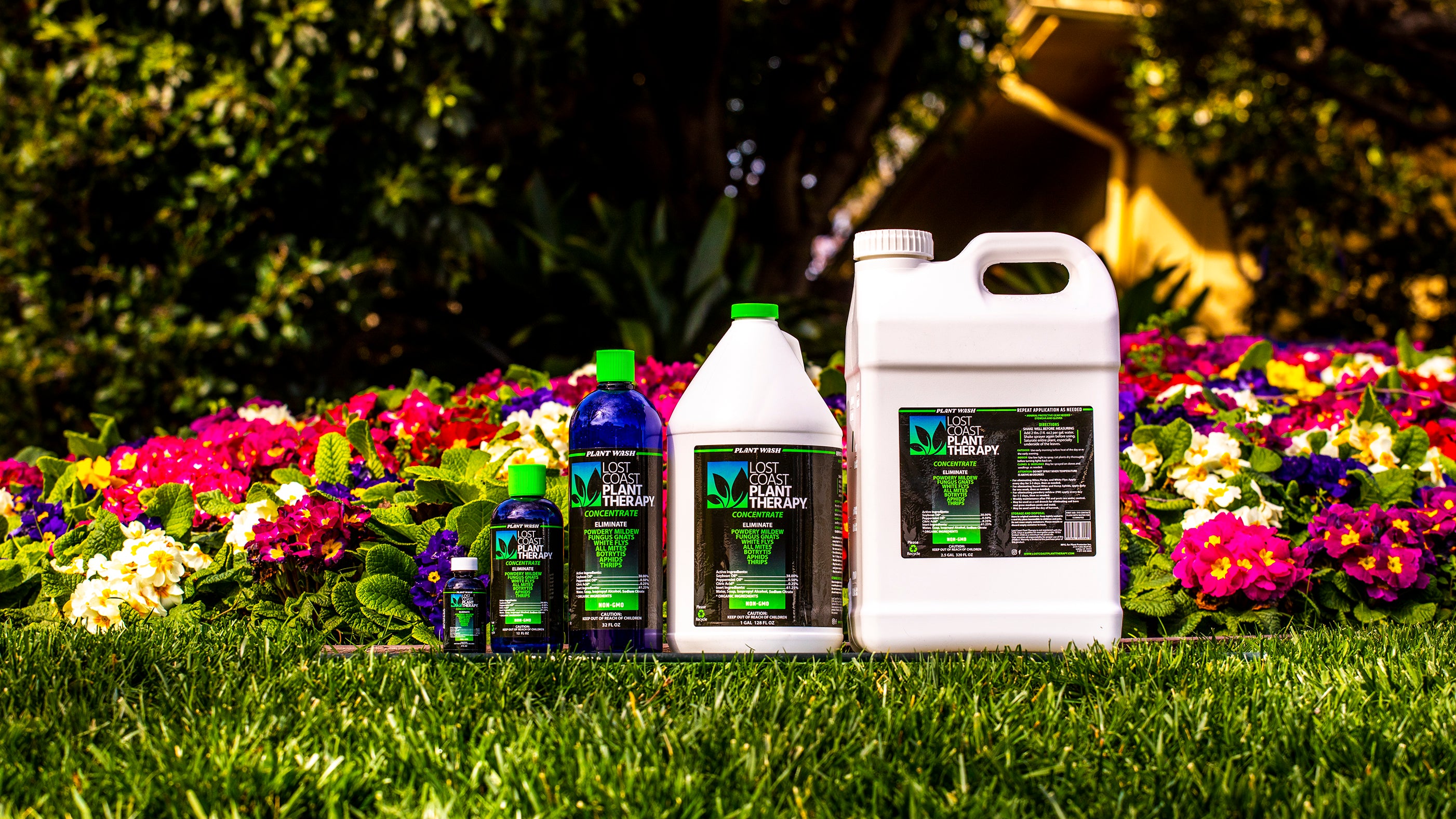
Lost Coast Plant Therapy controls soft bodied pests and plant disease on contact while sparing the bees and beneficial insects your crops depend on. Available from 4 oz bottles to 2.5 gallons.

Shop all sizes