
You walk out to your fruit tree on a Tuesday morning and everything looks great. The new growth is pushing strong, the leaves are clean, and you feel that quiet satisfaction that comes with a healthy garden. Then Thursday rolls around and you notice the tips starting to curl. Maybe there's a faint stickiness on the lower leaves, or tiny specks across the surface that weren't there before.
If you've grown fruit trees for any amount of time, you know this feeling well. It can happen fast, and it can feel like it came out of nowhere. New growth is like a dinner bell. Soft, tender leaves are exactly what insects look for, and a small problem can turn into a real one before most people realize they need to act. The good news is that a consistent foliar spray routine, paired with regular inspection and a few smart habits, keeps most of these problems completely manageable.

Why Foliar Sprays Work, And Why Coverage Is Everything
A foliar spray for fruit trees works by making direct contact with pests on leaf surfaces, stems, and branch junctions. There's no chemistry traveling through the plant. No residue building up in the soil. Contact is the entire mechanism, which means if the spray doesn't physically reach the pest, it doesn't do anything.
This is actually a good thing, but it does require us to take application seriously.

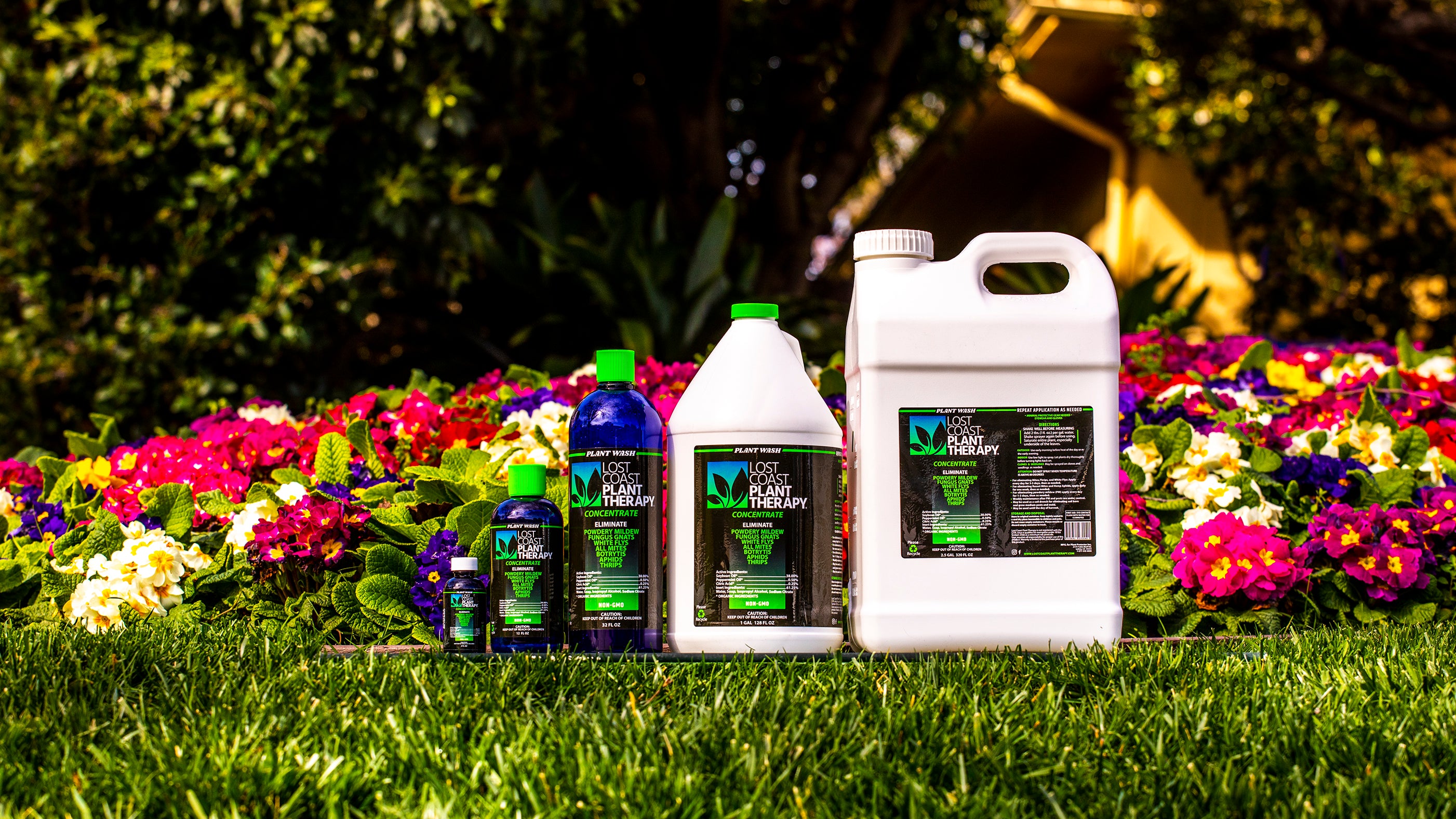
Lost Coast Plant Therapy is a minimum risk pesticide that controls pests through full contact coverage, and it's available as a concentrate so you mix only what you need. One bottle goes a long way, and the routine stays simple whether you're caring for a single backyard apple tree or working through a row of mixed fruit.
Because it works by contact, a light mist from one direction on the outside of the canopy is not going to cut it. True coverage means every targeted surface, especially leaf undersides and interior canopy pockets, is evenly saturated.

Inspect First, Then Spray
Start with the newest growth at the branch tips. That's where pressure shows up first because tender tissue is easier for pests to feed on. Flip those leaves over and look at the undersides. We're looking for clusters of tiny insects, faint webbing, pale stippling, or that telltale sticky residue.
Then check where leaf stems meet older wood. Those little junctions are favorite sheltering spots for early populations. Move to the older leaves and look for speckling or discoloration. Ask yourself if it look active, or if it's old damage that's just sitting there. Active pressure changes daily. Old damage stays the same.

Finally, check the lower canopy and the ground beneath the tree. Sticky residue dripping down onto lower leaves almost always means something is feeding above.
We've found that this inspection habit, once it becomes part of the weekly routine, actually makes caring for trees feel less stressful. Instead of wondering if something is wrong, we know exactly what we're dealing with.

How To Apply A Foliar Spray For Fruit Trees The Right Way
Fruit trees are not houseplants. A houseplant might have a few dozen leaves all facing outward at easy reach. A mature fruit tree has layered growth, interior pockets, angled branches, and sheltered undersides where pests gather quietly out of sight.
Aphids cluster along tender stems tucked inside the canopy. Mites prefer the undersides of leaves that face inward and downward. Powdery mildew gets its start in spots where airflow is low and light barely reaches. When we spray, we're navigating structure.
Mix Correctly
Shake the concentrate thoroughly before measuring. Natural formulations settle, and uniform mixing starts inside the bottle. Measure carefully rather than eyeballing it. The standard recommended mix rate of 1 oz per gallon of water is there for a reason, and more is not automatically better. Repeat applications at the correct strength almost always outperform a single heavy dose.

Move Slowly
Start at the top of the canopy and work your way down. Reposition and approach from multiple angles. Step closer and aim upward to reach interior sections. Pause occasionally to lift a leaf and check the underside. If it's dry, adjust your angle and go again.

Time It Right
Avoid spraying when temperatures are above 80 degrees Fahrenheit. Early morning or late afternoon is the sweet spot. Moderate temperature, softer light, steady drying. Don't spray right before rain.

Agitate During Use
Periodically swirl or pump your sprayer to keep the mixture uniform, especially if you're working through multiple trees. Rinse your lines clean after each session so the next batch starts fresh.
Full coverage means every targeted surface is evenly wet, undersides included. Once you slow down enough to actually achieve that, the results are night and day.

What Your Tree Is Trying To Tell You
Fruit trees are always communicating through their leaves. Once you learn the language, you can read a problem early and respond before it gets out of hand.
Sticky residue on leaves is usually a sign of sap-feeding insects above. Check tender stems and leaf undersides for clusters.

Curling leaf tips point toward feeding on new growth. Check the youngest, most tender leaves first, especially where growth is soft and folded. Fine stippling or pale speckling across the leaf surface suggests mite activity. Turn the leaf over and look for tiny moving dots or faint webbing.

Bronzing spreading across leaves often follows extended mite feeding during hot, dry stretches. By the time this shows up, activity has usually been going on for a while Patchy white film on leaf surfaces is usually powdery mildew, particularly in shaded areas with low airflow.

Distorted new growth with no visible insects requires a closer look under good light. Sometimes the pests are there but very small. Sometimes it's environmental stress instead. It takes a little practice, but once you start seeing what to look for, you'll catch things before they become real problems.

Young Trees Need More Attention
Young fruit trees are doing two demanding things at once. They're building root systems and branch structure while simultaneously pushing soft new growth. That tender growth is exactly what pests are drawn to, and unlike a mature tree with years of stored reserves and established foliage, a young tree doesn't have much buffer.
When feeding pressure hits a young tree, energy that should be going toward root expansion and structural development gets rerouted into repair instead. Those first few seasons set the foundation for everything that comes after. Early management matters far more than late rescue.

We've watched young trees rebound beautifully when pressure was caught early and addressed with a thorough application of Lost Coast Plant Therapy on new growth. We've also seen what happens when early signs get ignored.
The approach is the same as with mature trees. Inspect regularly, apply when early signs appear, and cover new growth thoroughly. But check young trees more often during active growth flushes.

Dormant Season: The Step Most People Skip
Dormancy is not downtime. It's preparation. When leaves have dropped and the branch structure is fully visible, we can see the tree's architecture clearly, and more importantly, we can see exactly where pests are overwintering.
Many insects and mites shelter in bark and branch joints during this period, and if we do nothing, they'll be first to the table when spring warmth arrives. A thorough foliar spray applied to branch structure and trunk surfaces about once a month through the dormant season, not reacting to damage but simply reducing what's overwintering, can dramatically change how spring goes.

Trees that get this attention enter the growing season with a much cleaner baseline. Instead of scrambling to get ahead of a sudden outbreak in the first warm week, we're already starting from a lower population level. It's one of those habits that doesn't feel like it's doing much until we compare spring seasons side by side. The difference is real.

Habits That Reduce Pest Pressure Before We Even Spray
A good spray routine works even better when the surrounding environment supports it.
Prune for Airflow and Spray Access
Dense canopies trap humidity and create the kind of sheltered interior zones where pests build quietly. Thinning cuts that remove crossing or stacked branches open the tree up to light, to air, and to our sprayer. A good question to ask, can you actually see light moving through the canopy? If it looks like a solid wall of leaves from the side, spray coverage is going to struggle to reach the middle. Shape with access in mind.

Clean the Ground
Dry, dusty conditions favor mite activity. Ground covers and occasional irrigation of nearby paths during dry stretches reduce airborne dust. Mulch supports soil moisture and health, but keep it away from the trunk. Stacked mulch against bark traps moisture and creates exactly the kind of damp conditions we're trying to avoid.

Water Steadily and Deeply
Soil that swings between bone dry and waterlogged stresses roots. Stressed roots affect the whole tree, and stressed foliage becomes more attractive to sap-feeding pests. Deep, consistent watering encourages balanced growth that isn't pushing the kind of overly soft, rapid flushes that attract the most attention.

Think About Companion Planting
Staggered bloom strips of flowering plants keep beneficial insects active throughout the season. Low-growing groundcovers stabilize soil and reduce dust. Herb borders with defined edges add diversity without crowding the canopy. Companion planting doesn't replace our spray routine, but it builds the kind of balance that makes pest cycles less intense overall.

Popular Fruit Trees And What To Watch For
Every fruit tree has its own personality. Some are easygoing and forgiving. Some will absolutely test your patience if you're not paying attention. Understanding those tendencies makes orchard care feel predictable instead of reactive. Here's where to look first on each variety, and how to spray intelligently when you need to.
Apple Trees
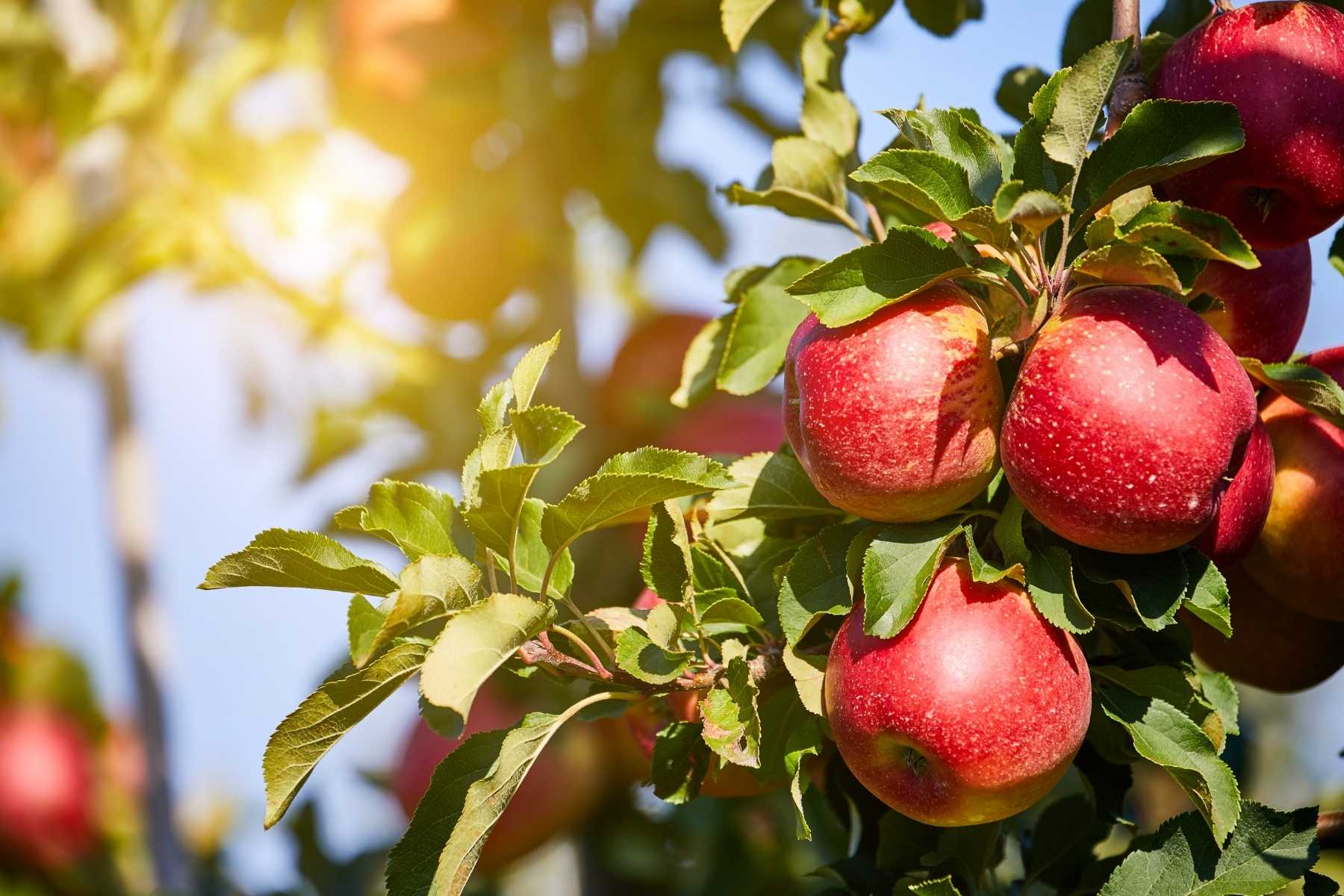
Apples are often the best starting point for new growers, and honestly, they're a pleasure for experienced ones too. They're hardy across a wide range of climates, they respond beautifully to pruning, and once they're established, they settle into a rhythm that just feels manageable. The window to watch most closely is early spring when new growth first pushes out. That tender flush is what aphids head for first, and interior canopy pockets can harbor early mite activity if things turn dry.
Always check branch tips first. Clean, upright new growth means the tree is doing well. When a foliar spray is needed, maybe sure to fully saturate leaf undersides and the inner canopy where airflow is softest.

Pear Trees
Pear trees can be deceptive. They look neat and composed even when something is building underneath, which makes them a little tricky. Pests can accumulate along midribs and leaf undersides while the rest of the tree looks perfectly fine, and by the time distortion becomes obvious, it's often spread through several branches already. We make underside checks a firm habit with pears.
When spraying, go into the center of the canopy and use multiple angles to get through the layered growth. Don't let the clean exterior fool you into skipping the inspection.

Peach Trees
Peaches are high-reward trees in the right climate but can become demanding where springs are cool and damp. Leaf curl and surface issues are common in those conditions, and once stressed, peaches tend to stay in recovery mode for extended periods.
Climate fit matters more with peaches than almost any other fruit tree. Watch emerging foliage closely in early spring. Leaves should unfurl smoothly and evenly. Distortion appearing early usually means the environment is working against the tree. Strong pruning for airflow is super important.

Nectarine Trees
Nectarines are basically peaches with even more delicate new growth. Their flush periods are the key window for inspection. Check new shoots and the undersides of emerging leaves closely during active growth.
Apply Lost Coast Plant Therapy with even, unhurried coverage. These trees respond best to steady, moderate routines. If things get away from you, dramatic corrections are hard to pull off. Consistency from the start is the move.

Plum Trees
Plums grow dense. That's just their nature, and it means sheltered interior zones are almost guaranteed without active pruning. From the outside a plum tree can look lush and healthy while pressure quietly builds in the middle.
When inspecting plums, step close and part branches slightly to look inward. When spraying, slow down and work all the way around the tree from multiple angles. Interior branches are the priority.

Cherry Trees
Cherry trees hide pressure in clusters. Leaves and developing fruit bunch together in ways that look clean from a distance while underside feeding happens quietly inside those groupings. When inspecting cherries, look upward into the canopy rather than scanning from the outside.
When spraying, direct the spray upward from beneath the canopy to actually reach those clustered zones. Surface spraying on cherries is a common mistake and rarely delivers the results you're hoping for.

Apricot Trees
Apricots can struggle in damp climates, especially during cool springs. They prefer drier air and stable warmth, and in regions that don't suit them they can feel like a constant project. Variety selection is critical.
Choosing cultivars adapted to your specific region makes a real difference in how much management is required. Inspect early foliage carefully during damp spells, and focus on maintaining clean leaf surfaces during vulnerable growth stages.

Citrus Trees
Citrus is its own world, especially in containers near patios and covered areas. Those warm, sheltered microclimates that make sitting outside so pleasant also happen to be perfect for pests. Lemon, lime, orange, and mandarin trees in these settings can become what we affectionately call patio pest magnets when routine care slips. Citrus leaves are thick and glossy, and pests love gathering along undersides and near stem junctions where they're harder to spot.
Container-grown citrus needs the most consistent attention of all because limited root space creates baseline stress that can make pest pressure escalate faster than it would in the ground.

Fig Trees
Figs can look completely healthy right up until mite damage becomes obvious from a distance. Their broad leaves can appear lush even while fine stippling and bronzing build up steadily. By the time discoloration is visible across the surface, activity may already be well established.
Early underside checks during warm, dry stretches are the best defense. Don't wait for the tree to show you something is wrong from across the yard. Get in the habit of flipping leaves even when everything looks fine.

Pomegranate Trees
Pomegranates are tough and heat-loving, which makes them lower maintenance in the right climate. But tough doesn't mean maintenance-free. Their dense growth still creates sheltered zones, and in warm regions where pest cycles run longer, ongoing awareness matters more than a seasonal sprint.
Thinning the canopy keeps air moving and reduces interior pressure points. When spraying, work methodically through the interior rather than just coating the outside.

Persimmon Trees
Persimmons tend to require less hands on management than almost any other fruit tree on this list, which makes them an excellent choice if you want reliable production without constant intervention. That said, unusual weather patterns can still trigger unexpected flare ups, so it is wise to keep up a simple inspection routine during active growth.
A quick look at new shoots and the interior canopy is usually enough to catch small issues early. When a spray is needed, new growth and interior canopy sections are the focus. Steady and simple is the whole game with persimmons.

Avocado Trees
Avocados require climate awareness and gentle timing. In suitable regions they can be productive and beautiful, but foliage sensitivity varies by variety. Before any broad foliar spray application, always test on a small section and observe the response before treating the whole tree. Inspect leaf undersides and branch junctions closely, apply during moderate temperatures, and avoid harsh afternoon sun.

When We're Already Behind: How To Recover Without Overreacting
If you're reading this because something is already happening in your orchard, that's okay. We've been there too, and most growers have. Pest pressure happens even in well-managed orchards. It's part of growing things, and it's nothing to panic about.
Start by prioritizing coverage. Identify the most affected trees and make sure our Natural Plant Wash is truly reaching all key surfaces, undersides, interior pockets, and branch junctions. In heavier pressure situations, repeat applications at appropriate intervals help control successive generations before they gain momentum. The goal is not to hit the tree harder. It's to make consistent contact with each new wave.

Once visible pressure decreases, stay in the routine rather than stopping cold. Most rebounds happen because the routine got dropped too early. A few well-timed, thorough applications will outperform one aggressive session followed by neglect almost every time.

FAQ's
Why did I spray and nothing changed?
When results are disappointing, coverage is the first thing to revisit. A contact product only works where it physically reaches, so leaf undersides, interior canopy pockets, and stem junctions must be thoroughly coated. Also consider whether the mixture was properly agitated during application. If the solution was allowed to settle in the tank, coverage may not have been uniform.

Why did the pests come back?
Rapid rebound usually points to lifecycle timing rather than failure. Eggs and newly hatched insects are often present even when adults have been controlled. A single application may reduce visible pressure, but repeat applications at appropriate intervals are necessary to interrupt the full cycle. Returning to a steady, consistent schedule typically stabilizes the situation.

What if my tree is too dense to spray properly?
When the canopy is overly thick, coverage becomes nearly impossible. In that case, pruning for spray access should come before another application. Opening the canopy improves airflow and allows the spray solution to reach interior leaves and branch junctions. Without structural adjustment, even the best routine will struggle to reach the areas where pests concentrate.

Why does my container fruit tree always seem stressed?
Persistent issues in container trees often start below the soil surface. Check whether the container is large enough for the root system. Make sure drainage is reliable and that watering is consistent rather than erratic. Root stress creates uneven growth that attracts pests. Improving root conditions frequently leads to better resilience than increasing spray frequency.

Why am I seeing pressure mostly on new growth?
Tender new shoots are naturally more attractive to pests because they are easier to feed on. This does not mean the routine is failing, but it does mean inspection should focus heavily on fresh growth during active flush periods. Timely applications that fully cover these areas prevent small populations from spreading deeper into the canopy.
See more FAQ's here.

Conclusion
Fruit tree care does not have to feel overwhelming. Most problems do not start as disasters. They start small, and they stay small when you catch them early.
Healthy orchards are built on routines that are realistic enough to repeat. That means inspecting, choosing trees that actually fit your climate, shaping the canopy so air and light can move through it and watering steadily. When a foliar spray is needed, Lost Coast Plant Therapy can help control pests and plant disease and support clean, vigorous growth throughout the season.
There will always be weather shifts. There will always be pressure at some point. Fruit tree care is not about preventing every single issue. It is about noticing what is happening and responding in a steady, practical way. When you build habits you can actually maintain, healthier, more productive fruit trees follow naturally.

Additional Resources
Starting a Home Fruit Garden – University of Maryland Extension
Pruning Apples and Pears in Home Fruit Plantings – Penn State Extension
Pruning Mature Fruit Trees – Oregon State University Extension Service
Fruit Information – University of Minnesota Extension
Plum Growing Guide – University of Minnesota Extension
Peach Diseases – Clemson University Extension
Apricots in the Home Garden – Utah State University Extension
Growing Citrus in the Home Landscape – University of Florida IFAS Extension
Fruit Trees for Home Gardens – University of Illinois Extension