
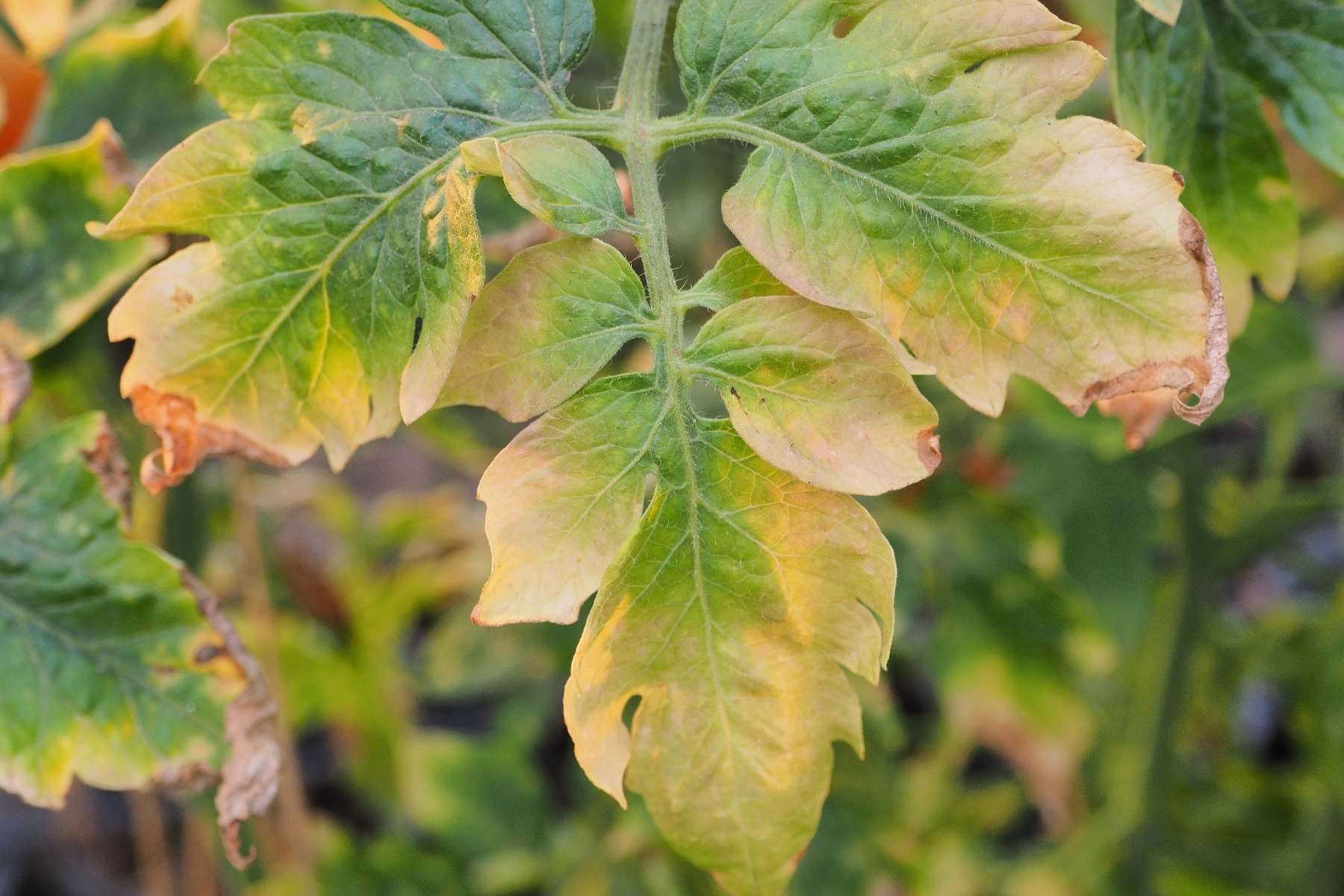
Yellow leaves can make a healthy plant look like something is wrong. One day it seems fine, and the next you spot a leaf turning pale, turning yellow, or dropping off completely.
It is a common problem, sometimes yellow leaves are just part of the plant’s normal growth. Older leaves fade and fall away so the plant can put energy into new ones. But yellowing can also be a sign that something in the plant’s care needs to change.
The cause usually comes down to a few common issues, including watering, light, nutrients, pests, temperature stress, or drainage problems. The important thing is to look at the whole plant, where the yellowing shows up, how many leaves are affected, and whether the leaves are soft, dry, spotted, or falling off can all help you figure out what is happening.
This guide will walk you through the most common reasons plant leaves turn yellow, how to tell them apart, and what to do next.

Yellow Leaves Are a Signal
The reason yellow plant leaves are confusing is that yellowing is not one condition. It is the visible end point of many different situations, the same way a cough can come from a cold, dry air, or a dozen other things. Watering problems can do it. So can light, nutrients, soil chemistry, and the plain fact that leaves do not live forever. Those are the common causes behind almost every case, whether you grow house plants, garden plants, or potted plants on a patio.
Because the symptom looks similar across all of these causes, treating the symptom blindly is a gamble. Pour on more water when the real issue was already too much water, and you make things worse. Reach for fertilizer when the plant was actually starved of light, and you stress it further. The fix depends entirely on the cause behind it.
That is why pattern reading matters. Four clues do most of the diagnostic work for you, where on the plant the yellowing starts, what the veins look like, which leaves turned first, and what the soil feels like when you push a finger into it.

How to Read the Pattern Before You Reach for a Fix
Before you decide on a single action, spend a minute observing.
When the Oldest Leaves Yellow First
Look at the lower, older leaves near the base and the interior of the plant. If those are the ones going yellow while the newer growth at the top stays green, you are usually looking at a mobile nutrient issue or simple aging.
Some nutrients can move around inside a plant. When supplies run short, the plant pulls these mobile nutrients out of its older leaves and ships them up to feed new growth, because new growth is its priority. Nitrogen, magnesium, and potassium are the classic examples. In effect, the plant is cannibalizing its own older leaves to keep growing. That is why old leaves turning yellow so often points toward feeding, watering, or soil that has been exhausted of these movable nutrients.

When the Newest Leaves Yellow First
If the youngest leaves at the tips and crown are pale or yellow while the older leaves below them stay greener, the story changes.
New leaves yellowing first usually points toward an immobile nutrient problem or a root and uptake problem. Iron and calcium are the key examples here. Unlike mobile nutrients, these cannot be relocated from old leaves to new ones, so new growth depends entirely on what the roots can pull from the soil right now. When new leaves come in weak, washed out, or yellow, the question is not what did the plant run out of so much as what can the roots currently access. That sends you to check pH, root health, and micronutrient availability rather than reaching for plant food.

Interveinal Yellowing With Green Veins
This is one of the most useful patterns to recognize because it is so specific. When the tissue between the veins turns yellow but the veins themselves stay distinctly green, the pattern is called interveinal chlorosis.
Interveinal chlorosis usually points toward iron, or a shortage of magnesium or manganese. The position tells you which one. Iron-related interveinal chlorosis tends to show on the newer leaves first, because iron does not move within the plant. Magnesium-related interveinal chlorosis tends to show on the older leaves first, because magnesium does move. So the same green-veined, yellow-between pattern means two different things depending on whether it appears at the top of the plant or the bottom.

Uniform Pale Yellow Across the Whole Plant
Sometimes the yellowing is not localized at all. The whole plant, or large sections of it, fades to a pale, washed-out, lime-to-yellow green at once.
Uniform pale yellowing has a few common drivers like nitrogen running low, light that is too weak, general root stress, or chronic overwatering quietly shutting roots down. Because the causes are so different, this is exactly the pattern where you should resist the urge to fertilize on instinct. Check the soil and the plant's situation first.

Just One or Two Bottom Leaves
If the entire issue is a single lower leaf, or two, going yellow on a plant that is otherwise growing well, this is likely normal aging.

Watering Too Much and Too Little Both Turn Leaves Yellow
Too much or too little water can produce yellow leaves that look strikingly similar at a glance, even though they are opposite problems with opposite fixes. Water-related yellowing is the single most common reason houseplant leaves turn yellow, which is exactly why guessing is so risky. Pour more water onto an already drowning plant and you accelerate its decline.
What Overwatering Yellowing Looks Like
Overwatering yellowing tends to travel with a cluster of telltale clues. Excess water in the pot keeps the soil wet for days, and the pot feels heavy when you lift it. The base of the stem may feel soft or mushy. The yellow leaves often droop and feel limp or soft rather than crisp. You may notice the soil smelling sour or musty, which is the early signal of root rot setting in. And critically, the leaves do not perk up after watering, because the problem was never thirst.

And there's one more clue worth knowing. Tiny black flies drifting around the pot, the kind that puff up when you water, are fungus gnats, and they breed in soil that stays damp. Their presence is a strong vote for an overwatering diagnosis. If you are seeing them, the soil is staying wetter than the plant wants.
For getting them under control, see more on how to get rid of fungus gnats here.

What Underwatering Yellowing Looks Like
When a plant is not getting enough water, the soil goes bone dry and sometimes pulls away from the edges of the pot so a visible gap appears. The pot feels light. Leaf edges go crispy and brittle rather than soft. The plant may wilt but after a thorough drink, a drought-stressed plant usually perks back up within hours. Leaves may also drop as the plant sheds what it cannot support.

The Simple Test That Settles It
Just feel the soil, soggy and cool, especially paired with a heavy pot and soft leaves, means too much water. When the soil is dry and dusty, paired with a light pot and crispy leaves, it means too little water. This thirty-second check resolves the majority of yellow-leaf mysteries, and it stops you from applying the wrong fix.

Nutrient Deficiencies and Why More Fertilizer Is Not Always the Answer
When watering and light both check out and leaves are still yellowing, a nutrient deficiency moves up the list. This is where the pattern-reading from earlier pays off, because each deficiency leaves a recognizable fingerprint, and the old-leaf versus new-leaf clue does most of the sorting.

Nitrogen, Magnesium, and Potassium: The Old-Leaf Group
Nitrogen deficiency shows as a general, even yellowing of older leaves that fades toward the newer growth as it worsens. The leaves usually stay firm and dry, which helps distinguish it from the soft droop of overwatering. Magnesium deficiency shows as interveinal chlorosis on older leaves, that yellow-between-green-veins look starting low on the plant. Potassium deficiency tends to turn the edges and margins of older leaves a bright yellow while the inner leaf stays greener for a while.

Iron and Calcium: The New-Leaf Group
These do not move within the plant, so their shortages appear on the youngest leaves. Iron deficiency creates interveinal chlorosis on new growth, with the newest leaves coming in pale and green-veined. True calcium problems show up as distorted, weak, or poorly formed new growth rather than a clean uniform yellow, and they often trace back to inconsistent watering that interrupts how the plant moves calcium around.

What to Check Before You Feed
Fertilizer is not always the answer, and sometimes it is the wrong one. Before you feed, run through a short checklist. Check watering first, because plants require active, healthy roots to use food, and a plant with struggling roots cannot use it no matter how much you add.
Check light, since a plant in too little light cannot put nutrients to work. Check whether the plant is actively growing, because a dormant or resting plant has little use for a feeding push. Check when it was last fertilized, so you do not stack feedings on top of each other. If all of that points to a genuine deficiency and the plant is healthy enough to grow, a balanced fertilizer used at the labeled rate is the appropriate move.

Just as important is what not to do. Do not overfertilize a stressed plant because excess feed builds up as salts that burn roots and can cause yellowing of its own. If you suspect that buildup, flush the pot with plenty of plain water to carry the excess out. And if the potting mix is old, compacted, and clearly exhausted, the better long-term answer is fresh mix, since no amount of liquid feed fixes a worn-out medium. Repotting into fresh potting soil, ideally worked through with a little compost, restores both nutrients and the drainage that roots need.

When Plants Cannot Reach The Nutrients
A nutrient being present in the soil and a nutrient being available to the plant are two different things.
Soil chemistry, specifically pH, controls availability. Iron is the headline example. Iron can sit right there in the soil and still be effectively invisible to the roots if the soil is too alkaline, because at a high pH the iron locks into forms the plant cannot absorb. Acid-loving plants feel this most sharply, so it is wise to avoid planting them in ground that runs too alkaline. Hard tap water, old and compacted potting mix, and accumulated fertilizer salts all nudge soil in this direction over time. This is exactly why adding more fertilizer often does nothing: you are adding a nutrient the plant already cannot reach, on top of one it already cannot reach. If the lockout drags on, the starved tissue can eventually turn brown.

The practical signal is repetition. If yellowing keeps returning despite consistent, sensible feeding, stop feeding harder and start looking at pH and root conditions instead. For home gardeners, that usually means a basic soil pH check, switching to filtered or collected rainwater if your tap is very hard, flushing built-up salts, and refreshing exhausted mix.

How Light Can Causes Yellow Leaves
Too little light is the usual reason. Plants need light to make food, and when they aren't getting enough, a plant cannot support all of its leaves, so growth turns pale, weak, and leggy, and lower leaves can yellow and fall as the plant sheds what it can no longer afford. Those lower and inner leaves often go first simply because they are the most shaded, sitting in the shadow of the leaves above them. If your plant has drifted away from its window over the months, or the season has shortened the daylight indoors, weak light may be the answer.
The opposite extreme matters too, though less often for whole-leaf yellowing. Plants exposed suddenly to harsh direct sun, especially shade-loving plants that are not built for it, can stress quickly, and intense sun can scorch tissue. The fix for both extremes is to move plants gradually. Shift a plant toward brighter or dimmer conditions over a week or two rather than relocating it in one jump, and watch how the new growth responds. Seasonal change indoors is real, so a spot that was perfect in summer can become too dim by midwinter.

When Yellow Leaves Are Completely Normal
Plants retire their old leaves on purpose. As a plant grows, it stops investing in shaded, aging lower leaves and pulls their resources up into new growth, then drops them. This is called senescence, and it is healthy, normal behavior. One or two yellow lower leaves on a healthy plant that is otherwise pushing out fresh, green growth is usually just the plant doing its housekeeping. Fast-growing plants cycle through leaves faster and more visibly, so they can look alarming when they are simply being efficient.
So how do you know when not to panic? Use these signals. If the yellowing is limited to a leaf or two, stays at the bottom of the plant, happens slowly, and is paired with healthy new growth elsewhere, it is almost certainly normal. The time to pay closer attention is when the yellowing is spreading, when it keeps repeating across many leaves, when it climbs into the mid and upper canopy, or when it comes alongside other stress signs like mushy stems, drooping, or a sour-smelling pot.

Is It Actually Pests or Disease?
Pest damage rarely looks like a clean, uniform yellow leaf. It tends to look like fine speckling or stippling across the leaf, sticky residue (honeydew) on stems and leaves and on surfaces around the plant, delicate webbing, distorted or curled new growth, or visible insects when you look under the leaves. Fungal and bacterial leaf problems tend to create distinct spots, lesions, halos, or patches rather than even yellowing.
If what you are seeing is spots, speckling, stippling, or lesions rather than whole-leaf yellowing, that is a different search entirely, see our Issue Identifier to get to the right answer faster. From there, the branch is simple. Sticky residue and clustered insects on new growth point to aphids, tiny white flies that scatter when you brush the plant are whiteflies. Fine stippling with webbing means spider mites. Cottony white tufts in leaf joints are mealybugs. And those tiny black flies around damp soil are fungus gnats, the overwatering clue from earlier.

That said, pests do connect to yellowing in one real way. Soft-bodied insects feed by draining sap, and a heavy infestation steadily robs leaves of the nutrients and energy they need to stay green, so a heavy infestation can cause leaves to yellow and weaken even when your watering and feeding are perfect. Powdery mildew, the white dusty coating that spreads across foliage, does the same by blocking light and slowing growth until leaves fade. When pests or mildew are part of the picture, our Natural Plant Protector effectively controls both and can help you keep you plants clean and healthy.

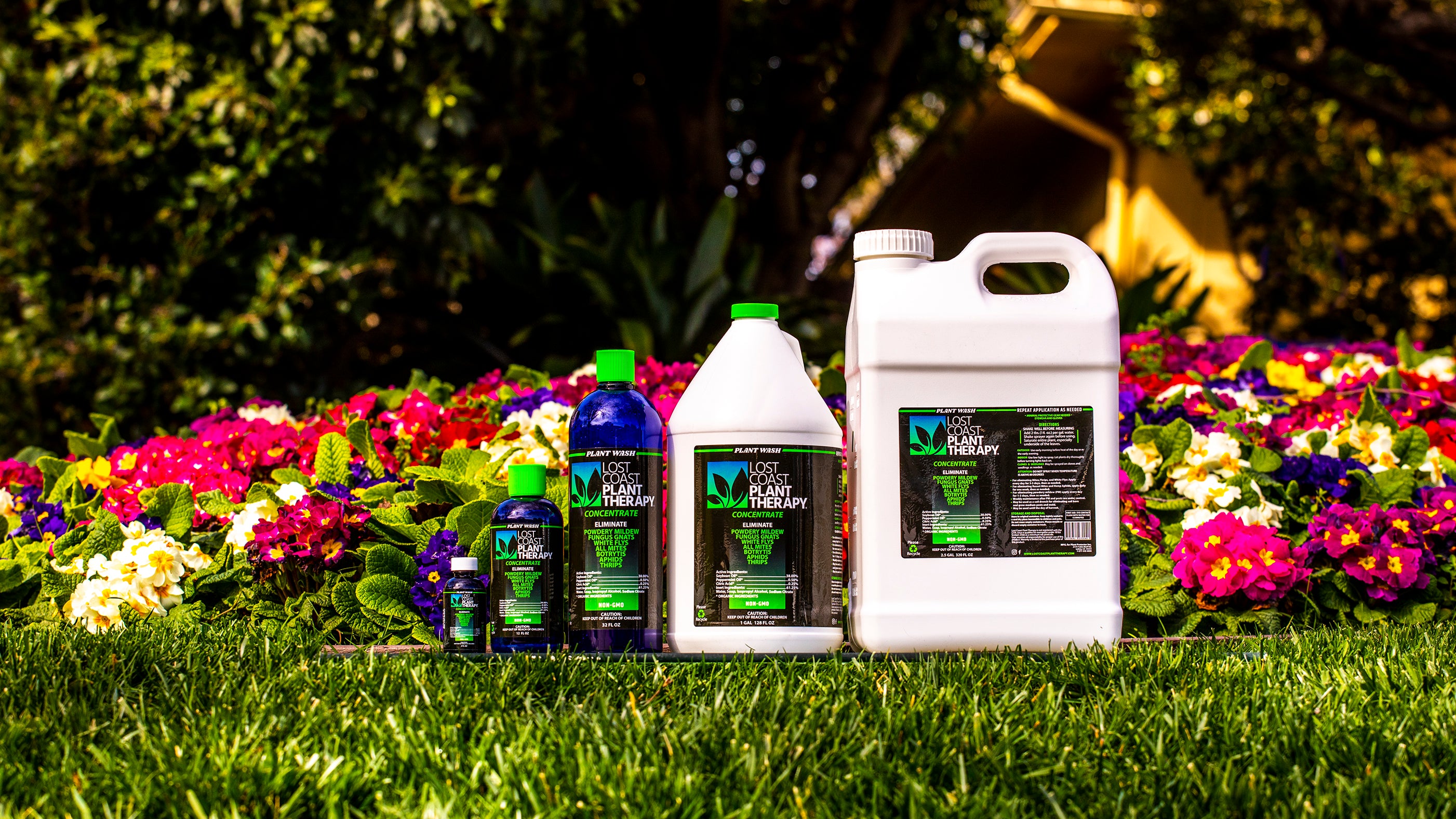
Lost Coast Plant Therapy: One Answer for Pests and Mildew
Lost Coast Plant Therapy is a FIFRA 25(b) minimum risk pesticide and a true 3-in-1 solution, so soft bodied pests and mildew are handled together.
What makes it an effective solution is how it works.. Lost Coast Plant Therapy controls pests through direct physical contact rather than through systemic toxicity. When you spray, the formula coats soft-bodied insects, their eggs, and larvae, disrupting respiration and dehydrating them. Because that action is mechanical rather than chemical, pests cannot build resistance to it the way they do to conventional sprays, which means it keeps working season after season.
For powdery mildew, the citric acid in the formula adjusts the pH of the leaf surface, creating conditions that fungal spores struggle to establish on. If powdery mildew is your main concern, our dedicated powdery mildew treatment article goes deeper, and for gray mold specifically, see our botrytis guide.

It's also built from natural and organic ingredients, including citric acid derived from cassava root, organic peppermint essential oil, non-GMO soy oil, and plant-based soaps. There are no synthetic residues left behind in the soil or on the leaves, and it carries a zero-hour re-entry interval, which means it is safe to be around your plants, and around your kids and pets, right after it dries when used as directed.
You can read the full breakdown on our ingredients page and on our how it works page.

Can Yellow Leaves Turn Green Again?
A leaf that is only slightly pale, caught early, can sometimes recover its color once you correct the underlying issue, because the chlorophyll machinery has not fully shut down yet. But a leaf that has gone fully, deeply yellow has usually crossed a point of no return, and it will not turn green again no matter what you do, it's just how leaves work.
The better sign of recovery is not the old leaf at all. It is the new growth. When fresh leaves emerge green, full-sized, and healthy, your fix worked, even if the old yellow leaves never change. So judge success by what the plant produces next.
You can remove fully yellow leaves to keep the plant looking good, and doing so helps the plant focus its energy. Just resist stripping too many at once. Taking off a large share of the plant's foliage in one go is its own kind of shock. Remove the clearly spent leaves, leave the rest, and let new growth lead the way back.

Conclusion
Most yellowing traces back to water, light, nutrients, soil chemistry, or the simple, healthy retirement of old leaves. The best thing you can do is look at the pattern before making changes. Check where the yellowing is happening, whether the leaves are soft, dry, spotted, or falling, and whether new growth still looks healthy. Then adjust one thing at a time so you can see what actually helps.
In many cases, yellow leaves are not the end of the plant. They are a sign to pause, check the basics, and give the plant what it needs next.

Frequently Asked Questions
Why are my plant leaves turning yellow?
Whole-leaf yellowing usually traces back to one of five things: watering problems (too much or too little), too little light, a nutrient deficiency, soil pH locking nutrients out, or the natural aging of older leaves. The fastest way to narrow it down is to read the pattern. Note where the yellowing started, whether the veins stayed green, which leaves yellowed first, and what the soil feels like. That pattern points you to the cause far more reliably than any single symptom on its own.
Should I cut off yellow leaves?
If a leaf has gone fully yellow, it will not recover its color, so removing it is fine and helps the plant redirect energy to new growth. Take off clearly spent leaves cleanly, but do not strip many at once, since removing a large amount of foliage in one go stresses the plant. A slightly pale leaf caught early may green back up, so those are worth leaving in place while you correct the cause.

Am I overwatering or underwatering?
Push a finger an inch or two into the soil and lift the pot. Soggy soil, a heavy pot, soft or drooping leaves, and a sour smell point to overwatering, often alongside fungus gnats. Bone-dry soil pulling away from the pot, a light pot, and crispy leaves that perk up after a drink point to underwatering. The symptom looks similar, but the soil and the pot weight tell you which one you are dealing with.
Should I throw out my plant?
Probably not. A few lower leaves yellowing on a plant that is still producing healthy new growth is usually normal aging, not decline. The warning signs that something more serious is happening are yellowing that spreads quickly, climbs into the upper leaves, keeps repeating, or comes with mushy stems and foul-smelling soil. If you are seeing those, check the roots and adjust watering before assuming the worst.
Should I fertilize a plant with yellow leaves?
Not automatically. Fertilizer only helps if a genuine nutrient shortage is the cause and the plant is healthy enough to grow and use it. Always check watering, light, and recent growth first, because a plant with damaged roots or too little light cannot use food and may be harmed by it. Overfeeding a stressed plant builds up salts that cause more yellowing, so when in doubt, fix the basics before you feed.

Could pests be causing the yellowing?
They can. Soft-bodied insects like aphids, spider mites, whiteflies, and mealybugs drain sap, and a heavy infestation steadily weakens and yellows a plant. Powdery mildew does similar damage by blocking light. The clue is that pests usually leave spots, speckling, stippling, webbing, sticky residue, or visible insects rather than clean whole-leaf yellowing. If you see those, treat the pest or mildew with Lost Coast Plant Therapy.
Can soil pH make leaves turn yellow?
Yes. Even when the nutrients are present, a high soil pH can lock them out so the roots cannot absorb them, with iron being the most common casualty. This is why feeding harder often does nothing, and why a simple soil pH check is worth doing when yellowing keeps returning. Acid-loving plants are the most affected when they sit in alkaline ground.

Can poor drainage cause yellowing of leaves?
Yes, and it is one of the more overlooked reasons. Without drainage holes and good drainage, water collects at the bottom of the pot, the roots suffocate, and leaves yellow even though the plant looks well watered. Make sure the pot is not sitting in water and that the mix drains freely between waterings.
How do I tell nitrogen deficiency from iron deficiency?
Look at which leaves are turning yellow first. Nitrogen deficiency causes even yellowing on the older, lower leaves first, because nitrogen is mobile and the plant moves it up to new growth. Iron deficiency causes yellow tissue between green veins on the newest top leaves first, because iron cannot move within the plant. The location does most of the sorting for you.
Can root damage cause yellow leaves?
Yes. Damaged or rotting roots cannot deliver water and nutrients, so leaves yellow even when your watering looks correct. If the yellowing is scattered and spreading, slide the plant out and inspect the roots, then trim any that are brown, black, or mushy and repot into fresh mix to give the plant a clean start.
See more FAQ's here.

Additional Resources
Yellow Leaves Can Indicate Plant Problems - University of Illinois Extension
Chlorosis - University of Illinois Extension
Nutrient Deficiency of Trees and Shrubs - University of Maryland Extension
Watch Out for These Nutrient Deficiency Symptoms - University of Connecticut Home & Garden Education Center
What Does Yellowing or Chlorosis Tell Us About the Crop? - Montana State University Extension
Chlorosis - University of Wisconsin-Madison Extension (Wisconsin Horticulture)
Diagnosing Nutritional Deficiencies - Texas A&M AgriLife Extension (Aggie Horticulture)