
Aphids are one of the most common pests gardeners run into, and they can multiply quickly once they find new growth to feed on. These tiny, soft-bodied insects often gather on fresh shoots, flower buds, stems, and the undersides of leaves, where they feed on plant sap and can leave plants looking curled, sticky, or stressed.
The reason aphids can spread so fast has almost nothing to do with luck and everything to do with biology. Once you understand how different types of aphids reproduce, move through the garden, and settle onto plants, identifying them stops being a guessing game and starts telling you exactly what to do next.

Why Aphids Seem to Appear Overnight
Most pests spread by crawling, flying, or hitching a ride. Aphids do all of that too, but their real superpower is how fast they multiply once a single one lands on a plant. The aphid lifecycle is built for explosive, almost instant population growth, which can lead to an overnight colony.
Cloning Without a Mate
Through most of the growing season, female aphids of many species reproduce by parthenogenesis, which means they produce offspring without mating at all. No males required. A lone female that drifts onto your tomato can begin a colony entirely on her own.
Every daughter she produces is essentially a genetic copy of herself, already programmed to do the same thing. So instead of a slow start while a population pairs off and breeds, you get immediate, uninterrupted reproduction from the very first arrival.

Live Birth and Telescoping Generations
Many aphids do not lay eggs during the growing season. Instead, they give live birth to fully formed nymphs, which is the term for young aphids. Those nymphs start feeding right away, and skipping the egg stage shaves days off each generation.
Aphids also have another remarkable advantage where some newborn aphids are already carrying their own developing young inside them at the moment they are born. Scientists call this telescoping generations, which simply means several generations are developing at the same time, almost like a set of nesting measuring cups. A grandmother, her daughter, and her granddaughter can all be in production at once. This is why a small cluster of aphids on a plant can grow into a large colony so quickly, even when no mating is happening at all.
That fast pace can continue through much of the growing season. Then, as daylight shortens in autumn and conditions begin to change, many aphid species switch to producing males and females. Those aphids mate and lay eggs that overwinter, allowing the colony cycle to begin again in spring.

When Aphids Decide to Grow Wings
For a while, those clones are wingless and content to stay put, packed onto soft new growth. Then conditions change, and the colony responds with a second trick, winged forms, called winged morphs.
Two triggers usually flip the switch. The first is crowding. When too many aphids compete for the same shoot, that pressure signals the colony to start producing winged daughters. The second is a host plant in decline, when their food source begins to run down. As the plant they are draining begins to weaken, yellow, or toughen up, the colony reads the warning and prepares to leave.

Those winged daughters lift off and fly to fresh, unguarded plants, where they land and quietly restart the whole cloning cycle from scratch. That is the part most gardeners miss. An aphid infestation does not just expand outward across one plant, it launches founders into the wider garden. So the overnight appearance on a plant that looked perfectly clean is often a winged aphid that arrived days earlier and has already produced a living, growing family.
Understanding this is the foundation for everything that follows, because each species below carries this same engine and simply runs it in a slightly different place on your plants.

Black Aphids
Black aphids are among the easiest types to recognize because their dark coloring, ranging from dark green to almost sooty black, stands out sharply against green stems. The most common species behind a heavy black colony is the black bean aphid, a species notorious for swarming beans, but it is far from picky. You will also find black aphids piling onto nasturtiums, dock, beets, and the tips of ornamental plants.
To identify them, look at the densest, softest part of new growth. Black aphids cluster tightly on stem tips, flower buds, and the undersides of the youngest leaves, often packed so close together that the stem looks like it has been dipped in pepper. They favor that tender tissue because it is easiest to pierce and richest in sap.

The damage shows up as twisting, puckering, and stunting at the growing tips, and heavy feeding causes leaves to curl protectively around the colony. Because black aphids concentrate their feeding on the exact part of the plant responsible for new growth, even a moderate colony can deform flower spikes and bean shoots quickly. And thanks to the cloning and live-birth biology described above, a small cluster you forgot about one morning can blanket a whole shoot by the weekend.
Removing them is usually straightforward if you act while the colony is still localized. Pinch off and bag the worst few tips where the aphids are densest, and then saturate your plants fully with Lost Coast Plant Therapy.

Woolly Aphids
Woolly aphids break every visual rule you just learned. Instead of smooth, shiny clusters, they hide under a white, waxy, cottony coating that they secrete over their bodies. A colony can look less like insects and more like a smear of mold, fluff, or wet wool stuck to a branch. Brush the fluff aside and you will find the soft aphids underneath.
That disguise is the whole point of their name, and it changes where you find them. Rather than crowding fresh green shoots, woolly aphids tend to settle on the woody parts of trees and shrubs, mostly on mature stems, the cracks in bark, the joints of branches, and in some species the roots below the soil line, where they behave as a root aphid. The woolly apple aphid is a well known example, attacking apple and related trees both above and below ground. Apple growers also meet the rosy apple aphid and the green apple aphid, but those are bare-bodied species, the woolly apple aphid is the one wearing the cottony coat.

Their feeding can do something most aphids cannot. On apples in particular, woolly apple aphid colonies can trigger galls, which are knotty, swollen lumps of distorted tissue on roots and limbs. These swellings can crack and create entry points for disease, and the colonies can overwinter on roots and bark to return year after year, so a woolly colony is worth taking more seriously on fruit trees than a passing cluster on an annual.
The waxy coat also creates a practical headache. Spraying them slightly might not penetrate the wool, and leave the aphids underneath untouched. That is why drenching the colony with enough force to wet what is beneath matters far more here than with bare-bodied species.

Oleander Aphids
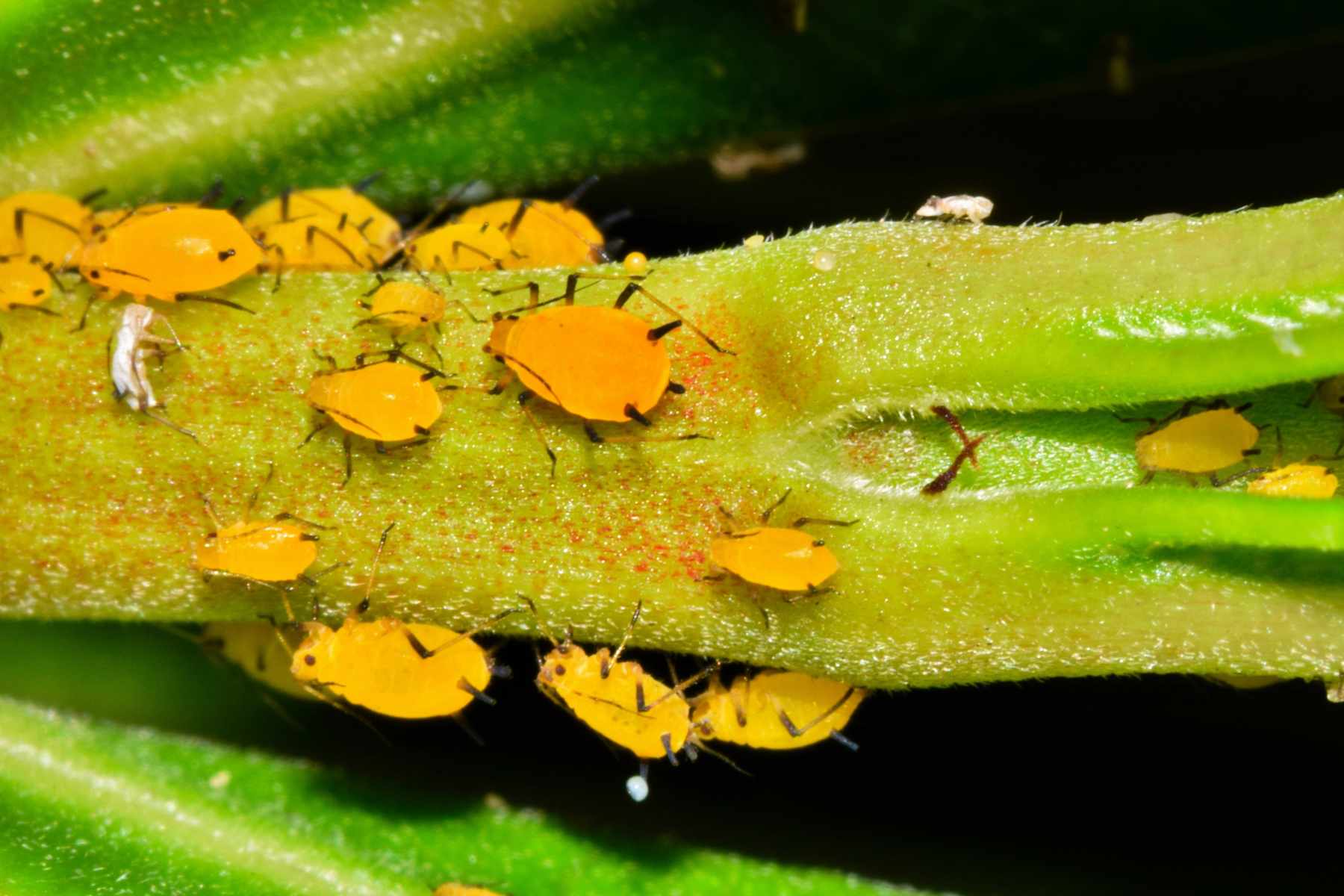
If black aphids are subtle and woolly aphids are disguised, oleander aphids are the show-offs. They are bright, almost neon yellow with contrasting black legs and cornicles (the little twin tailpipes near the rear), and they cluster in such dense yellow masses that you can spot them from across the yard.

Their name points to their favorite host and food source. Oleander aphids swarm oleander, but gardeners most often meet them on milkweed, where the same vivid yellow colonies coat stems and flower buds. Because they are so easy to see, they tend to be noticed early, which is an advantage you do not get with hidden species.

Ants Are Farming Your Aphids
As aphids feed, they take in far more plant sap than they can use and excrete the excess as a sweet, sticky liquid called aphid honeydew. This honeydew is sugar-rich, and ants are obsessed with it. To an ant colony, a patch of aphids is a renewable dairy herd, so in exchange for the honeydew, ants protect the aphids.
They will fend off and even kill ladybugs, lacewings, and other predators that try to eat the colony, which is why an ant-tended infestation is so much harder to knock down. Ants will also physically carry aphids to fresh, tender growth when their current feeding spot declines, effectively herding the colony to greener pasture and helping it spread. Some of that overnight expansion is ants doing the moving for them. Left unchecked, the honeydew itself causes a second problem as it coats leaves and grows a black film of sooty mold.

Look for ant trails, they are easy to follow. A steady line of ants marching up a stem is a reliable arrow pointing straight to an aphid colony you might not have found otherwise, including hidden ones on the underside of leaves or high in a shrub. Aphids and ants travel together, so the ants do some of your scouting for you.

How to Break the Ant Supply Line
Because the ants are actively defending and spreading the colony, cutting off their access is one of the most effective levers you have. Wrap a band of horticultural sticky barrier around the trunk or main stem to stop ants from climbing up to their herd.
Clear away the mulch, weeds, or touching branches that give them an alternate route, since ants will detour around a single obstacle. Locate and address the nest if it sits right at the base of a plant. Once the ants can no longer reach the aphids, the colony loses its bodyguards.

Aphids Spread Plant Viruses
Many aphid species transmit plant viruses, and aphids are among the most important insect vectors of plant disease in the world, which is the strongest argument for treating even a small colony seriously.
The mechanism is simple and unsettling. As an aphid probes plant after plant looking for a good feeding site, it can pick up a virus from an infected plant and inject it into the next healthy one, sometimes in a matter of seconds. The aphid does not need to settle in or build a colony to do damage. A few exploratory bites from a passing winged aphid can be enough to transmit a disease the plant will carry for life.

The plant viruses aphids spread include many of the mosaic viruses, named for the mottled yellow-and-green patchwork they paint across leaves, along with leaf-curling and yellowing diseases that stunt and deform crops. The green peach aphid is especially infamous here. It is a wide-ranging species capable of transmitting a long list of mosaic and other viruses across an enormous range of vegetables and ornamentals, which is part of why it is considered one of the most economically destructive aphids on the planet.
There is no spray that cures a virus once a plant has it. That is exactly why early control matters so much. Knocking back aphids while their numbers are low is all about cutting off the disease-spreading bites before they happen and keeping an infection from moving through your whole bed.

How to Get Rid of Aphids
Getting rid of aphids requires consistent, thorough coverage that matches the way aphids feed, reproduce, and hide on the plant. Lost Coast Plant Therapy works best when it makes direct contact with the aphids, so the goal is to treat the full plant carefully, repeat as needed, and interrupt the colony before it has time to rebuild. Here is a practical sequence, with each step tied back to the biology that makes it work.

Start With a Close Inspection
Before doing anything, look. Turn over the leaves, check the growing tips, run your eye down the stems, and follow any ant trails you spot. You are answering three questions, which type of aphid is this, how far has it spread, and is anything already eating it. A wingless cluster packed on one shoot is a different problem from winged aphids scattered across several plants, because the scattered ones tell you the colony is already trying to colonize new ground.

Prune the Worst, Spray the Rest
The fastest way to cut a colony's reproductive engine is to remove the parts where it is densest. Snip off and bag the most heavily encrusted tips, since those crowded shoots hold the most nymphs and, per the biology above, crowding is also the trigger that pushes a colony to produce winged daughters and flee. Cutting them off removes both the breeders and the escapees. Then, saturate your plants fully with our Natural Plant Wash.

Protecting the Natural Enemies of Aphids
Every spray you apply is a decision about the predators too. Ladybugs for example are voracious aphid predators. The goal of good aphid control is to lean on these allies, not erase them.
This is one of the biggest reasons to reach for Lost Coast Plant Therapy instead of a harsh chemical insecticide. It is a minimum risk pesticide, so when used as directed it knocks down the aphids without harming the beneficial insects working alongside you, including ladybugs, bees, and praying mantis.

Lost Coast Plant Therapy: A Minimum Risk Way to Control Aphids
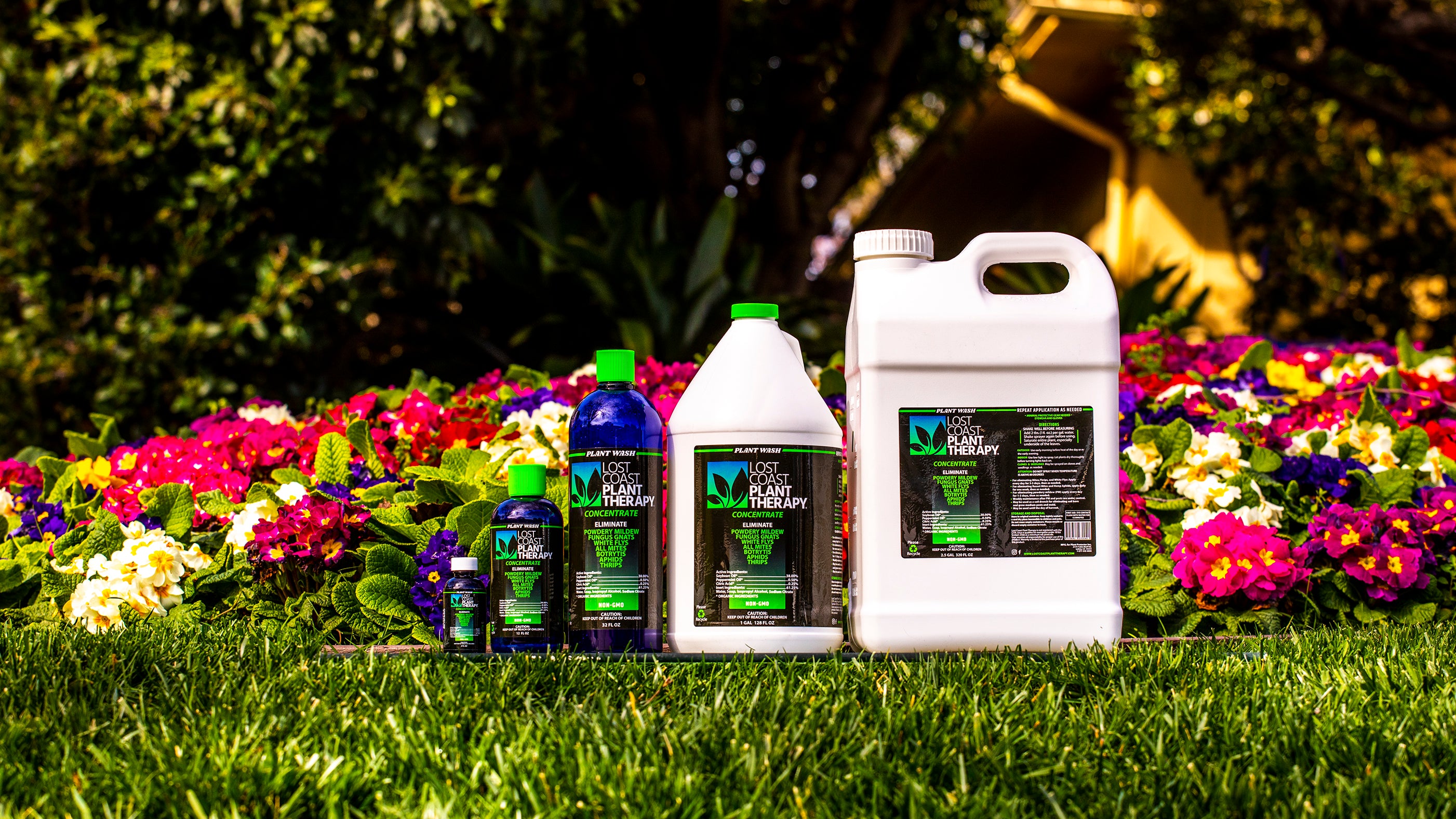
Lost Coast Plant Therapy is a plant-based foliar spray that controls aphids on contact by coating them and working with the biology described above rather than against it, which is why it pairs so naturally with the spray-and-repeat rhythm aphids demand.
It is a FIFRA 25(b) minimum risk pesticide, made from food-grade and naturally derived ingredients. That classification matters in a garden full of life. Used as directed, it is gentle enough to spray on edible crops, around children and pets, and near pollinators, while still being tough on aphids, mites, and whiteflies. It leaves no harsh chemical residue in your soil, and because it works by contact rather than as a systemic poison, pests can not build resistance to it.
It's also very versatile. You can use it indoors on houseplants and outdoors in the garden, on ornamentals, fruit trees, and vegetables alike.
You can read more about our ingredients here and exactly how to apply it here.

When a Plant Is Too Far Gone to Save
Sometimes the math does not favor rescue. If a plant is severely stunted, heavily distorted, or showing the mottled, mosaic patterning of a virus that aphids may have delivered, no amount of spraying will reverse it. A virus has no cure, and a badly deformed annual is rarely worth more effort than a healthy replacement.
In those cases the smartest control is removal, just remove and dispose of the plant so it cannot serve as a reservoir of aphids and disease for everything growing nearby. Saving the rest of the bed is sometimes worth sacrificing one plant.

Conclusion
Aphids feel overwhelming because they seem to come from nowhere, but that overnight magic is just biology you can now see clearly. They clone themselves without mating, give live birth to daughters already carrying the next generation, and grow wings to colonize fresh plants the moment a colony gets crowded or its host starts to fail. Once you know that, the question becomes how to control them.
The best aphid plan is early, steady, and thorough. Lost Coast Plant Therapy gives gardeners a practical way to respond because it controls pests on contact when it directly reaches the aphids and their hiding spots. Focus on full coverage, especially the undersides of leaves, stems, new shoots, and flower buds, then repeat as directed so each new wave of aphids is addressed before the colony has time to rebuild.
Because our Natural Plant Protector is a concentrate made with natural and organic ingredients and fits into the minimum risk pesticide category, it supports a more thoughtful approach to plant care by protecting the plants you love while respecting the garden ecosystem around them.

Frequently Asked Questions
How can I identify aphids on my plants?
Aphids are small, soft-bodied insects, usually under an eighth of an inch, and they come in green, black, yellow, brown, red, or gray depending on the species and the plant. The surest way to identify aphids is to look for the pair of tiny tailpipes (cornicles) projecting from the rear of the body, no other common garden insect has them. You will typically find them clustered on new growth and on the underside of leaves, often alongside sticky honeydew or a trail of ants.

What are the most common types of aphids in a home garden?
The types you are most likely to meet are black aphids (often black bean aphids on beans and ornamentals), woolly aphids on woody plants and fruit trees, oleander aphids on milkweed and oleander, and the wide-ranging green peach aphid, which shows up almost everywhere and is a major spreader of plant viruses. Other common species you may run into include the cabbage aphid on brassicas and the pea aphid on legumes.
Why do aphids appear so suddenly on plants?
Because their reproduction is unusually fast. Female aphids clone themselves without mating and give live birth to nymphs that are sometimes already carrying their own developing young. A single winged aphid that landed days ago can become a visible colony overnight.

Can I get rid of aphids without harming bees, ladybugs, and other beneficial insects?
Yes. Start by pinching off the most infested tips and knocking the rest off by drenching the colony with our 3-in-1 natural pest control solution, it is a minimum risk pesticide that controls aphids on contact and, when used as directed, does not harm bees, ladybugs, or praying mantis.
How often do I need to reapply aphid treatment?
A contact treatment only controls the aphids it physically touches, so it misses eggs, hidden individuals, and the next generation developing inside live-born nymphs. Plan on reapplying Lost Coast Plant Therapy every several days for two or three rounds to catch newly hatched aphids before they mature and breed.
Learn more about aphids here.

Additional Resources
Aphids – UC Statewide Integrated Pest Management Program, University of California
Aphids in Home Yards and Gardens – University of Minnesota Extension
Aphids, In-Depth – University of Wisconsin-Madison Division of Extension
Cabbage Aphid – UC IPM Pest Management Guidelines, University of California
Oleander Aphid – NC State Extension, North Carolina State University
Orange Aphids on Milkweed – University of Maryland Extension
Oleander Aphids – Colorado State University Extension
Aphids on Milkweed – University of Illinois Extension
Oleander Aphids and Monarchs – Buckeye Yard and Garden Line, The Ohio State University