
Skip to content
Rose problem diagnostic guide

Rose Diseases. How to identify what's wrong, and what to do next

Black spots, white powder, rusty undersides, browned buds, leaf drop, distorted shoots, and unhealthy canes can all point in different directions. This guide helps you identify the pattern first, then choose a response that fits the problem you actually found.

Rose leaf, bud, or cane showing a visible disease symptom
For garden, container, greenhouse and landscape roses
Shop Lost Coast Plant Therapy →
Start here

What are rose diseases?

Rose diseases are problems caused by fungi, bacteria, viruses, and related plant pathogens. The useful clue is the pattern: where the symptom began, what the damaged tissue looks like, and how the problem changes with weather.

Black spot, powdery mildew, rust, Botrytis, downy mildew, Cercospora leaf spot, cankers, and virus diseases can all affect roses. The same bush can also show pest feeding, nutrient stress, spray injury, sunburn, drought stress, or waterlogged roots, which is why a symptom name such as “brown leaves” is only the beginning of the diagnosis.

Independent Cornell CALS greenhouse trials reported 96% +/- efficacy for Lost Coast Plant Therapy against established powdery mildew.

View the Cornell trial results.

Start with the oldest visible symptom. Check the upper and lower leaf surfaces, then look at new growth, buds, flowers, and canes. Notice whether the damage is dry or soft, whether there is visible fungal growth or powder, whether leaves are falling, and whether the problem appeared after rain, fog, irrigation, heat, pruning, or a recent spray.

⚫ Black spots + yellowing Check black spot, Cercospora, or downy mildew.
⚪ White powder Inspect for powdery mildew on leaves, shoots, and buds.
🟠 Orange underneath Turn the leaf over and check for rust pustules.
🌫️ Brown buds + gray fuzz Cool, wet weather can point toward Botrytis.
Rose Problem Finder

What do you see?

Choose the closest match. The result gives you the most likely direction, the next detail to inspect, and whether Lost Coast Plant Therapy can help.
Compare quickly

Rose symptom comparison matrix.

Use this desktop reference when two problems look similar. On phones and tablets, the matrix is hidden so the diagnostic stays readable.
Symptom Where it starts Texture or pattern Weather clue Likely condition Lost Coast fit
Black spots + yellowing Often lower leaves Dark lesions with feathery margins Wet leaves, humidity Black spot Can fit after diagnosis
White powder Leaves, shoots, buds White to gray surface growth Warm days, humid nights Powdery mildew Strong fit
Orange pustules Leaf undersides Powdery orange growth Cool, moist weather Rose rust Works
Brown buds + gray fuzz Flowers and buds Soft decay, fuzzy gray mold Cool, wet, humid Botrytis Strong fit
Angular purple or brown spots Leaves, sometimes stems Vein-bounded lesions, possible downy growth below Cool, wet, humid Downy mildew Works
Small purple spots + tan centers Lower foliage Smooth margins Warm, rainy weather Cercospora leaf spot Diagnose first
Witch's broom + excess thorns New shoots and canes Clustered stems, red distortion Not weather-dependent Rose rosette Removal
Yellow rings or mosaic lines Leaves throughout plant Systemic line or ring patterns Persistent across weather Rose mosaic virus No cure
The main disease patterns

Rose diseases you'll see most often.

These six patterns cover a large share of the “what is wrong with my rose?” questions gardeners ask. The photos become the fastest visual reference once you pair the symptom with the place it appears.
Powdery mildew on rose leaves, shoots, and buds
White powder • distorted young tissue

Powdery mildew

Powdery mildew produces white to gray fungal growth on leaves, shoots, sepals, buds, and sometimes petals. Young leaves can curl, redden, or distort as the infection develops. It does not need standing water on the leaf surface, so roses can develop it during warm weather when nights are humid and airflow is poor.

Lost Coast Plant Therapy has a dedicated powdery mildew page and current instructions for active powdery mildew. Thorough coverage matters because the product works on contact with the affected plant surface.

Look first New leaves, shoots, buds
Weather Warm days, humid nights
Product fit Strong
Black spot lesions with yellowing on a rose leaf
Feathery margins • yellow halos • leaf drop

Black spot

Classic black spot produces dark lesions with feathery or fibrous edges. Early infections often begin on older lower leaves, then move upward. Leaves can yellow and fall even when there are only a few lesions. Splashing water and long periods of leaf wetness help the fungus reproduce and move through a planting.

Sanitation and moisture management are central. The current Lost Coast rose-growing article also recommends removing affected leaves and applying Lost Coast Plant Therapy when black spot appears.

Look first Older lower leaves
Weather Wet, humid periods
Product fit Use with sanitation
Orange rose rust pustules on the underside of a rose leaf
Orange underside pustules • yellowing

Rose rust

Rose rust is easiest to confirm by turning the leaf over. The upper surface may show yellow or reddish-brown spots, while the underside develops orange powdery pustules. Pustules often darken later in the season as the fungus forms overwintering spores. Heavy infections can cause defoliation and weaker flowering.

Current Lost Coast Plant Therapy How It Works information lists leaf rust within its plant-disease scope. Remove affected foliage and fallen leaves while you address the active surface problem.

Look first Leaf undersides
Weather Cool nights, moisture
Product fit Current scope
Botrytis blight on a rose bud with gray fungal growth
Brown buds • petal spotting • gray fuzz

Botrytis blight

Botrytis often shows up in flowers before foliage becomes the main concern. Petals spot and wither, buds can rot before opening, and entire blooms may turn brown. Gray fuzzy fungal growth on decaying tissue is a strong clue. Cool, wet, humid conditions give the disease a major advantage.

Lost Coast Plant Therapy has a dedicated Botrytis page and current application instructions for active Botrytis on plant surfaces. Remove badly affected buds and flowers so dead tissue does not remain packed into the canopy.

Look first Buds and petals
Weather Cool, wet, humid
Product fit Strong
Angular downy mildew lesions on rose foliage
Angular lesions • between veins • leaf drop

Downy mildew

Downy mildew can be mistaken for black spot. The lesions tend to be angular or square because they are restricted by leaf veins, and they may be purple, red, or brown. Pale fuzzy growth can develop on the underside. Cool temperatures, high humidity, and prolonged leaf wetness favor this disease.

Environmental management matters most here. Increase airflow, reduce prolonged wet foliage, remove infected material, and use local Extension guidance if symptoms continue to spread.

Look first Vein-bounded lesions
Weather Cool, wet, humid
Product fit Another plan
Cercospora leaf spot with purple margins and tan centers on rose leaves
Purple margins • tan centers • lower leaves

Cercospora leaf spot

Cercospora often begins on lower leaves as small maroon to dark-purple lesions with smoother margins than black spot. Older spots develop dead tan centers. It tends to appear during warm weather and can move upward through the plant during rainy summers, sometimes causing substantial defoliation.

The visual distinction matters because a dark spot alone is not enough to name the disease. Sanitation and the same leaf-wetness practices used for black spot are important first steps.

Look first Lower foliage
Weather Warm, rainy periods
Product fit Diagnose first
Dark marks need a closer look

Black spot, sooty mold, or something else?

A black mark can be dead leaf tissue, superficial mold growing on honeydew, or another leaf-spot disease. The surface and edge of the mark tell you more than the color.

Black spot

The mark is part of the leaf tissue. Classic lesions have feathery margins, may show tiny black fruiting bodies, and often trigger yellowing around the spot. Lower leaves are common starting points.

Quick check: the black area does not wipe away because the tissue itself is diseased.

Sooty mold

Sooty mold grows on sticky honeydew left by aphids, scale, whiteflies, or other sap-feeding pests. It looks like a dark coating rather than a lesion forming inside the leaf.

Quick check: look for sticky leaves, insects, shed skins, or ants. The coating may smear or lift from the surface.

Cercospora or downy mildew

Cercospora tends to have smooth purple margins with tan centers. Downy mildew makes more angular lesions between veins and may show pale growth underneath.

Quick check: compare the spot edge and turn the leaf over before calling every dark mark black spot.
Rose rust pustules on the underside of a rose leaf

Rose rust is easiest to confirm from underneath.

The upper leaf surface may only show yellow or reddish-brown discoloration. The underside often gives the diagnosis away with orange powdery pustules. Later in the season those pustules can darken as overwintering spores form.

Cool nights, dew, and other moist conditions favor rose rust. Remove heavily affected foliage and fallen leaves, improve drying, and avoid letting disease pressure build unnoticed beneath the canopy.

Look underneath Orange powdery pustules are the strongest visual clue.
Watch the season Pustules can darken later as spores develop.
Product fit Lost Coast Plant Therapy work on leaf rust.
Flowers and buds

Why rose buds turn brown or gray.

Botrytis cinerea attacks flowers and damaged tissue readily. A bloom may begin with small brown spots on the petals, then the bud softens, sticks closed, or collapses. Gray fuzzy spores can appear on flowers, leaves, stems, and spent tissue as the disease develops.

Remove damaged buds and petals, improve airflow, and keep dead flower tissue from staying trapped in the plant. Lost Coast Plant Therapy has a dedicated Botrytis resource and current instructions that describe application for active Botrytis on plant surfaces.

Direct answer Brown buds that rot before opening, spotted petals, and fuzzy gray growth during cool, wet, humid weather are classic Botrytis clues.
Rose bud that failed to open because of Botrytis damage
Gray Botrytis growth on rose petals or damaged tissue

Identified a supported rose disease or pest?

Once the diagnosis points to powdery mildew, Botrytis, leaf rust, black spot management, or a supported soft bodied pest, use the current product directions and make coverage part of the plan. Environmental correction and sanitation still matter where disease pressure is being driven by wet foliage, crowded growth, or infected debris.

Seasonal scouting

Rose problem calendar by season.

Disease timing changes by climate, but the weather pattern is often more useful than the calendar date. Use these seasonal windows as a scouting rhythm, then adjust for your local conditions.
🌱 Spring

Fresh shoots, cool nights, rain, and tender buds create a busy diagnostic window.

Watch for Black spot beginning low, downy mildew, Botrytis on buds, early powdery mildew, aphids on tender growth.
Weather clue Cool, wet or humid stretches and foliage that dries slowly.
First move Inspect new shoots and lower leaves, clear spent petals, and keep irrigation off flowers and foliage when practical.
☀️ Summer

Heat changes the mix. Powdery mildew can continue even without wet leaves, while mites and stress begin to imitate disease.

Watch for Powdery mildew, Cercospora, rust in moist climates, spider-mite stippling, sunburn, drought stress.
Weather clue Warm days, humid nights, hot dry spells, or repeated summer rain.
First move Separate fungal growth from heat or pest damage before increasing treatment frequency.
🍁 Fall

Cooler nights, dew, fog, and aging foliage can bring Botrytis and rust back into focus while leaf debris builds below the plant.

Watch for Rust, Botrytis, late black spot pressure, cane lesions, lingering powdery mildew.
Weather clue Cool nights, condensation, fog, and long wet periods.
First move Remove heavily affected material and fallen leaves so disease does not carry forward unnoticed.
Disease pressure

What makes rose disease more likely?

The same rose can look fine in one stretch of weather and struggle in another. These conditions change how long leaves stay wet, how quickly flowers dry, and how easily spores move through the canopy.
🌿 Dense growth and poor airflow +

Crowded shoots create humid pockets and slow drying. Open the plant enough for air to move through without turning disease prevention into a general pruning tutorial. The goal here is simply faster drying and easier inspection.

💧 Persistent leaf wetness +

Black spot and downy mildew benefit from prolonged moisture on foliage. UC IPM notes that black spot reproduces when leaves remain wet for extended periods. Morning irrigation gives foliage more time to dry than evening wetting.

🚿 Overhead irrigation and splash +

Splashing water can move spores and keeps petals and leaves wet. Irrigation at the root zone helps reduce unnecessary foliage wetness, especially during weather that already favors black spot or Botrytis.

🌫️ Humidity, fog, and cool nights +

Botrytis, rust, and downy mildew all respond strongly to cool moist conditions. Powdery mildew behaves differently because it can develop without free water and often benefits from humid nights even when leaves look dry.

🍂 Infected fallen leaves and petals +

Diseased debris keeps inoculum close to the plant. Cleaning up heavily infected foliage, spent flowers, and pruned canes reduces the amount of infected tissue sitting under and inside the rose.

✂️ Wounded or damaged canes +

Cold injury, pruning wounds, and other damage can be followed by stem cankers. Make clean cuts into healthy tissue and avoid leaving dead or damaged cane material in place when disease is advancing through it.

Check the look-alikes

Disease or something else?

Pests and environmental stress can produce spots, distortion, yellowing, and weak blooms. Confirm these clues before treating a non-disease problem like a fungus.
Pest distortion on rose caused by aphids, thrips, mites, or chewing insects

Pest feeding

Honeydew, webbing, stippling, silver scarring, chewed tissue, or visible insects push the diagnosis toward pests.

Issue Identifier →
Environmental stress on rose foliage from sun, drought, cold, or wind

Environmental stress

Sunburn, drought, winter injury, and hot reflected surfaces can blacken or brown tissue without an infectious disease.

Growing Roses →
Blotchy rose foliage showing possible spray injury

Spray injury

Damage that appears soon after a foliar application and matches sprayed surfaces deserves a label, rate, temperature, and timing review.

Instructions →
Rose foliage with interveinal yellowing or marginal browning

Nutrient or root stress

Interveinal yellowing, marginal browning, and weak growth can come from nutrient availability, salts, wet roots, or soil conditions.

Issue Identifier →
A different management branch

When spraying is not the answer.

Systemic viruses, crown gall, severe cane disease, and suspicious rose rosette symptoms need removal, pruning, clean stock, or local diagnostic guidance. Treating the leaf surface does not correct a problem that is inside the plant or rooted in damaged structural tissue.
Rose rosette symptoms with witch's broom, excess thorns, or abnormal red growth

Rose rosette disease

Look for clustered shoots, excessive thorniness, thin distorted leaves, abnormal red stems, reduced flowering, and distorted buds. Normal rose growth can also emerge red, so the full pattern matters. Suspected rose rosette deserves local Extension confirmation and plant-removal guidance rather than a routine foliar spray.

Rose mosaic symptoms with yellow rings, lines, or bands

Rose mosaic viruses

Irregular yellow or white lines, rings, and blotches can come from systemic viruses. Removing a few leaves does not remove the virus from the plant. There is no foliar cure for a systemic rose virus.

Dark enlarging rose cane lesion with dieback above it

Stem cankers and dieback

Purplish, reddish, brown, or gray lesions can enlarge around canes and cause dieback. Prune infected canes back into healthy tissue with clean tools. Structural canker removal matters more than spraying the foliage.

Large crown gall growth at the rose crown, roots, or cane base

Crown gall

Large irregular galls at the crown, roots, or stems can be caused by crown gall bacteria entering through wounds. Avoid moving infected planting material into clean soil. Use local nursery or Extension guidance for removal and replanting decisions.

Lower the pressure

Keep rose disease pressure from building.

Disease prevention on roses is mostly about drying, sanitation, and early observation. These steps support the diagnostic work without turning this page into a general rose-growing guide.
🌬️

Keep enough airflow

Open dense growth enough for leaves and flowers to dry. Airflow also makes it easier to see the undersides of leaves and spot problems while they are still localized.

💧

Water the root zone

Reduce unnecessary leaf and flower wetness when black spot, downy mildew, Botrytis, or rust pressure is high. If foliage gets wet, earlier watering gives it more drying time.

🍂

Remove infected debris

Pick up heavily diseased leaves and spent petals instead of leaving them directly beneath the rose. Disease pressure is easier to manage when old infected tissue is not accumulating.

👀

Inspect new and old growth

Check tender shoots for powdery mildew and pests, then check lower older leaves for black spot, Cercospora, rust, and early defoliation. Different problems announce themselves in different parts of the plant.

✂️

Remove badly affected tissue

Prune dead canes and cankers into healthy tissue. Remove Botrytis-damaged buds and flowers. Avoid stripping large amounts of healthy foliage from a stressed rose all at once.

🧼

Clean tools after disease work

Soil, sap, and infected debris can move between plants on tools. Clean and disinfect pruners when working through diseased roses, especially before moving to a healthy plant.

Diagnosis first

Build a rose disease application routine that fits the diagnosis.

Lost Coast Plant Therapy controls supported surface fungal problems, powdery mildew and soft bodied insects.

Applying Lost Coast Plant Therapy to rose leaves, shoots, buds, and flowers
Application routine
Best fit
Confirmed powdery mildew, Botrytis, leaf rust, mold, fungus, black spot management, or a supported soft bodied pest that is contributing to rose symptoms.
Before you spray
Confirm the problem is active on the plant surface. Rule out rose rosette, rose mosaic, crown gall, severe structural cankers, root stress, and environmental injury.
Application
Follow the current label and Instructions page. Thorough coverage matters because the product works through direct contact with the target issue on the plant surface.
Powdery mildew
Reach leaves, shoots, sepals, buds, and other areas showing visible white or gray fungal growth.
Botrytis
Remove badly affected buds, flowers, and dead tissue first, then follow current Botrytis directions for the remaining plant surfaces.
Leaf rust
Turn leaves over. Orange pustules often sit on the underside, so upper-surface coverage alone can miss the most diagnostic area.
Conditions
Keep sanitation, airflow, drying, and infected-debris removal in the plan where weather or canopy conditions are helping disease persist.
Repeat applications
Follow current instructions and keep scouting new growth. Cornell powdery mildew results were strongest with repeat applications and thorough coverage.
Lost Coast Plant Therapy with healthy blooming roses

Where Lost Coast Plant Therapy fits.

Lost Coast Plant Therapy is a Natural Plant Wash made with natural and organic ingredients.

Coverage matters because the product works on contact with the target issue. Powdery mildew can spread across leaves, shoots, and buds; Botrytis can sit in flowers and damaged tissue; rust is easy to miss on leaf undersides. Correct the conditions that are helping disease persist while you follow the current product label and instructions.

✓ Strong or current fit Powdery mildew, Botrytis, mold, fungus, leaf rust, and supported soft bodied pests that are causing rose symptoms.
✓ Contact and coverage Reach the affected plant surface, including buds, shoots, flowers, and leaf undersides when that is where the diagnosed issue is active.
✓ Independent powdery mildew evidence Cornell CALS reported 96% +/- efficacy across evaluated powdery mildew trials.
✓ Use another approach Rose rosette, rose mosaic viruses, crown gall, severe cankers, root problems, nutrient stress, and environmental injury.

Rose disease questions.

See more FAQs here →
Inspecting rose foliage and flowers for disease symptoms
What disease does my rose have? +

Start with the part of the rose that changed first. Black spots with feathery margins and yellowing point toward black spot. White powder on leaves, shoots, or buds points toward powdery mildew. Orange pustules under leaves fit rose rust. Brown buds that fail to open with gray fuzzy growth fit Botrytis. Distorted red growth, excessive thorniness, or clustered stems can signal rose rosette disease and needs a very different response. Use the symptom pattern, where it began, weather, and speed of spread together before choosing a treatment.

Why are there black spots on my rose leaves? +

Classic rose black spot produces dark lesions with feathery or fibrous margins, often followed by yellowing and early leaf drop. It commonly begins on older lower foliage and moves upward during wet, humid weather. Cercospora leaf spot can look similar but tends to have smoother purple margins and tan centers, while downy mildew often makes more angular lesions between veins. Sooty mold is different again because it forms a superficial black coating on honeydew from sap-feeding pests.

Is the white powder on my roses powdery mildew? +

White or gray powdery growth on rose leaves, shoots, sepals, buds, and sometimes petals is a strong powdery mildew clue. Infected young leaves can curl, redden, or distort. Powdery mildew usually sits visibly on the plant surface rather than creating water-soaked or sunken lesions. Confirm that the white material is fungal growth rather than dried spray residue, mineral deposits, or pest debris before treating.

What causes orange or rusty spots on rose leaves? +

Rose rust produces yellow to reddish-brown discoloration on upper leaf surfaces and powdery orange pustules on the undersides. The underside is often the fastest place to confirm it. Cool nights, moisture, and dew favor rose rust, and heavily affected plants may yellow and lose leaves. Pustules can darken later in the season as the fungus forms overwintering spores.

Why are my rose buds turning brown before opening? +

Brown buds that soften, rot, or fail to open during cool, wet, humid weather can be Botrytis blight. Petals may first develop small spots or browned edges, then entire buds can turn brown. Gray fuzzy fungal growth may appear on decaying flowers, leaves, stems, or damaged tissue. Remove affected flowers and buds, improve drying and airflow, and confirm the gray-mold pattern before treating.

Can Botrytis affect rose flowers? +

Yes. Botrytis cinerea commonly affects rose petals and buds. Spotted petals, withering flowers, buds that fail to open, soft brown decay, and fuzzy gray spores are typical clues. The disease is favored by cool temperatures, high humidity, and wet flower tissue. Lost Coast Plant Therapy has a current Botrytis page and instructions for active Botrytis control on plant surfaces when used as directed.

Why are my rose leaves turning yellow and dropping? +

Yellowing and defoliation can follow black spot, Cercospora leaf spot, downy mildew, rust, severe powdery mildew, root stress, nutrient problems, drought, excess water, or pest pressure. The yellow color alone does not identify the cause. Look at the oldest affected leaves for spots or pustules, inspect the leaf undersides, check whether new growth is distorted, and review recent watering and weather.

How can I tell rose disease from pest damage? +

Disease patterns often include expanding spots, powdery fungal growth, pustules, gray mold, cane lesions, or symptoms that track with wet or humid weather. Pest damage is more likely when you find insects, mites, honeydew, webbing, stippling, silver scarring, chewed tissue, or distorted tender growth with feeding evidence. Aphids, thrips, spider mites, and roseslug sawflies can all create symptoms that are mistaken for disease, so inspect the plant closely before treating.

Should infected rose leaves be removed? +

Remove heavily infected leaves, spent flowers with Botrytis, and fallen diseased foliage when practical. Black spot, rust, and several other rose diseases can persist on infected plant material, so sanitation reduces the amount of disease pressure around the plant. Prune cankers and dead tissue back into healthy wood with clean tools. Avoid stripping a rose of most of its healthy foliage at once, and follow local guidance for serious systemic diseases such as rose rosette or rose mosaic.

Which rose diseases can Lost Coast Plant Therapy help control? +

Lost Coast Plant Therapy is most relevant when the diagnosis points to a supported surface fungal problem such as powdery mildew, Botrytis, mold, fungus, or leaf rust, and the current Lost Coast rose-growing article also recommends it as part of black spot management. Cornell CALS greenhouse trials reported 96% +/- efficacy against established powdery mildew across the evaluated tomato, melon, and hemp trials. Roses were not part of that Cornell trial, so the result is independent product-performance evidence for powdery mildew rather than a rose-specific efficacy result. Rose rosette, rose mosaic viruses, crown gall, severe systemic decline, and many environmental disorders require another management strategy.

Sources and further reading.

Independent horticultural guidance Official product information
University of Maryland Extension on black spot, Cercospora, downy mildew, powdery mildew, rust, Botrytis, rose rosette, rose mosaic, stem cankers, and common rose pests.
UC Statewide IPM Program on rose powdery mildew, black spot, rust, Botrytis, downy mildew, cane disorders, crown gall, nutrient problems, and environmental stress.
UC IPM Rose Pest Management Guidelines on rose black spot, Botrytis, powdery mildew, rust, symptom patterns, leaf wetness, debris, and irrigation.
Penn State Extension on outdoor rose diseases, including powdery mildew, black spot, rust, Botrytis, and rose rosette symptoms.
Lost Coast Plant Therapy Cornell University Trial Results for the current 96% +/- powdery mildew result, trial design, crop replicates, repeat applications, and coverage findings.
Lost Coast Plant Therapy Powdery Mildew Guide for current powdery mildew product guidance and rose-specific identification information.
Lost Coast Plant Therapy Botrytis Guide for current Botrytis claims, identification, and application guidance.
Lost Coast Plant Therapy How It Works for current plant-disease scope, including powdery mildew, Botrytis, fungus, blight, and leaf rust.
Lost Coast Plant Therapy Instructions for current mixing, saturation, repeat-application, powdery mildew, and Botrytis directions.
Lost Coast Plant Therapy Rose-Growing Guide for existing rose-specific black spot, powdery mildew, watering, and airflow guidance.

Ready to protect your roses?

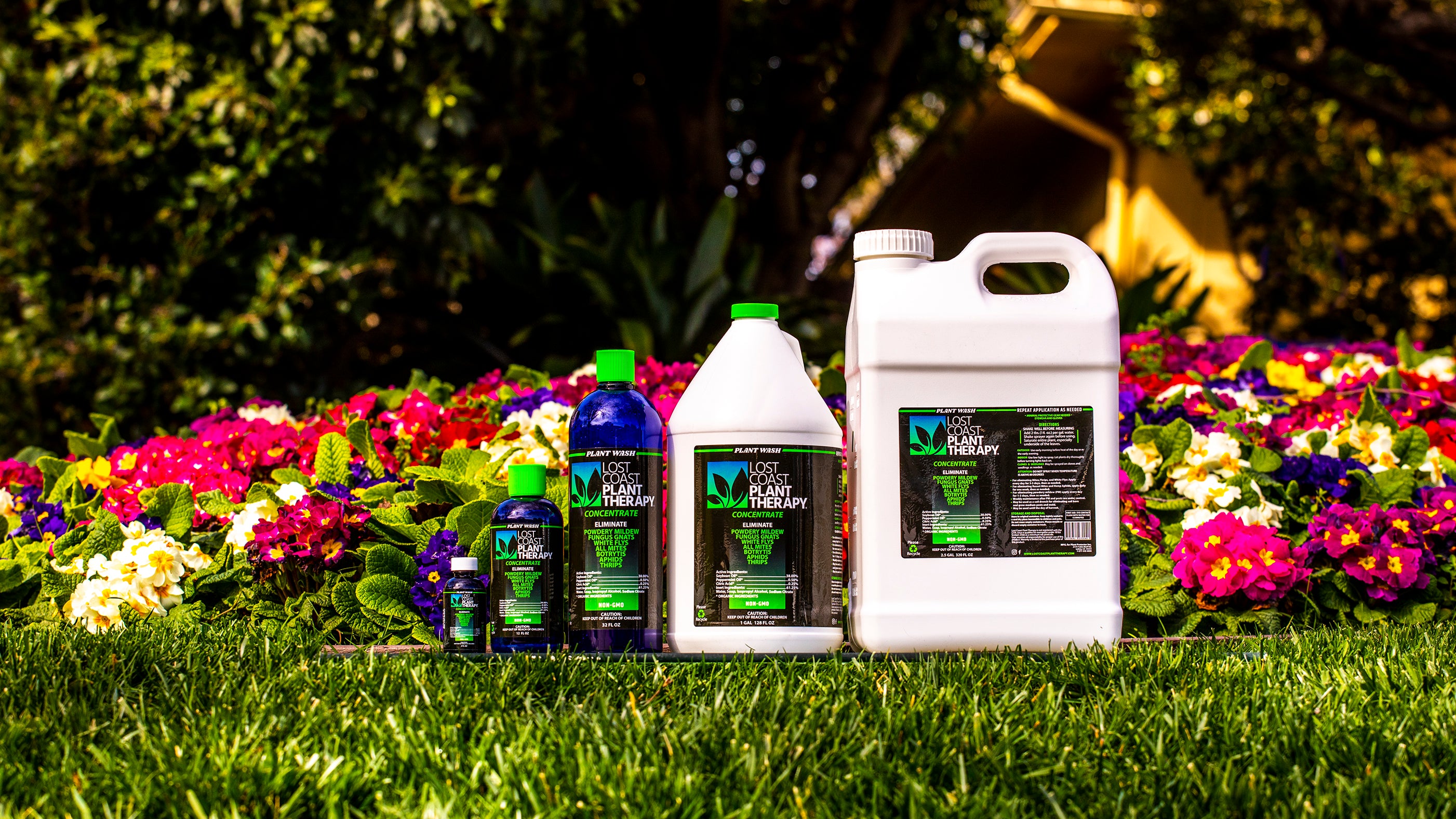
12 oz Concentrate bottle
Lost Coast Plant Therapy

12 oz

Mixes with water to create 12 gallons of application spray.

Buy now →
32 oz Concentrate bottle
Lost Coast Plant Therapy

32 oz

Mixes with water to create 32 gallons of application spray.

Buy now →
1 Gallon Concentrate bottle
Lost Coast Plant Therapy

1 Gallon

Mixes with water to create 128 gallons of application spray.

Buy now →
2.5 Gallon Concentrate bottle
Lost Coast Plant Therapy

2.5 Gallon

Mixes with water to create 320 gallons of application spray.

Buy now →