
Strawberry diagnostic guide
Strawberry Pests & Diseases. What's damaging your strawberry plants?
Leaves, flowers, green berries, ripe fruit, and the crown can all tell different stories. This guide helps you start with the damaged part of the plant, identify the pattern, and choose the next step before harvest.

Start here
What are strawberry pests & diseases?
The fastest way to diagnose a strawberry problem is to start with where the damage is happening. A stippled leaf, a browned blossom, a gray berry, and a collapsing crown point in very different directions.
Strawberries stay close to the ground, grow dense foliage, flower and fruit quickly, and hold developing berries inside a low canopy. That means pests and disease pressure can build in several layers at once. Spider mites and aphids are usually easier to find on leaves. Thrips often matter most around flowers and developing fruit. Powdery mildew can change leaf color and curl the margins. Botrytis can begin around bloom and later show up as soft fruit covered in gray growth.
Start with the damaged plant part, then look at texture and progression. Fine stippling suggests a different problem from sticky honeydew. White surface growth suggests a different disease path from gray fuzzy fruit rot. Large holes and missing tissue usually belong to a chewing-pest branch.
Strawberry problem map
Where is the damage?
Choose the part of the plant that looks wrong first. The result narrows the likely problem, tells you what to inspect next, and shows whether Lost Coast Plant Therapy belongs in that branch.

Compare quickly
Strawberry symptom matrix.
Use the matrix when the symptom is obvious but the cause is still hiding. Start with where the problem appears, then compare the pattern and inspect the next most useful location.
| Where it starts | What you see | Likely problem | Inspect next | Can Lost Coast help? |
|---|---|---|---|---|
| Leaves | Fine pale stippling, bronzing, fine webbing | Spider mites | Leaf undersides with magnification | Yes |
| New growth | Clusters, sticky residue, curling | Aphids | Tender center and leaf undersides | Yes |
| Flowers | Hidden insects, browning, scarring | Thrips or Botrytis | Open the flower; compare insects with fuzzy mold | Yes |
| Green berry | Bronzing, scarring, misshapen development | Thrips, lygus, poor pollination | Seeds, flower history, live insects | Depends on the diagnosis |
| Ripe berry | Gray fuzzy growth, soft brown tissue | Botrytis gray mold | Nearby blossoms, dead material, wet canopy | Yes |
| Fruit or leaves | Large holes or missing tissue | Slug, snail, caterpillar, beetle | Dusk inspection, mulch, leaf undersides | Another approach |
| Crown or roots | Whole-plant wilt or collapse | Root or crown disease, water problem | Crown tissue, roots, drainage | Diagnose the root cause |
Read the leaves first
Three leaf patterns that change the diagnosis.

Fine stippling • bronzing • webbing
Two-spotted spider mites
Spider mites remove cell contents from strawberry foliage. Early damage can look like tiny pale flecks before leaves become bronzed, curled, or weakened. Fine webbing underneath leaves strengthens the diagnosis. Warm conditions can allow populations to build quickly, but the live pest is still the clue that matters most.
Where Lost Coast Plant Therapy fits: Our product controls spider mites on contact. Thorough underside coverage matters because that is where mites and eggs collect.

Sticky leaves • cast skins • distortion
Aphids on strawberries
Aphids often settle on tender tissue and leaf undersides. Honeydew can make foliage shiny or sticky, attract ants, and support black sooty growth. Curling or distortion can become more obvious around new growth when colonies are active.
Where Lost Coast Plant Therapy fits: Lost Coast Plant Therapy controls Aphids and all soft bodied pests. Direct contact and full coverage of the colony are the key.

Upward curl • reddish margins • powdery growth
Powdery mildew
Strawberry powdery mildew often reveals itself differently from the classic white top-surface coating gardeners expect. Leaf edges can curl upward, the upper surface may redden or purple, and gray-white powdery growth can be easier to see underneath. Fruit can also be affected when disease pressure is high.
Where Lost Coast Plant Therapy fits: Lost Coast Plant Therapy controls powdery mildew. See the dedicated mildew guide to learn more about the full treatment.
Flowers can predict the fruit problem
Look inside the bloom before the berry tells you.

Thrips: hidden feeding around flowers and young fruit
Thrips can feed on strawberry leaves, flowers, and fruit. Gardeners often notice the injury after the insect has already been hiding in blossoms. Developing berries may become bronzed, scarred, cracked, or uneven after feeding. Open a fresh affected flower and look for slender insects and dark fecal specks.
Inspect
Flower centers, petals, and green fruit close to the calyx.
Product fit
Yes, Lost Coast Plant Therapy controls thrips on contact.

Botrytis: infection can begin around bloom
Gray mold can infect strawberry flowers and later appear on fruit. Cool, wet flowering conditions raise the risk. Affected blossoms may brown or fail, while fruit can develop soft light-brown tissue followed by fuzzy gray spores. Remove obviously affected berries and dead flower material rather than leaving infected material in the canopy.
Inspect
Brown flowers, soft berries, gray growth, and dead petals trapped in the canopy.
Product fit
Yes, Lost Coast Plant Therapy controls botrytis on contact.

When the berry turns fuzzy
Gray growth on fruit is a strong Botrytis clue.
Botrytis fruit rot is one of the most familiar strawberry diseases because the final stage is so visible. It often begins with soft tan or light-brown tissue, then produces fuzzy gray spores in moist conditions. The disease can also connect back to infected flowers and dead plant material.
Strawberries grow low and close together, so infected petals, berries touching damp surfaces, crowded foliage, and poor drying can keep disease pressure close to the fruit. Sanitation and airflow matter alongside any treatment decision.
Flower clue
Blossoms can brown or dry before obvious fruit rot appears.
Fruit clue
Soft tan tissue followed by fuzzy gray sporulation fits Botrytis.
Next move
Remove affected fruit and dead material, improve drying, then follow current disease guidance.
Fruit symptoms need context
Damaged berries are not always an insect problem.
A damaged strawberry is easy to blame on bugs, but the fruit surface also records pollination, weather, contact injury, moisture, and disease. Look at the whole berry and the surrounding plant before choosing a control.

Lygus feeding or poor pollination
Irregularly shaped fruit can come from lygus bug feeding or poor pollination. Lygus damage can interrupt berry development around individual seeds, so look closely at the berry surface before assuming one cause.

Bruising and mechanical injury
Soft damaged areas can result from handling, rubbing, fruit contact, or pressure. Fresh physical injury does not automatically need a pest treatment.

Heat and environmental stress
Uneven ripening, bleaching, dry tissue, or exposed-surface injury can be environmental. Check which side of the fruit was exposed and what changed in the weather.

Slugs and chewing pests
Large holes, gouges, and missing tissue belong to a chewing-pest branch. Slugs, snails, caterpillars, earwigs, beetles, or fruit feeders need pest-specific management rather than a soft-bodied-pest assumption.

A serious strawberry disease
NEO-P can affect leaves, fruit, crowns & roots.
Neopestalotiopsis, often shortened to Neo-P, deserves its own branch because it can show up across several parts of a strawberry plant instead of staying confined to one leaf symptom. Symptoms include leaf spots, fruit rot, crown and root rot, and lesions on petioles or runners. Severe cases can end in whole-plant decline.
Look for a pattern that keeps expanding beyond a few isolated spots. Brown lesions on leaves combined with fruit rot, crown symptoms, or plants collapsing in the same planting deserve a closer diagnosis.
Leaf clue
Light- to dark-brown lesions may enlarge, merge, and develop dark spore-producing structures in older tissue.
Fruit clue
Fruit rot can occur alongside leaf symptoms rather than behaving like a simple bruise or one isolated gray-mold berry.
Whole-plant clue
Crown and root involvement can lead to wilt, decline, and collapse, which is why the crown and roots matter in the diagnosis.
Next move
Do not treat a suspected Neo-P outbreak as ordinary leaf spotting. Use sanitation and isolate suspect plants.

When the whole plant wilts
Read the crown and root zone.
A strawberry that suddenly wilts or collapses needs more than a leaf inspection. Check moisture, drainage, crown firmness, and root condition. Several crown and root diseases can affect strawberries, including Phytophthora root and crown rot and black root rot. Those problems need disease-specific or cultural management rather than a generic foliar spray.
Water stress can also mimic disease. A plant can wilt in dry media, in waterlogged soil, or after roots have lost function. Feel the root zone and inspect the crown before reaching for more water or a pest product.
Healthier crown
Firm tissue and active roots without widespread dark collapse.
Concerning crown
Dark, soft, deteriorating tissue or persistent collapse despite corrected watering.
Root-zone clue
Standing moisture, poor drainage, or saturated soil changes the diagnosis.
Next move
Use the Root Rot guide or local Extension guidance when the issue is below the crown.
Why strawberry problems build fast
The plant's low canopy can hide pressure.
Strawberries create several small, sheltered environments inside one compact plant. That is why a quick glance from above can miss the problem that is developing underneath.
Growth-stage scouting
The problem changes as the berry develops.

Vegetative growth
Watch for aphids, mites, powdery mildew, leaf spots, sticky residue, distorted growth, and early crown stress.

Flowering
Inspect for thrips, browned blossoms, Botrytis pressure, hidden insects, and conditions that keep flowers wet.

Green fruit
Look for scarring, bronzing, misshapen development, early rot, chewing, and berries resting against damp surfaces.

Ripening and harvest
Check for Botrytis, soft rot, slug or fruit-feeder injury, active mites, powdery mildew, and old damaged fruit that should be removed.
Where Lost Coast Plant Therapy fits.
Lost Coast Plant Therapy is a minimum risk pesticide that controls soft bodied pests such as spider mites, aphids, thrips, and whiteflies powdery mildew, mold, and Botrytis on contact.
On strawberries, complete coverage matters because mites, aphids, flowers, and low fruiting tissue can all sit in sheltered parts of the canopy. Cornell CALS greenhouse trials reported 96% +/- efficacy against established powdery mildew.
Strong fit
Spider mites, aphids, thrips, whiteflies, powdery mildew, Botrytis, mold, and other supported soft bodied pests or plant-surface disease problems.
Needs another diagnosis path
Slugs, snails, large chewing pests, lygus injury, bruising, poor pollination, crown or root disease, physical fruit damage, and suspected Neopestalotiopsis.

Lost Coast Plant Therapy strawberry application routine.
Once you have confirmed a supported pest or plant-surface disease, build the application around contact and coverage. Strawberry leaves overlap, flowers create sheltered feeding sites, and fruit sits low in the canopy, so a quick pass over the top is not enough.

Application
routine
Standard mix
Current standard guidance is 1 oz of Concentrate per gallon of water.
Powdery mildew + Botrytis
Current Instructions list 1 oz per gallon daily for 1–3 days, then as needed.
Extreme infestation
Current Instructions list 1–3 fl oz per gallon every other day for 7–10 days, then as needed.
Outdoor timing
Use early morning before the heat of the day or at dusk. Best when air temperature is 80°F or less.
Indoor timing
Use under low light and allow plants to dry thoroughly before lights go back on.
Coverage
Direct contact matters. Saturate the plant thoroughly, including leaf undersides and sheltered tissue where the confirmed target is present.
Mixing + agitation
Shake the Concentrate well before measuring. Agitate the mixed sprayer before use and approximately every five minutes during application.
Plant sensitivity
Test on a small area or plant first when plant sensitivity is uncertain and always follow the current label.
Harvest
Current Instructions state that Lost Coast Plant Therapy may be used until the day of harvest when used as directed.
Want to learn more?
Keep going with the pest, disease, and diagnostic guides that match what you found on your strawberry plants.

Pest guide
Spider Mites
Fine stippling, bronzing, webbing, and how to inspect strawberry leaf undersides.

Pest guide
Aphids
Sticky honeydew, cast skins, tender-growth colonies, and contact coverage.

Pest guide
Thrips
Flower-feeding insects, silver scars, dark specks, and sheltered feeding sites.

Disease guide
Powdery Mildew
The full identification and application guide for active powdery mildew.

Strawberry disease
Neopestalotiopsis
A deeper look at the aggressive strawberry disease that can affect leaves, fruit, crowns, and roots.

Diagnostic tool
Issue Identifier
Move from a confirmed pest or disease name to the matching Lost Coast Plant Therapy issue guidance.
Common strawberry questions
Questions gardeners ask after the first clue.
These are the follow-up questions that usually come after someone notices spots, sticky leaves, fuzzy fruit, flower damage, holes, or a strawberry plant that suddenly looks weak.
What pests attack strawberries? +
Common strawberry pests include spider mites, aphids, thrips, slugs and snails, lygus bugs, caterpillars, weevils, and other chewing or fruit-feeding insects. The best clue is where the damage begins: leaves, flowers, berries, or the crown and root zone.
What causes stippled strawberry leaves? +
Fine pale stippling on strawberry leaves commonly points toward spider mite feeding. Turn leaves over and inspect the undersides with magnification for mites, eggs, bronzing, and fine webbing. Thrips and some environmental stress can create lighter scarring, so confirm live mites before treating.
Why are strawberry leaves sticky? +
Sticky strawberry leaves often mean honeydew from sap-feeding insects such as aphids or whiteflies. Check tender growth and leaf undersides for live insects, cast skins, ants, and black sooty growth developing on the sugary residue.
What damages strawberry flowers? +
Thrips can feed in strawberry flowers and later contribute to bronzing or scarring on developing fruit. Botrytis can also infect blossoms, especially during cool, wet conditions. Browned flowers, hidden insects, and the condition of nearby fruit help separate these problems.
Why are berries turning gray or fuzzy? +
Fuzzy gray growth on softening strawberries is a classic Botrytis gray mold clue. Remove affected berries, keep old infected material out of the canopy, improve drying and airflow, and confirm the diagnosis before choosing a disease-control product.
Can strawberries get powdery mildew? +
Yes. Strawberry powdery mildew can cause upward-curling leaf edges, reddish or purple discoloration, and gray-white powdery growth, often on leaf undersides. Flowers and fruit can also be affected when pressure is high.
What causes damaged or misshapen strawberries? +
Misshapen berries can come from lygus bug feeding, poor pollination, thrips injury, heat or weather stress, bruising, disease, or physical contact with wet soil. Look at the seeds, fruit surface, flower history, and nearby pests before assuming one cause.
What is eating holes in strawberry leaves? +
Fresh holes and missing leaf tissue point toward chewing pests such as slugs, snails, caterpillars, beetles, earwigs, or similar feeders rather than aphids or spider mites. Inspect at dusk or early morning and check beneath leaves, mulch, boards, and fruit clusters.
How do I protect strawberries close to harvest? +
Diagnose the problem first, remove badly damaged or rotting fruit, and follow the current product label for any treatment. Our current Instructions page says Lost Coast Plant Therapy may be used until the day of harvest when used as directed. Use the current label and Instructions page rather than inventing an extra harvest interval.
Which strawberry pests or diseases can Lost Coast Plant Therapy help control? +
Lost Coast Plant Therapy controls spider mites, aphids, thrips, whiteflies, powdery mildew, mold, and Botrytis. Slugs, large chewing pests, bruising, poor pollination, crown or root damage, and unrelated strawberry diseases need another management approach.
Sources & further reading.
Independent horticultural guidance
Official product information
UC Statewide IPM: Strawberry
for the crop-wide pest and disease framework, including mites, aphids, thrips, slugs, crown diseases, powdery mildew, and Botrytis.
→
UC Statewide IPM: Spider Mites in Strawberry
for strawberry mite identification, monitoring, and crop-specific context.
→
UC IPM Strawberry Insect & Mite Identification
for aphid, whitefly, thrips, mite, and harvest-scouting clues.
→
UC IPM: Strawberry Powdery Mildew
for upward leaf curl, discoloration, powdery growth, and strawberry-specific disease context.
→
University of Minnesota: Growing Strawberries
for home-garden strawberry care, Botrytis, and disease-pressure guidance.
→
University of Minnesota Strawberry Fruit Diagnosis
for gray mold, heat stress, and fruit-problem lookalikes.
→
UC IPM: Lygus Bug in Strawberry
for irregular fruit development and the poor-pollination lookalike.
→
Pacific Northwest Plant Disease Handbook: Strawberry Gray Mold
for Botrytis fruit-rot biology and cultural-control context.
→
National Plant Diagnostic Network: Neopestalotiopsis on Strawberries
for the disease overview, affected plant parts, wetness risk, and why early detection matters.
→
UF/IFAS: Pestalotia Leaf Spot and Fruit Rot of Strawberry
for strawberry-specific Neopestalotiopsis symptoms on leaves, fruit, crowns, and roots.
→
Lost Coast Plant Therapy: How to Fight Strawberry Fungus
for our deeper strawberry-specific Neopestalotiopsis background and symptom guidance.
→
Lost Coast Plant Therapy Cornell University Trial Results
for the current powdery mildew result, tested crops, trial design, and the role of repeat coverage.
→
Lost Coast Plant Therapy Instructions
for current mixing, temperature, saturation, repeat-application, Botrytis, powdery-mildew, and harvest guidance.
→
Lost Coast Plant Therapy How It Works
for current contact-control language and supported pest and disease scope.
→
Lost Coast Plant Therapy Strawberry Growing Guide
for our existing strawberry pest and disease context without duplicating general cultivation advice here.
→
Ready to protect your strawberries?
Lost Coast Plant Therapy Concentrate is our Natural Plant Wash and Natural Plant Protector made with natural and organic ingredients. Once your diagnosis points to a supported soft bodied pest, powdery mildew, Botrytis, mold, or another supported plant-surface problem, direct contact and thorough coverage matter.

Lost Coast Plant Therapy
Buy now
→
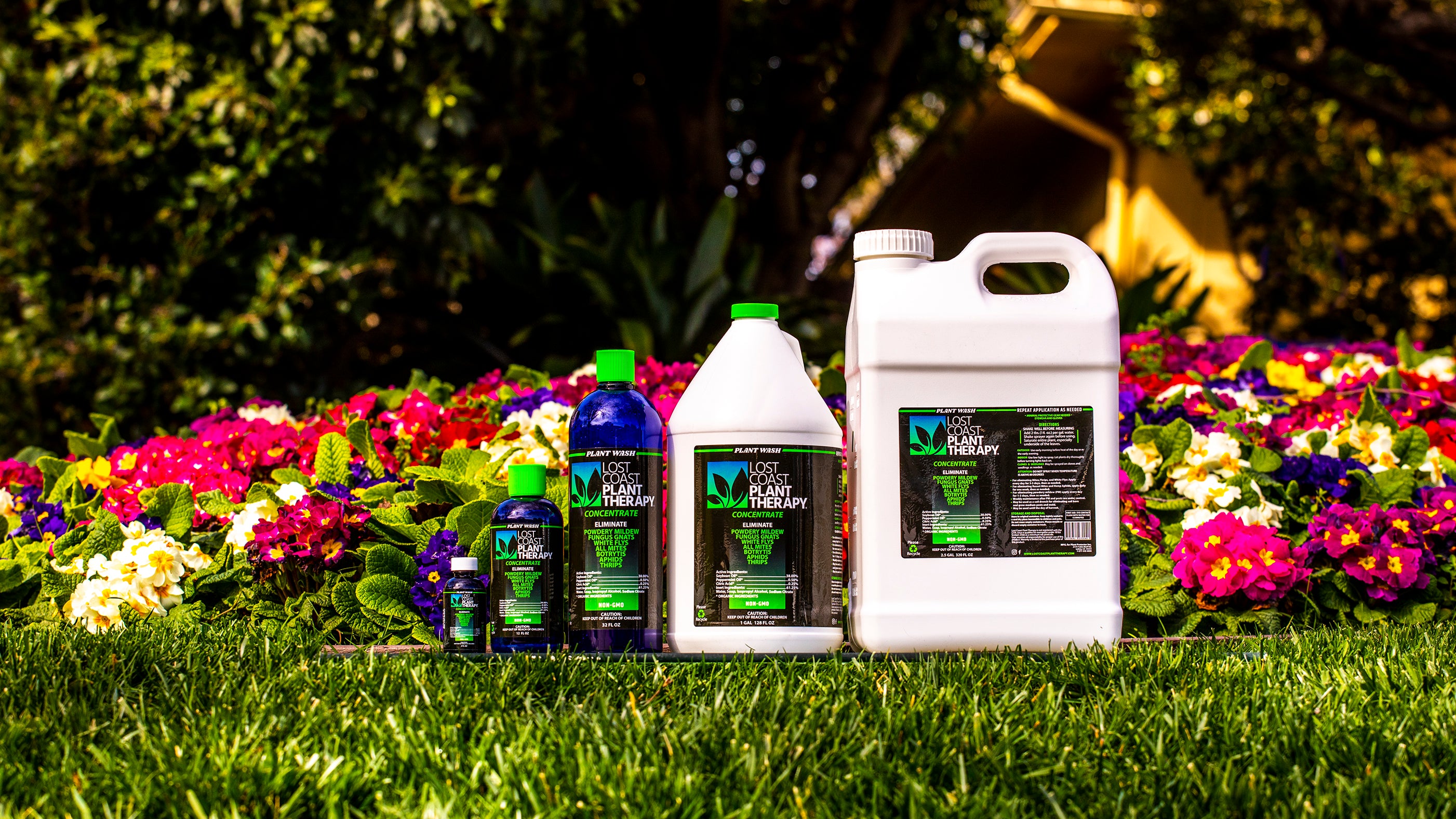
12 oz
12 oz of Concentrate makes up to 12 gallons of application spray at the standard 1 oz-per-gallon mix.

Lost Coast Plant Therapy
Buy now
→
32 oz
32 oz of Concentrate makes up to 32 gallons of application spray at the standard 1 oz-per-gallon mix.

Lost Coast Plant Therapy
Buy now
→
1 Gallon
One gallon of Concentrate makes up to 128 gallons of application spray at the standard 1 oz-per-gallon mix.

Lost Coast Plant Therapy
Buy now
→
2.5 Gallon
2.5 gallons of Concentrate makes up to 320 gallons of application spray at the standard 1 oz-per-gallon mix.