Aphids
Aphids gather where tomato tissue is softest. Look around new shoots, flower clusters, and leaf undersides. Honeydew can make leaves glossy and sticky.
Sticky leaves, pale stippling, silver scarring, curling new growth, flying white insects, and missing leaf sections all point in different directions. This guide helps you identify the pest first, then choose a control method that fits the pest you found.
Sticky foliage sends us toward honeydew-producing pests such as aphids and whiteflies. Fine pale stippling points toward spider mites. Silver streaks and black specks fit thrips. Bronze, distorted growth can come from russet or broad mites. Large missing leaf sections usually belong to a chewing pest such as a hornworm, which needs a different control plan.
Cornell CALS greenhouse trials reported 96% +/- efficacy against powdery mildew and 95% +/- efficacy against total western flower thrips and all soft bodied insects.
Lost Coast Plant Therapy works on aphids, whiteflies, spider mites, russet mites, broad mites, thrips and all soft bodied insects. Make sure to fully cover your plants because the product controls pests on contact. Hornworms, stink bugs, cutworms, and similar chewers call for another approach.
| Pest | What it looks like | Where it hides | Damage pattern | Life-stage clue | Can Lost Coast Plant Therapy help? | Deeper guide |
|---|---|---|---|---|---|---|
| Aphids | Pear-shaped insects in colonies | Tender shoots, buds and leaf undersides | Curling, sticky honeydew, ants and yellowing | White shed skins often remain beside the colony | Yes | Aphids guide |
| Whiteflies | Tiny white adults plus flat pale nymphs | Leaf undersides, especially younger leaves | Honeydew, yellowing, sooty mold and flying adults | Immobile nymph stages stay attached underneath leaves | Yes | Whiteflies guide |
| Spider mites | Moving specks visible with magnification | Leaf undersides and along veins | Fine pale stippling, bronzing and webbing | Eggs and young mites can outnumber visible adults | Yes | Spider mite guide |
| Russet mites | Microscopic mites | Stems, petioles and lower foliage | Bronzing, rough stems, leaf curl and stunting | Symptoms often appear before the mite is visible | Yes | Russet mite guide |
| Broad mites | Microscopic mites requiring magnification | Protected new growth, buds and leaf folds | Twisted, hardened or bronzed new tissue | Damage can persist after mites move away | Yes | Issue Identifier |
| Thrips | Very slender yellow, tan or dark insects | Flowers, buds and tender leaves | Silver streaks, scarring and black specks | Eggs are inserted into plant tissue | Yes | Thrips guide |
| Psyllids | Small jumping sap feeders | Leaf undersides and tender growth | Yellowing, curling and stunting | Adults jump readily when disturbed | Yes | Psyllids guide |
| Hornworms | Large green caterpillars with a rear horn | Inside the canopy | Whole leaves removed and stems stripped | Large dark droppings below feeding sites | Another approach | Hornworms |
| Stink bugs | Shield-shaped adults and rounder nymphs | Leaves, flowers, fruit and canopy edges | Cloudy feeding spots on fruit and dimpling | Barrel-shaped egg clusters can occur under leaves | Another approach | Stink bugs |
| Cutworms and fruitworms | Caterpillars with chewing mouthparts | Soil line, canopy, flowers or fruit | Clipped seedlings, ragged holes or bored fruit | Larvae may feed at night or hide during the day | Another approach | Vegetable insects |

Aphids gather where tomato tissue is softest. Look around new shoots, flower clusters, and leaf undersides. Honeydew can make leaves glossy and sticky.
Brush the plant lightly. If a cloud of tiny white insects rises and settles back under the leaves, whiteflies move high on the list. Eggs and nymphs stay on leaf undersides and are easy to miss.
Spider mites often announce themselves through the leaf before you see the mite. Fine pale dots appear across the surface where cells have been damaged.
Tomato russet mites are so small that the damage can be easier to find than the pest. Strong magnification matters here.
Thrips are narrow insects that slip into flowers, buds, and tight folds. Their feeding leaves silver or bronze scars and tiny black specks.
Psyllids are small sap feeders that jump readily when disturbed. On tomatoes, the first clue may be yellowing, curling, or stunting.
Independent greenhouse trials conducted by Cornell University’s College of Agriculture and Life Sciences compared Lost Coast Plant Therapy treatments with a water-only control. After five applications, the strongest treatment produced 95% +/- efficacy against total western flower thrips and all soft bodied insects.
Hornworms can strip entire leaves, usually beginning toward the top of the plant. Look for dark blocky droppings beneath the feeding site. Hand-picking them is often practical.
Stink bugs pierce fruit and can leave cloudy white or yellow spots, dimpling, and internal corky tissue. Their shield-shaped bodies make them easier to identify than the damage alone.
Cutworms are most obvious when young tomato transplants are clipped near the soil line. The caterpillar may hide in the upper soil during the day and feed at night. Physical barriers around young stems and direct caterpillar management fit this problem better.
Caterpillars can chew leaves, flowers, and fruit. Fruitworms often leave a clear entry wound in developing tomatoes. Scouting eggs and small larvae early gives you more options than waiting until a large caterpillar is protected.
Small round shot holes scattered through young leaves can come from flea beetles and other leaf chewers. Tomatoes often tolerate some cosmetic feeding once established, so confirm the pest and the amount of damage before escalating control.
Mines, tunnels, folded leaves, or internal feeding point toward larvae protected inside plant tissue. Surface contact cannot reliably reach a pest once it is sheltered inside the leaf or fruit, so identification and timing matter.
Turn over leaves from the lower, middle, and upper canopy. Whitefly eggs and nymphs, spider mites and their eggs, and aphid colonies all use the protected underside. If you only look at the top of the plant, this is the hiding place you are most likely to miss.
Tender expanding tissue shows damage quickly. Puckering, curling, bronzing, or unusually hard new leaves can point toward aphids, broad mites, russet mites, or psyllids. Use magnification before assuming the problem is nutritional.
Thrips can disappear inside flowers, buds, and folded tissue where a quick glance will miss them. Tap flower clusters over white paper and look for slender moving insects. Aphids may also gather around flower stems and soft buds.
Bronzed or roughened stems can be an important russet mite clue, especially when lower foliage is declining. Stem junctions and petioles can also shelter aphids and psyllids when populations are building.
If a young tomato is clipped, wilted, or chewed close to the ground, inspect the soil line and the top inch of soil. Cutworms often hide during the day and feed at night. Slugs and snails can also leave ragged feeding and slime trails around lower leaves.
Cloudy pale spots and dimpling can point toward stink bugs, while clear holes or gouges suggest caterpillar feeding. Scarring on young fruit may trace back to thrips feeding earlier in the flower, so inspect the fruit and the nearby flower cluster together.
Aphids, thrips, broad mites, and psyllids often concentrate where tissue is tender. Distortion develops fast there.
Whitefly eggs and nymphs, spider mites, aphids, and thrips can all be missed when we inspect only the top surface.
Thrips hide in flowers and protected folds. Scarring on petals or fruit may appear after the pest has already been feeding.
Spider mites can move quickly during hot dry weather. Bronzing and stippling can spread before webbing becomes obvious.
Greenhouses and high tunnels can favor whiteflies, mites, aphids, and thrips because warmth and protected foliage support repeated generations.
Stink bug feeding, caterpillar entry holes, and flower-related scarring are easier to trace when you catch the damage early.
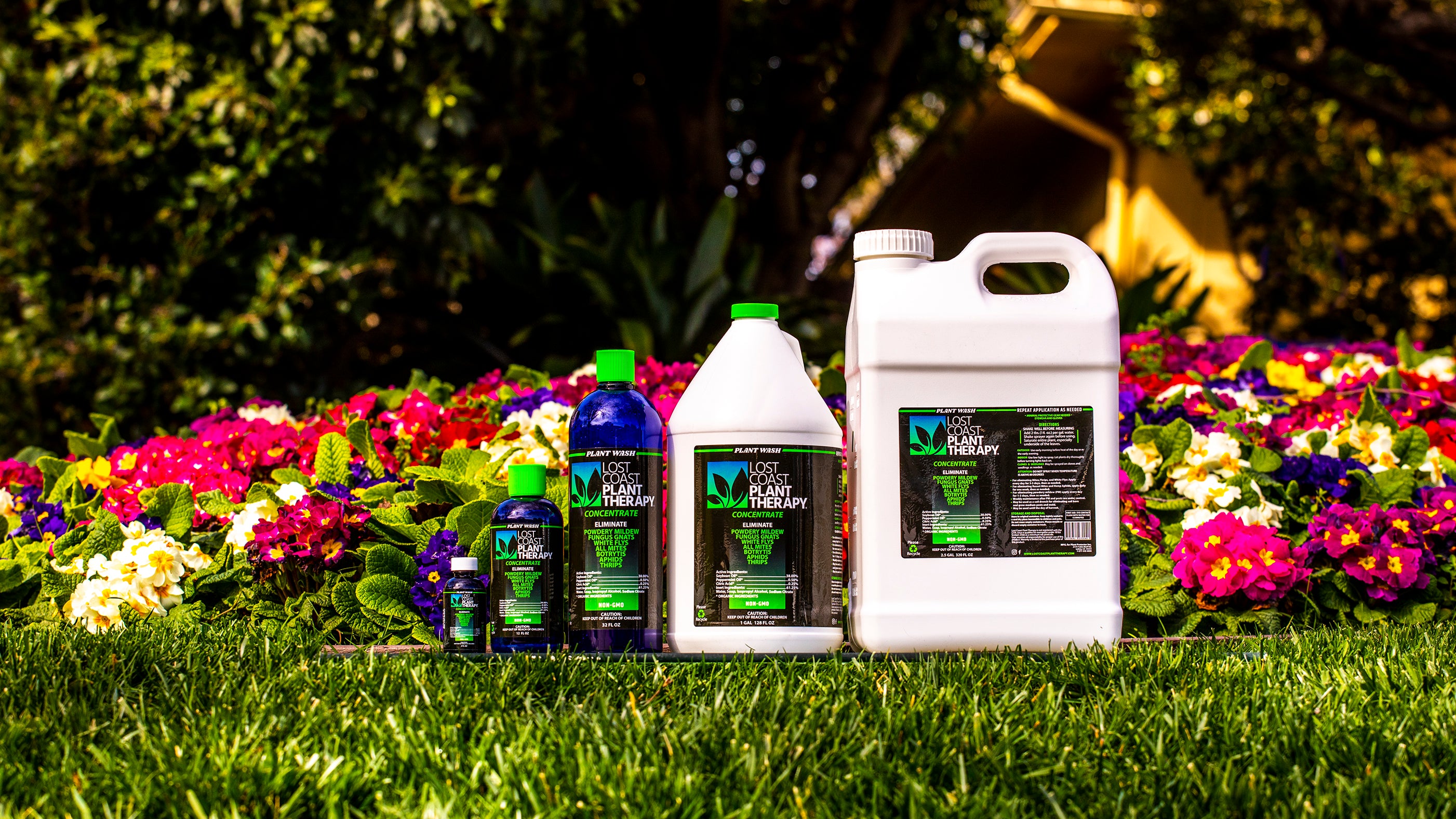
Lost Coast Plant Therapy is a Natural Plant Wash made with natural and organic ingredients. It is a minimum risk pesticide that controls supported soft bodied pests on contact. The product has to reach the insect or mite, which is why full coverage matters.
Insect control begins on contact and includes soft bodied insects, their eggs, and larvae. It works on spider mites, broad mites, russet mites, whiteflies, thrips, and aphids.
On tomatoes, reach past the top of the canopy. Spray leaf undersides, stem junctions, growing tips, flowers when appropriate, and the sheltered places where the pest is feeding.
The current Instructions page lists 1 to 3 fl oz per gallon and says to start with the lowest amount. For extreme infestations it lists 1 to 3 fl oz per gallon every other day for 7 to 10 days, then as needed. The same page notes that some growers get better results at 2 oz per gallon. Always test a few plants first, follow the current label, and review the live instructions before changing a rate or combination.
Use the damage pattern, hiding place, and magnification before you decide a soft bodied pest is the cause.
Follow the current label and Instructions page. Agitate the mixture so the Concentrate stays evenly dispersed.
Leaf undersides, sheltered stems, folds, and colonies need direct coverage. Missing the pest leaves the problem in place.
Eggs, larvae, nymphs, and adults overlap. Repeat applications help you contact stages that were protected or missed earlier.
Do not to spray above 80°F, use low light indoors, and test sensitive plants before broad application.
Do not judge control only by old damaged leaves. Check whether live pests and fresh feeding damage are decreasing.
Open curled leaves before spraying so the colony is exposed. Coat shoots, petioles, buds, and the leaf underside where aphids are clustered. Check again for live aphids and fresh honeydew rather than judging success by leaves that were already curled.
Adults are easy to see when they fly. The harder target is the flat immature stage attached below the leaf. Work from the bottom of the canopy upward and wet the underside thoroughly. Repeat scouting matters because several generations can overlap.
Stippling tells you which leaves deserve the closest inspection. Aim coverage along veins, petioles, leaf undersides, and areas with visible webbing. Dense webbing can shield mites, so repeat applications and physical access to the infested surface become more important as populations build.
These mites can occupy stems, petioles, buds, and new growth where a broad spray can miss them. Use magnification to decide which tissue is active, then coat those areas rather than treating every bronze leaf as though the mite is still there.
Thrips hide where petals, sepals, and tender leaves overlap. Open the canopy and reach those sheltered spaces. Cornell’s thrips trial reinforces the same point: repeat applications and complete coverage produced the strongest treatment response.
Inspect active tips and leaf undersides for jumping adults and flatter nymph stages. If the plant is already heavily curled or stunted, separate ongoing pest pressure from old damage and from disease symptoms before deciding whether another application is needed.
Identified a supported soft bodied pest?
Apply Lost Coast Plant Therapy according to label instructions.
Once you have identified a supported soft bodied pest, consistency matters more than chasing a stronger mix. Lost Coast Plant Therapy controls pests on contact, so we build our routine around thorough saturation, repeat scouting, and the pest’s life cycle.
Start with the lowest current mix rate and focus on the places tomato pests actually hide, leaf undersides, new growth, stem junctions, and flower folds when appropriate. For heavier pressure, repeat applications based on the pest pressure and life cycle. If you need a stronger mix, current guidance allows higher rates; test a few plants first and always follow the current label and Instructions page.
Lost Coast Plant Therapy is a minimum risk pesticide made with natural and organic ingredients that controls all soft bodied pests on contact. On tomatoes, that includes aphids, whiteflies, spider mites, russet mites, broad mites, thrips, and psyllids.
Because our formula works through direct contact, coverage is the heart of a successful application. Make sure to apply the product where pests like to hide, this includes leaf undersides, tender shoots, flower folds, stem junctions, and protected growth.
Go deeper on whiteflies, leaf undersides, honeydew, tomato-specific scouting, and what to do when adults lift off the plant.
Learn the clues behind stippling, bronzing, webbing, hot dry outbreaks, and where to inspect tomato leaves for live mites.
Understand silver scarring, flower hiding, life-stage clues, coverage, and the repeat-contact approach used for active thrips pressure.
See how Lost Coast Plant Therapy controls supported soft bodied pests on contact and why complete plant coverage matters.
Explore the ingredient list behind the Concentrate and the transparency we built into Lost Coast Plant Therapy.
Review mixing directions, spray timing, saturation guidance, repeat applications, and current use instructions before you spray.
These are the questions gardeners usually ask once they notice bugs, sticky leaves, stippling, silver scars, curling, or chewing damage on tomatoes.
Start with where they are and what the leaves look like. Pear-shaped insects clustered on tender growth are often aphids. Tiny white insects that fly when foliage is disturbed point toward whiteflies. Moving specks with fine stippling suggest spider mites, while very slender insects hiding in flowers and new growth can be thrips. Russet and broad mites are much harder to see and are usually diagnosed from bronzing or distorted growth plus magnification.
Sticky tomato leaves usually mean honeydew from a sap-feeding pest. Aphids and whiteflies are the first pests to check. Look under leaves and around tender shoots for colonies, pale shed skins, whitefly nymphs, or adults. Ants moving up and down the plant can be another clue because they feed on honeydew. Black sooty mold may develop on heavy honeydew deposits.
Fine pale stippling is a classic spider mite symptom, especially when it begins on leaf undersides during hot, dry weather. As feeding increases, leaves can turn bronze, dry, and brittle, and fine webbing may appear. Russet mites can also bronze tomato foliage and stems, but their damage is usually more uniform and the mites themselves are too small to confirm without strong magnification.
Several pests can curl tomato leaves. Aphids feeding on expanding leaves can leave new growth puckered or curled. Russet and broad mites can distort tender growth and create bronzing. Thrips can scar and deform young tissue. Whiteflies can weaken and distort foliage, and some whiteflies and thrips can transmit viruses that also curl leaves. Check for the pest itself before treating a curled leaf as an insect problem.
Leaf undersides are one of the best places to scout. Aphids form colonies there, whitefly eggs and nymphs develop there, spider mites feed and lay eggs there, and thrips may shelter along veins or tucked areas. Turn over leaves from the lower, middle, and upper canopy instead of checking only the top surface.
A cloud of tiny white insects lifting off when you tap or brush the foliage strongly suggests whiteflies. Adults quickly settle back onto leaf undersides, where eggs and flattened nymph stages are easy to miss. Sticky honeydew, yellowing, sooty mold, and plant weakness can build as populations increase.
Silver or bronze streaks and scars are strongly associated with thrips feeding. Thrips scrape plant cells and feed on the exposed contents, leaving silvery patches that may contain tiny black fecal specks. Check flowers, buds, tender leaves, and protected folds because thrips often hide where a quick glance misses them.
Large missing sections or whole leaves disappearing point toward a chewing pest rather than a mite, aphid, whitefly, or thrips. Tomato and tobacco hornworms can remove entire leaves and leave dark blocky droppings below the feeding site. Cutworms, fruitworms, armyworms, flea beetles, slugs, and other chewers can create different hole patterns. Find the pest before choosing a control method.
Lost Coast Plant Therapy is a minimum risk pesticide made with natural and organic ingredients that controls supported soft bodied pests on contact. On tomatoes, the most relevant supported pests include aphids, whiteflies, spider mites, russet mites, broad mites, and thrips. Cornell CALS greenhouse trials reported 95% +/- efficacy against total western flower thrips and all soft bodied insects in the strongest treatment after five applications.
Hornworms, stink bugs, cutworms, and other chewing or hard-bodied pests usually require another management approach.
A quick inspection at least once a week is a useful baseline, and every few days is better when plants are flowering, growing quickly, under greenhouse cover, or experiencing hot dry weather that favors mites. Check new growth, flower clusters, leaf undersides, stems near the soil line, and developing fruit. Once you find a pest, inspect more often so you can tell whether the population is shrinking, stable, or spreading.
Mixes with water to create 12 gallons of application spray.
Mixes with water to create 32 gallons of application spray.
Mixes with water to create 128 gallons of application spray.
Mixes with water to create 320 gallons of application spray.