Skip to content
Tomato Problem Diagnostic Guide

Tomato Diseases. Symptoms, Diagnosis, Prevention, And What To Do Next

Tomato problems get easier to sort out when you start with where the symptom appeared and how quickly it changed. This guide takes you from a vague symptom to the likely disease or disorder, then to the next step.

Tomato plant showing visible disease symptoms
For garden tomatoes, containers, raised beds and greenhouses
Shop Lost Coast Plant Therapy →
Start here

What are tomato diseases?

Tomato diseases include problems caused by fungi, bacteria, water molds, viruses, and other pathogens. Powdery mildew is one of them, and on tomatoes it shows up as white or gray powdery growth on the leaf surface. Tomatoes also develop look-alike disorders from water, heat, roots, herbicide exposure, and calcium movement in fruit.

A few brown spots on old leaves call for a different response than a plant that wilts from one side, a fruit with a black sunken bottom, or a cool-weather outbreak that turns leaves and stems water-soaked within days. Begin with the first affected tissue and follow the pattern from there.

Cornell CALS greenhouse trial

Lost Coast Plant Therapy is a highly effective treatment for powdery mildew, demonstrating 96% +/- efficacy across tomato, melon, and hemp crops evaluated in Cornell University trials.

See the Cornell trial results here.

Fast diagnostic rule

If the problem begins on lower leaves and slowly moves upward, early blight and Septoria belong near the top of the list. Irregular water-soaked lesions that reach stems or fruit quickly raise concern for late blight. One-sided yellowing and wilt point toward the vascular system.

Tomatoes often have more than one problem at once. A plant can carry Septoria on the lower foliage while spider mites feed higher up, or lose leaves to blight and then develop sunscald on exposed fruit. Treat each symptom as evidence and keep checking the whole plant.

🎯 Target-like rings Early blight
⚪ Many small gray spots Septoria leaf spot
💧 Water-soaked lesions Late blight
☁️ White powder Powdery mildew
🥀 One-sided wilt Fusarium or Verticillium
🍅 Black blossom end Blossom-end rot
Tomato Symptom Finder

Where did the problem show up first?

Choose the first place you noticed something wrong. The result gives you the most useful conditions to compare next.
Compare quickly

Tomato symptom to probable condition.

Use this as a fast comparison board. Start with where the problem appeared, then compare speed and which plant parts are involved.
Symptom Where it starts Speed Leaf, stem, fruit involvement Likely condition What to do next
Brown spots with yellowing and target-like rings Older lower leaves Steady Leaves, sometimes stems and fruit Early blight Remove heavily infected lower leaves, reduce splash, improve airflow, keep foliage dry, and clean debris.
Many small gray or tan spots with dark margins Older lower leaves Steady in wet weather Mostly leaves Septoria leaf spot Inspect for tiny black dots in lesions, remove infected foliage, and reduce leaf wetness and soil splash.
Irregular water-soaked lesions that turn brown Can appear on young foliage Fast Leaves, stems and fruit Late blight Treat as urgent. Confirm locally, remove badly infected plants or tissue, and follow regional Extension guidance.
Tiny dark spots, sometimes with yellow halos Leaves, then fruit in some cases Can build quickly in wet weather Leaves and fruit Bacterial spot or speck Keep foliage dry, avoid handling wet plants, remove infected debris, and use disease-free transplants and seed.
Lower leaves yellow and wilt, often one side first Lower plant Progressive Leaves and vascular tissue Fusarium or Verticillium wilt Check vascular tissue, remove badly affected plants, rotate crops, and use resistant varieties in future plantings.
White or gray powdery coating Leaf surfaces Progressive Mostly leaves, sometimes stems Powdery mildew Confirm the powdery surface growth, improve airflow, remove heavy infection, and use a supported treatment when appropriate.
Dark leathery sunken patch on blossom end Developing fruit Appears as fruit enlarges Fruit only Blossom-end rot Stabilize watering, mulch, review soil pH and fertility, and avoid excessive nitrogen.
Pale, blistered or sunken patch on sun-facing fruit Exposed fruit After intense sun exposure Fruit only Sunscald Protect remaining leaf cover and avoid removing excessive foliage around fruit clusters.
Compare the pattern

The tomato diseases you will see most often.

The name matters once the pattern fits. Compare the starting point, lesion shape, speed, and whether stems or fruit join the problem.
White powdery growth on a tomato leaf surface
Surface fungal growth

Powdery mildew

Powdery mildew appears as white or gray powdery growth across the leaf surface. It looks dusty rather than water-soaked and can spread across foliage until leaves yellow and lose function.

Best clue Visible powdery growth that sits on the leaf surface.
Next check Confirm the surface growth, inspect surrounding plants, and improve airflow.
Close-up of bull's-eye lesions on an older tomato leaf
Usually starts low

Early blight

Early blight often begins as brown spots on older leaves. Lesions enlarge, yellow tissue develops around them, and darker concentric rings can form inside the spot. The disease can move upward and may also mark stems or fruit.

Best clue Larger lower-leaf lesions with target-like rings.
Next check Look for yellowing around lesions and similar damage on nearby lower foliage.
Many small gray spots with dark borders on lower tomato leaves
Small spots • many of them

Septoria leaf spot

Septoria usually produces many small round gray or tan spots with dark margins. Tiny black fruiting bodies can appear inside mature lesions. It starts on lower leaves and can strip foliage from the plant when wet conditions keep the cycle going.

Best clue Small uniform spots rather than large bull's-eye lesions.
Next check Use a hand lens for tiny black dots in older spots.
Water-soaked tomato leaf lesion with stem involvement
Fast and urgent

Late blight

Late blight makes irregular water-soaked lesions that turn olive or brown. Stems and petioles can brown and shrivel, and fruit may develop olive-brown lesions. Cool wet weather can drive very rapid spread through a planting.

Best clue Fast spread plus water-soaked leaf, stem, or fruit lesions.
Next check Look for white growth around lesion edges during wet weather and check local reports.
Tiny dark tomato leaf spots and fruit specks
Wet-weather spotting

Bacterial spot and speck

These bacterial problems create small dark leaf spots and can cause yellowing and leaf drop. Fruit symptoms help separate spot from speck more reliably than the leaf lesions alone. Splashing water and wet foliage help bacteria move.

Best clue Tiny dark spots, sometimes with yellow halos, on leaves and fruit.
Next check Review recent rain, overhead irrigation, seed or transplant source, and fruit symptoms.
One-sided tomato yellowing with lower stem vascular discoloration
Wilt from inside the stem

Fusarium and Verticillium

These soilborne fungi interfere with water movement inside the plant. Lower leaves yellow and wilt, often on one side first. Cutting the lower stem can reveal brown vascular tissue even when the center remains green.

Best clue One-sided wilt or yellowing with brown vascular tissue.
Next check Compare weather, root-zone moisture, and variety resistance before assuming drought.
Cornell CALS greenhouse trial

Found powdery mildew on your tomatoes?

In controlled Cornell CALS greenhouse trials, Lost Coast Plant Therapy was tested against established powdery mildew on tomato, melon, and hemp. The trial results report 96% +/- efficacy against powdery mildew across the evaluated crops.

Tomato was included in four separate treatment replicates, and treated plants finished with significantly lower disease severity than the water control. The strongest results came with repeat applications and thorough coverage.

Tomato powdery mildew Cornell greenhouse trial reference
Fruit symptoms

Fruit problems that look like disease.

Not every damaged tomato fruit has an infectious disease. The location and texture of the mark usually tell you which direction to investigate next.
Dark leathery blossom-end rot patch on a tomato
Physiological disorder

Blossom-end rot

A dark sunken patch at the blossom end comes from a calcium shortage inside developing fruit, often tied to inconsistent water movement. Keep soil moisture steadier, mulch, review pH and fertility, and avoid excessive nitrogen.

Pale blistered sunscald patch on an exposed tomato
Sun exposure

Sunscald

Pale, yellow-white, or blistered tissue on the exposed side of fruit often follows sudden sun exposure. It becomes common after disease or heavy pruning removes the leaf cover that had been shading the fruit.

Tomato fruit showing disease-related spots and lesions
Check the whole plant

Spots tied to disease

Small raised spots can occur with bacterial disease, while olive-brown lesions can accompany late blight. When fruit spotting appears alongside active leaf and stem symptoms, diagnose the whole plant rather than the fruit alone.

Run these checks first

Why is my tomato wilting?

Wilting is a water-movement problem, but the cause may sit in the soil, roots, stem, or weather. Run these checks before changing the watering schedule.
1

Check the root zone

Dry soil supports a drought explanation. Saturated soil raises concern about root damage, poor drainage, or a vascular problem that is keeping the plant from using available water.

2

Look for one-sided yellowing

Fusarium and Verticillium often begin with lower leaves and can affect one side of the plant more strongly before the whole canopy declines.

3

Inspect the lower stem

When wilt persists, a clean cut through the lower stem can reveal brown vascular tissue. That finding supports a vascular wilt much more than a simple watering problem.

4

Check the weather and speed

Heat can make a healthy tomato droop temporarily. Rapid collapse with stem lesions or cool wet weather calls for a disease check rather than another irrigation cycle.

One useful distinction. A thirsty tomato usually improves after the root zone is watered appropriately. A tomato with damaged roots or blocked vascular tissue may stay wilted even though the soil is moist.

Disease pressure

What makes tomato disease spread faster?

Most tomato disease management gets easier when foliage dries faster, soil splash is reduced, and infected debris is kept out of the canopy. Open any factor that matches your garden.
💧 Leaves staying wet +

Many fungal and bacterial leaf diseases need moisture on the leaf surface to infect or spread. Long wet periods after rain, dew, or overhead watering give them more opportunity. Water at the soil line when possible and give foliage time to dry.

🌧️ Soil splashing onto lower leaves +

Early blight and Septoria commonly show first on lower foliage. Mulch creates a physical barrier between soil and leaves, while removing leaves that touch the ground reduces repeated splash onto the canopy.

🌿 Dense foliage and poor airflow +

Crowded plants dry slowly after rain or irrigation. Give tomatoes enough spacing for air to move through them and remove badly crowded or diseased foliage without stripping away the canopy that protects fruit from sunscald.

🚿 Overhead irrigation +

Water belongs in the root zone. Drip irrigation, a soaker hose, or careful watering at the base keeps leaves drier and reduces splash that can move fungal spores and bacteria from leaf to leaf.

🍂 Infected debris left in the bed +

Several tomato pathogens survive in crop residue. Remove diseased leaves during the season when practical and clean up infected tomato debris after the crop is finished rather than composting obviously diseased material beside the next planting.

🔁 Tomatoes returning to the same soil +

Soilborne pathogens and infected residue can make repeat plantings harder. Crop rotation is especially useful for problems that survive in soil or debris. Vascular wilt history is also a good reason to choose resistant varieties or grow in clean containers.

Can tomato disease spread to nearby plants?

Yes, many can. Fungal spores and bacteria move in water splash, infected debris, tools, and sometimes wind. Viruses can move with insect vectors such as whiteflies or aphids. Keep diseased foliage out of contact with neighboring plants, work with dry foliage, clean tools, and control confirmed insect vectors when they are part of the disease cycle.

Prevent disease pressure

How to prevent tomato disease before it gets established.

Prevention is mostly about keeping leaves drier, reducing inoculum around the plant, and choosing plants that can handle diseases already known to occur in your garden.

What resistance letters mean

Seed sellers often use short codes in tomato descriptions. V commonly refers to Verticillium resistance and F refers to Fusarium resistance. Some listings show more than one F because different Fusarium races exist. Read the seller's key rather than assuming every code means the same thing across catalogs.

Healthy tomato plants with airflow and disease-prevention care
📏

Give plants room to dry

Spacing and selective pruning can improve airflow through a dense tomato canopy. Keep enough healthy foliage to shade fruit while opening crowded areas that stay wet.

💧

Water the soil

Use drip, soaker hose, or a gentle stream at the base. Keeping leaves dry reduces the wet period many leaf pathogens need to infect.

🌾

Mulch beneath the plant

A clean mulch layer reduces splash from soil onto lower leaves and helps keep root-zone moisture steadier through hot weather.

✂️

Remove diseased lower foliage

Cut out heavily spotted leaves when they are contributing to active disease pressure. Work on dry plants and clean tools between plants.

🧹

Clean up after the crop

Remove infected tomato debris at the end of the season. Sanitation matters because several common pathogens survive on old plant material.

🛡️

Use resistance when it helps

If Fusarium or Verticillium has been a recurring problem, choose tomato varieties described as resistant to the disease present in your garden.

Use the right management plan

When spraying is not the answer.

Some tomato problems live inside the vascular system, inside the fruit's physiology, or in the plant's genetics and exposure. Foliar coverage cannot correct those causes.
🌱
Soilborne wilt

Fusarium or Verticillium

Manage with resistant varieties, rotation, clean growing media or containers, and removal of badly affected plants. A foliar spray does not reopen blocked vascular tissue.

🍅
Fruit disorder

Blossom-end rot

Steady watering, mulch, root health, soil pH, and balanced fertility matter here. The dark fruit tissue does not become healthy again after a spray.

🧬
Systemic problem

Virus symptoms

Strong mosaic patterns, severe distortion, stunting, and vector history can point toward virus disease. Confirm the problem and manage infected plants and insect vectors separately.

☀️
Non-disease injury

Herbicide, heat, or root stress

Correct the exposure or root-zone condition and judge recovery by new growth. Treating a care problem as a leaf disease adds another variable without solving the cause.

A pest that can look like disease

Thrips can mimic tomato disease.

Thrips scrape tomato leaves, flowers, and new growth. The damage can look like silvery streaks, bronzing, tiny black specks, or distorted young leaves. Some thrips can also transmit Tomato Spotted Wilt Virus, so finding the pest matters before you blame the spotting on a fungus.

Cornell CALS tested western flower thrips on lettuce, not tomato. After five applications, the strongest treatment reached 95% +/- efficacy against total thrips compared with the water control. Coverage, rate, and repeat applications affected the result. Lost Coast Plant Therapy controls thrips on contact when used as directed.

Thrips damage and silver scarring on tomato growth
Watch the new growth

Can a tomato plant recover from disease?

Many tomato plants recover when the problem is caught early and healthy new growth keeps replacing damaged tissue. Recovery depends on the diagnosis, how much functional foliage remains, and whether stems, roots, or the vascular system are involved.

A plant with a manageable leaf-spot problem may keep producing after infected lower leaves are removed and the canopy is kept drier. A tomato with advanced vascular wilt, a severe virus infection, or fast-moving late blight has a poorer outlook because the problem is no longer limited to a few leaves.

Clean new tomato growth without fresh leaf spots
Better sign

New leaves stay clean

Old lesions remain visible, but fresh foliage emerges without the same spotting pattern.

Firm healthy tomato stem without new cankers
Better sign

Stems remain firm

No new stem cankers, collapse, or internal discoloration appears while the plant keeps growing.

Tomato disease symptoms spreading into upper foliage
Watch closely

Symptoms keep moving upward

Fresh lesions on higher foliage mean the disease cycle is still active and management needs to change.

Wilted tomato plant despite moist soil
Poorer outlook

Wilt persists in moist soil

Ongoing wilt with vascular discoloration or severe stem disease points to a deeper problem than leaf spots alone.

Lost Coast Plant Therapy with tomato plants

Where Lost Coast Plant Therapy fits.

Lost Coast Plant Therapy is a Natural Plant Protector that works on powdery mildew and soft-bodied pests such as spider mites, aphids, thrips, or whiteflies. Cornell CALS greenhouse trials showed efficacy was 96% +/- against established powdery mildew across tomato, melon, and hemp.

✓ Works on Confirmed powdery mildew and supported soft-bodied tomato pests.
✓ Powdery mildew evidence Cornell CALS reported 96% +/- efficacy across tomato, melon, and hemp.
✓ Contact matters Complete contact and thorough coverage matter for supported problems.
✓ Use another plan when needed Bacterial disease, vascular wilt, blossom-end rot, viruses, herbicide injury, and root-zone disorders need other management.

Build an application routine

Apply Lost Coast Plant Therapy to control powdery mildew and soft-bodied pests and help keep your plants healthy.

Applying Lost Coast Plant Therapy to tomato foliage
Application routine
Best fit
Confirmed powdery mildew or a supported soft-bodied pest.
Before you spray
Confirm the symptom pattern and rule out disorders that need another management plan.
Application
Follow the current Lost Coast Plant Therapy label and Instructions page.
Coverage
Give the affected plant surfaces complete contact and thorough coverage.
Repeat applications
Cornell powdery mildew results were strongest with repeat applications and thorough coverage.
Powdery mildew
Confirm white or gray powdery surface growth before using the powdery mildew branch.
Pest pressure
Identify spider mites, aphids, thrips, or whiteflies before treating insect-like symptoms.
Use another plan
Bacterial disease, vascular wilt, blossom-end rot, viruses, herbicide injury, water issues, and nutrient disorders require other management.

Common questions.

These are some questions gardeners ask once they have looked at where the problem started, how quickly it is moving, and which parts of the tomato plant are involved.

Tomato disease symptoms and diagnosis
What are the most common tomato diseases? +

Common tomato diseases include early blight, Septoria leaf spot, late blight, bacterial spot and speck, Fusarium wilt, Verticillium wilt, powdery mildew, gray mold, and several virus diseases. Tomatoes also develop disorders that look like disease, especially blossom-end rot, sunscald, physiological leaf roll, herbicide injury, and water or root stress. Start with where the symptom appeared, how quickly it is spreading, and whether leaves, stems, fruit, or the whole plant are involved.

How can I identify tomato disease from the leaves? +

Look at the oldest affected leaf and the newest affected leaf, then compare the shape and texture of the damage. Early blight usually makes larger brown lesions with yellowing and concentric rings on older leaves. Septoria makes many smaller gray or tan spots with dark margins, also starting low on the plant. Late blight produces irregular water-soaked lesions that can move quickly into stems and fruit. Tiny dark spots with halos can fit bacterial spot or speck. White powder on the surface points toward powdery mildew. Leaf symptoms overlap, so the direction of spread and the rest of the plant matter.

Why are spots starting on the bottom leaves of my tomato plant? +

Lower leaves sit closest to splashing soil and often stay humid longer inside the canopy. Early blight and Septoria leaf spot commonly begin there, especially after rainy periods or repeated overhead watering. Lower leaves can also yellow first with Fusarium or Verticillium wilt, though those diseases usually add wilting and internal stem discoloration rather than a simple leaf-spot pattern. Remove leaves touching the soil, keep irrigation at the base of the plant, and watch whether new lesions continue moving upward.

What is the difference between early blight and late blight on tomatoes? +

Early blight usually starts on older lower leaves and produces brown lesions that develop concentric rings, often with yellow tissue around them. It tends to progress upward over time and can also affect stems and fruit. Late blight can appear on young foliage higher on the plant, makes irregular water-soaked lesions, and can move through leaves, stems, and fruit very quickly during cool wet weather. Rapid spread and stem or fruit involvement make late blight much more urgent.

How can I tell Septoria leaf spot from early blight? +

Septoria usually produces many small round gray or tan spots with dark borders. Tiny black fruiting bodies may be visible in the centers of older lesions. Early blight lesions are usually larger and are more likely to show a bull's-eye pattern of concentric rings. Both commonly begin on lower leaves, both are favored by wet conditions, and they can occur on the same tomato plant at the same time.

Why is my tomato plant wilting even though I am watering it? +

Wilting can happen when roots cannot move enough water even though moisture is present. Fusarium and Verticillium wilt block the plant's vascular tissue and often begin with lower-leaf yellowing or one-sided wilt. Root damage, waterlogged soil, or severe root loss can create a similar canopy symptom. Check the root zone before adding more water. If one side of the plant yellows and wilts or the vascular tissue inside the lower stem is brown, a vascular wilt becomes more likely.

Is blossom-end rot a tomato disease? +

Blossom-end rot is a physiological disorder rather than an infectious disease. The dark sunken patch forms at the blossom end of developing fruit when calcium does not reach expanding fruit tissue consistently. Inconsistent watering, drought, root stress, low soil calcium, unsuitable soil pH, and excessive nitrogen can contribute. Management centers on steady soil moisture, mulch, appropriate soil fertility, and allowing the root system to function well.

Can powdery mildew grow on tomato plants? +

Yes. Powdery mildew can infect tomatoes and appears as white or gray powdery growth on leaf surfaces. It looks very different from the water-soaked lesions of late blight or the small dark spots of Septoria and bacterial diseases. Cornell CALS greenhouse trials evaluated Lost Coast Plant Therapy against established powdery mildew on tomato, melon, and hemp, and the trial results report 96% +/- efficacy against powdery mildew across the evaluated crops.

Should I remove diseased tomato leaves? +

Remove leaves that are heavily diseased, touching the soil, or contributing to a crowded wet canopy. For early blight and Septoria, removing infected lower foliage can reduce a source of spores and improve airflow. Avoid stripping a stressed plant of most of its foliage at once, because healthy leaves still feed and shade the fruit. Use clean tools, avoid handling wet plants, and remove diseased debris from the growing area rather than leaving it beneath the plant.

Which tomato problems can Lost Coast Plant Therapy help control? +

Lost Coast Plant Therapy can help when the tomato problem is powdery mildew or a supported soft-bodied pest such as spider mites, aphids, thrips, or whiteflies. Cornell CALS greenhouse trials reported 96% +/- efficacy against established powdery mildew across tomato, melon, and hemp. In a separate western flower thrips trial on lettuce, the strongest treatment reached 95% +/- efficacy against total thrips after five applications.

Sources and further reading.

Independent horticultural guidance and official Lost Coast Plant Therapy resources used throughout this guide.
Independent horticultural guidance Official product information
University of Maryland Extension on common tomato problems, including early blight, Septoria, bacterial disease, Fusarium wilt, fruit disorders, pests, and non-disease symptoms.
University of Minnesota Extension on early blight, Septoria, bacterial spot and speck, leaf wetness, and irrigation practices.
University of Minnesota Extension on early blight symptoms on leaves, stems, and fruit.
University of Minnesota Extension on late blight, rapid spread, and leaf, stem, and fruit involvement.
University of Minnesota Extension on Fusarium wilt, vascular symptoms, disease resistance, and tomato varieties.
University of Maryland Extension on blossom-end rot, calcium movement, irrigation, soil pH, and fertility.
Cornell Vegetables on tomato disease management and common tomato pathogens.
Lost Coast Plant Therapy Powdery Mildew Guide for current powdery mildew claims and tomato greenhouse trial information.
Lost Coast Plant Therapy Cornell Trial Results for current tomato powdery mildew test information.
Lost Coast Plant Therapy Issue Identifier for current supported pest and plant-disease categories.

Ready to protect your tomatoes?

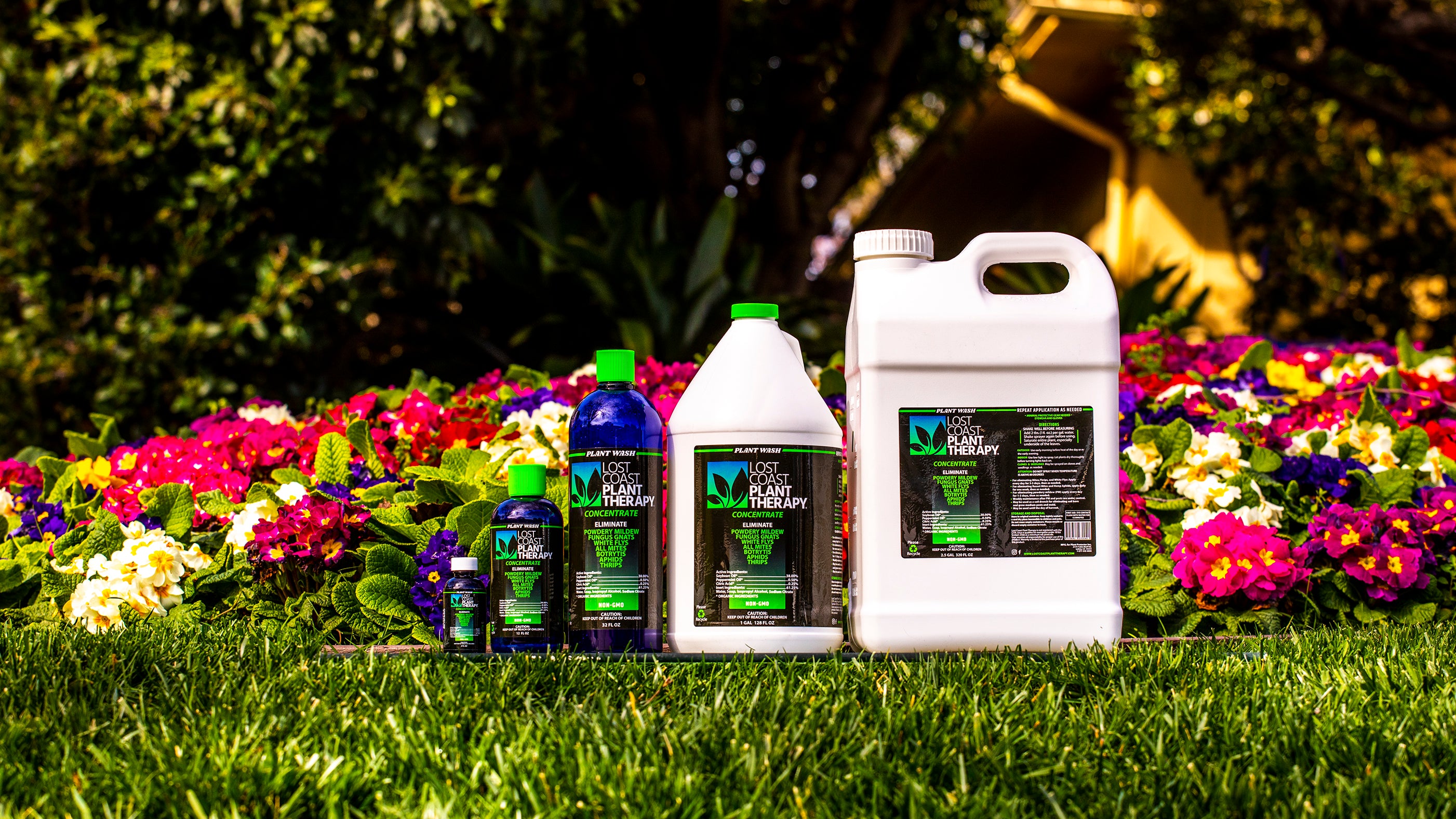
Lost Coast Plant Therapy is a Natural Plant Wash made with natural and organic ingredients. Use it when your diagnosis points to powdery mildew or a soft-bodied pest, and give the spray complete contact with the affected plant surfaces.
12 oz Concentrate bottle
Lost Coast Plant Therapy

12 oz

Mixes with water to create 12 gallons of application spray.

Buy now →
32 oz Concentrate bottle
Lost Coast Plant Therapy

32 oz

Mixes with water to create 32 gallons of application spray.

Buy now →
1 Gallon Concentrate bottle
Lost Coast Plant Therapy

1 Gallon

Mixes with water to create 128 gallons of application spray.

Buy now →
2.5 Gallon Concentrate bottle
Lost Coast Plant Therapy

2.5 Gallon

Mixes with water to create 320 gallons of application spray.

Buy now →