Aphids → honeydew → sooty mold
Aphids and whiteflies can produce sticky honeydew. Black sooty mold can then grow on that residue. The black coating is the secondary clue; the sap-feeding pest is the problem to find.

When several edible crops share one bed, the same clue can mean very different things. Start with what you are growing, what the damage looks like, and where it appears on the plant, then follow the diagnosis to the right pest or disease.

Start with two observations: what crop is affected, and what do you actually see? A hole, sticky residue, curled new growth, fine stippling, white powder, spreading spots, wilt, or tiny flying insects each sends the diagnosis in a different direction.
Vegetable beds are complicated because one pest may use several crops, and one crop can show more than one problem at once. Aphids can leave honeydew that later supports sooty mold. Spider mites can build faster on stressed plants. Wet media around seedlings can support fungus gnats while a separate leaf disease develops aboveground. The goal of this page is to sort those clues before we choose a treatment.
Do not begin with the spray bottle. Begin with the crop, symptom, plant part, and visible evidence. That first minute of diagnosis is what separates an applicable soft-bodied pest or surface disease from a chewing insect, root problem, physiological disorder, or disease that needs a different strategy.

Mixed beds create overlapping clues. The useful question is not “Which single thing explains the whole garden?” It is “Which symptoms belong together, and which ones need their own diagnosis?”
Aphids and whiteflies can produce sticky honeydew. Black sooty mold can then grow on that residue. The black coating is the secondary clue; the sap-feeding pest is the problem to find.
Hot, dry, dusty, or water-stressed plants can become more vulnerable to spider-mite buildup. Correcting stress does not replace pest control, but the two problems can be happening together.
Tiny flies around seedling trays or containers can point toward fungus gnats, while persistently wet media may also create separate root-health concerns. Inspect both the insect and the root zone.

Look at tender growth, stems, buds, and leaf undersides. Aphids commonly cluster where tissue is soft. Feeding can curl or distort leaves, while honeydew can make leaves shiny or sticky and later support sooty mold.

Fine pale dots can merge into bronzing as feeding increases. Turn leaves over and use a hand lens. Spider mites can build quickly in hot weather, especially when plants are already under dry or dusty stress.

Thrips can scar leaves, flowers, and developing fruit, and gardeners often see the scraped-looking damage before they see the insect. Inspect buds, flowers, shoot tips, folded leaves, and both leaf surfaces.

Gently disturb the plant and watch for tiny white adults. Then turn leaves over. Immature whiteflies stay attached and feed there. Heavy populations can yellow leaves and produce sticky honeydew that supports sooty mold.

Leaf stippling is one of the most obvious leafhopper feeding clues, but mites and thrips can create similar pale speckling. Check leaf undersides for wedge-shaped insects that quickly hop or fly when disturbed.

Fungus gnats are most relevant around seedlings, starts, containers, and consistently damp organic media. Adults fly near the soil surface; larvae develop in moist media and feed on fungi, organic material, and sometimes fine roots.

Look for irregular holes, missing leaf edges, frass, rolled leaves, or larvae hiding along veins and leaf undersides.

Very small round “shot holes” can appear across leaves, especially on young brassicas, eggplant, radish, and other susceptible crops.

Night feeding, irregular holes, and shiny slime trails point toward mollusks rather than sap-feeding insects.

Chewed margins, missing seedling tissue, fruit damage, and night activity can point to several crop-specific chewing pests.

Powdery mildew can affect cucurbits, beans, peas, leafy greens, tomatoes, and other vegetables. White powdery growth is the key clue, but resistant varieties and improved growing conditions are part of prevention.

Brown, black, yellow, water-soaked, target-like, or angular spots can come from fungal, bacterial, environmental, or physiological causes. Do not assume every spot is a pest or every spot is powdery mildew.

Check soil moisture and roots before treating foliage. Root rot, vascular disease, drought, heat, stem injury, borers, and other causes can all produce a wilted plant. Whole-plant wilt deserves a root and stem check.
Check tender leaves, growing tips, buds, and tightly folded tissue for aphids, thrips, distortion, and fresh feeding.
Turn several leaves over. This is where mites, whiteflies, aphids, eggs, and early colonies are often easiest to confirm.
Look for thrips, scarring, rot, chewing, misshapen growth, honeydew, and pests hidden around sepals or flower tissue.
Check branch joints, shaded leaves, soil splash, stem lesions, insects sheltered inside the canopy, and debris caught below.
Inspect moisture, drainage, mulch, roots, crown tissue, algae, gnats, slugs, and signs that the problem begins below the leaves.
Edible-crop note: identification comes before product selection. For any treatment used on food crops, follow the current product label and official instructions rather than relying on a general garden rule.
Crop rotation, sanitation, spacing, watering, and debris removal are useful when they address how a specific pest or disease survives or spreads. They are not magic fixes, and they do not replace a correct diagnosis.
Rotation can reduce carryover for some crop-specific soilborne diseases and pests. Think in plant families rather than simply moving one tomato plant a few feet.
Old infected leaves, rotten fruit, and diseased plants can maintain inoculum. Remove problem material when the disease diagnosis calls for sanitation.
Dense foliage can hold humidity and slow leaf drying. Give disease-prone crops enough room for inspection and air movement.
Persistent leaf wetness and saturated media can increase pressure from some diseases and root problems. Match irrigation to the crop and actual moisture conditions.


Independent Cornell CALS greenhouse trials evaluated Lost Coast Plant Therapy against established powdery mildew and western flower thrips. The powdery mildew crops were tomato, melon, and hemp; the thrips trial was on lettuce. Those tested crops matter here because tomato, melon, and lettuce all sit directly inside the vegetable-garden diagnosis network.
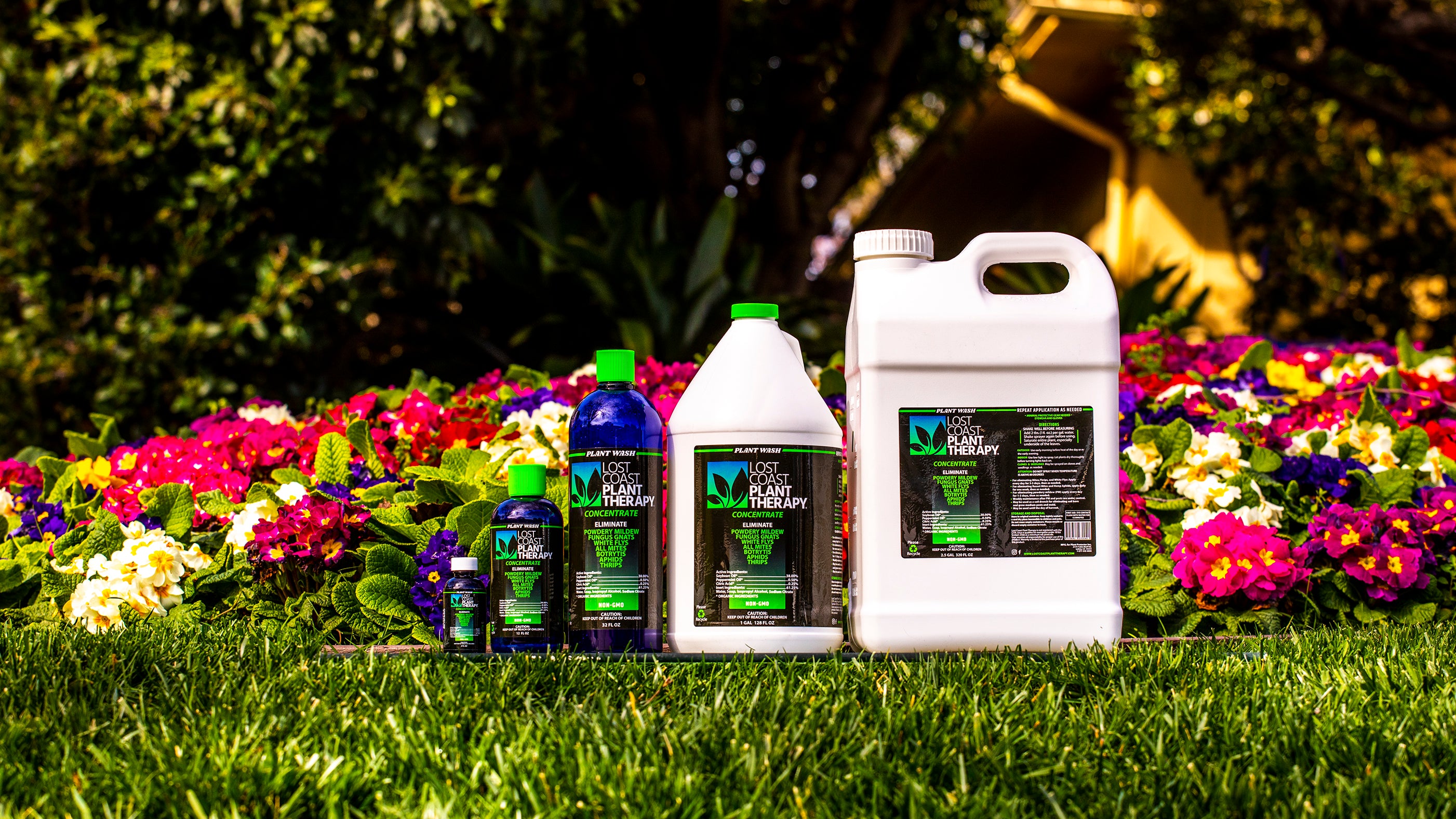
Once the diagnosis points to a soft-bodied pest or supported surface disease, Lost Coast Plant Therapy can become part of the response. Our Natural Plant Wash is a minimum risk pesticide that controls supported soft-bodied pests and plant diseases on contact when used as directed.
In a vegetable bed, direct contact and coverage matter. Reach leaf undersides, stems, new growth, and the hidden plant surfaces where the confirmed target is present. Large chewing pests, physiological disorders, bacterial or viral disease, and unrelated root problems need a different diagnosis and control path.

Common vegetable garden pests include aphids, spider mites, thrips, whiteflies, leafhoppers, flea beetles, caterpillars, slugs and snails, beetles, and other crop-specific insects. Which pest is most likely depends on the crop and the damage pattern, so start with the plant part affected and the visible clue rather than the pest name.
Holes usually point toward a chewing pest rather than aphids, mites, thrips, or whiteflies. Check for caterpillars, flea beetles, beetles, earwigs, slugs, snails, or physical injury. The size and shape of the hole, frass, slime, edge feeding, and whether damage appears overnight can help narrow the cause.
Sticky leaves are often honeydew from sap-feeding insects such as aphids or whiteflies. Check tender growth and leaf undersides for insects, cast skins, ants, and black sooty mold. Sooty mold grows on honeydew, so the useful diagnosis is the insect producing the sticky residue.
White powdery growth commonly points toward powdery mildew, although residue and other leaf problems can look similar at first. Check whether the coating expands across living leaf tissue and whether nearby plants show the same pattern. Use the dedicated Powdery Mildew guide for crop-specific confirmation and management.
Many pests move among related or neighboring crops, and mixed beds place multiple host plants close together. A pest can begin on one preferred plant and spread as numbers rise. Shared environmental stress, weeds, plant debris, or contaminated transplants can also make several crops show problems at the same time.
Inspect tender new growth, leaf undersides, flowers, stems, and the soil line with a hand lens if possible. Note whether the insect clusters, flies when disturbed, jumps, leaves webbing, produces honeydew, or creates silvering or stippling. Those behaviors are often more useful than color alone.
Check new growth, both sides of leaves, flowers, developing fruit, stems, and the soil or mulch line. Inspect several plants, including apparently healthy ones, because early infestations can be localized. Before using any product on an edible crop, follow the current label and official instructions for that product.
All soft-bodied pests including spider mites, aphids, thrips, whiteflies, and fungus gnats, along with powdery mildew, mold, and Botrytis.
Use another approach when the problem is a chewing pest such as a caterpillar, beetle, slug, or snail; a physiological disorder; a bacterial or viral disease; a root-zone problem that requires cultural correction; or any issue outside the product's current scope. Accurate diagnosis prevents unnecessary spraying.

Mixes with water to create 12 gallons of application spray.

Mixes with water to create 32 gallons of application spray.

Mixes with water to create 128 gallons of application spray.

Mixes with water to create 320 gallons of application spray.
Your cart is currently empty.
Not sure where to start?